Robes Through the Ages: The Real and Imagined Roots of Magical Garb
Why do fantasy mages always wear robes? Discover the historical, symbolic, and practical roots of the wizard’s wardrobe, from medieval scholars to modern spellcasters, in this richly detailed exploration.
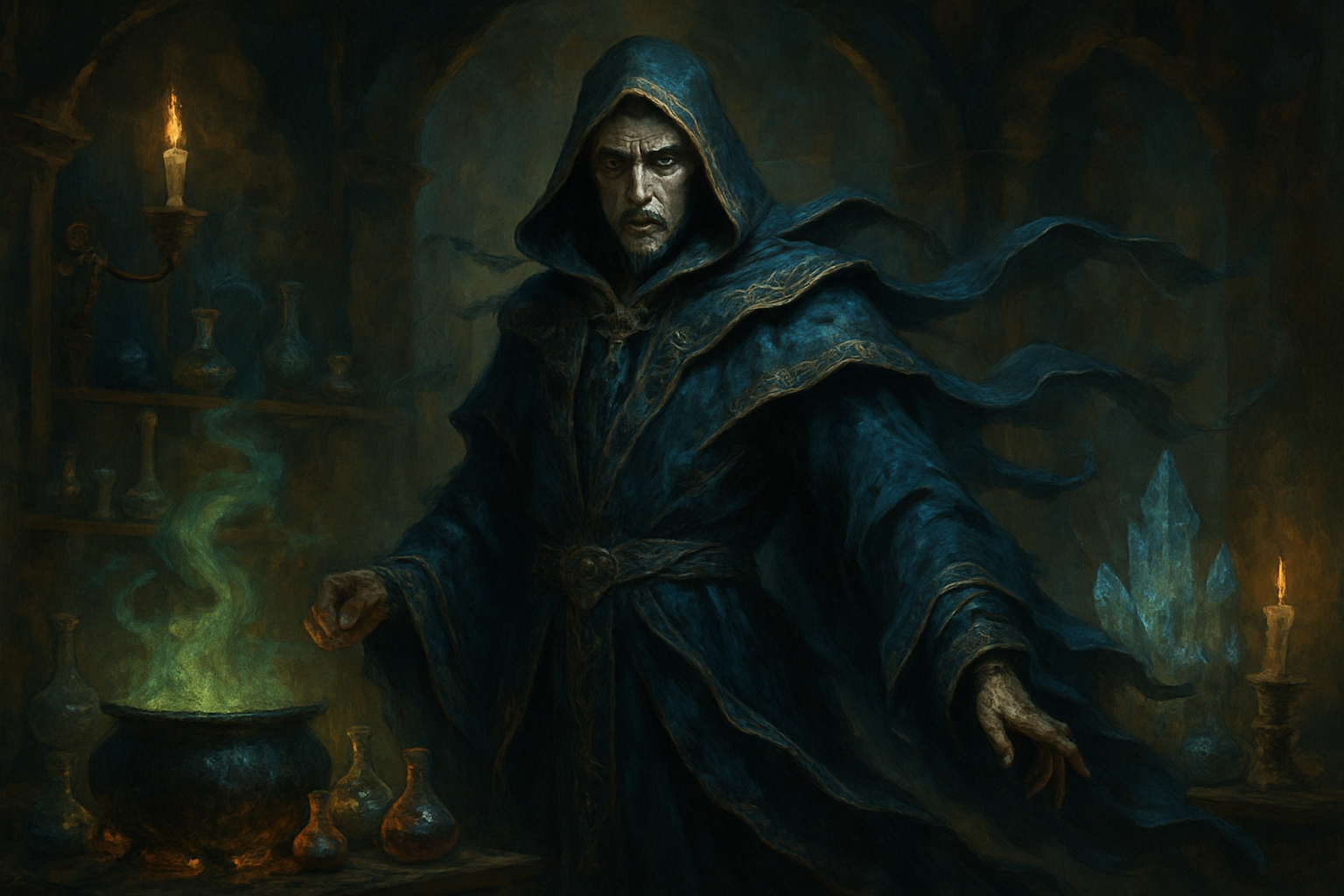
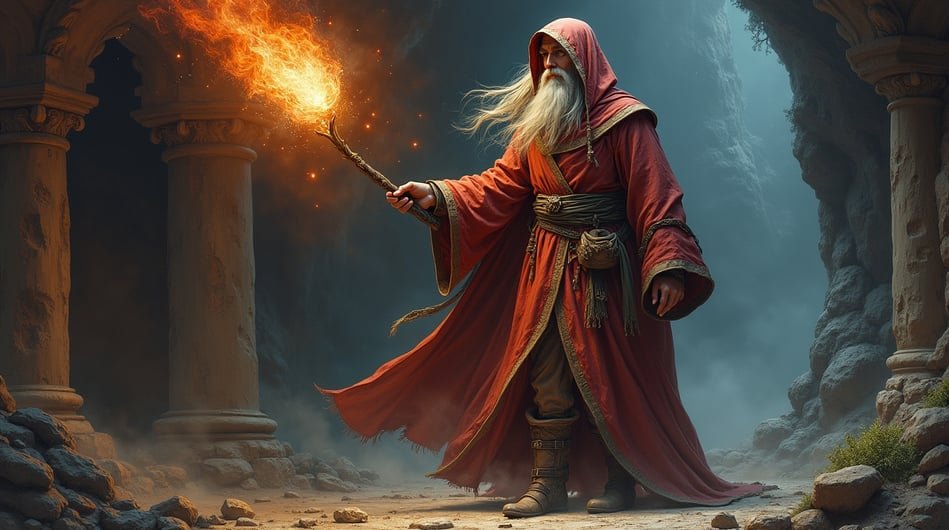
The Mystical Mantle: An Introduction to Wizardly Wardrobes When we conjure the image of a mage in our minds, certain elements invariably materialize: the staff, perhaps a pointed hat, and most distinctively, flowing robes that seem to billow with arcane energy. This iconic representation has become so deeply embedded in our collective consciousness that we rarely question its origins. Yet, the tradition of depicting spellcasters in these distinctive garments has deep historical roots and practical considerations that extend far beyond mere aesthetic preference.
The mage’s robe stands as perhaps the most recognizable symbol of magical prowess across fantasy literature, games, and visual media. From Gandalf’s gray cloak to the color-coded robes of various magical schools, these garments have become shorthand for identifying practitioners of the arcane arts. But why robes specifically? Why not armor, practical traveling clothes, or any other form of attire that might better serve a wandering spellcaster?
This exploration delves into the historical, practical, symbolic, and cultural reasons behind the ubiquitous association between mages and their distinctive flowing garments. By examining both real-world influences and fantasy traditions, we’ll unravel the mystery behind this enduring sartorial choice that has clothed countless wizards, sorcerers, and spellcasters throughout the ages.
Historical Foundations: The Scholar’s Garb
Academic Origins: From Medieval Universities to Magical Academies
The most direct historical influence on the wizard’s robe comes from the academic traditions of medieval Europe.. During the 12th century, when the first universities were established, many students were members of the clergy who wore distinctive robes that set them apart from ordinary townspeople. These academic robes became the standard attire for scholars and learned individuals, creating a visual association between robes and knowledge that persists even today in graduation ceremonies.
Medieval scholars, who were often the most educated members of society, wore long robes as a practical garment but also as a symbol of their intellectual status. These scholarly figures were frequently the closest real-world equivalents to fantasy wizards – they studied ancient texts, conducted experiments, and possessed knowledge beyond that of the common person. Their distinctive attire naturally influenced how later generations would imagine practitioners of even more esoteric arts.
The connection between academic robes and wizardry was further cemented as the medieval period became increasingly associated with magic and mysticism in the popular imagination. The robes worn by clergy and academics gradually transformed into the standard costume for wizards and anyone attempting to channel the aesthetic of the Middle Ages in a magical context. This evolution explains why, at many modern universities, students still don caps and gowns at graduation – education being, as one scholar poetically noted, “the truest sorcery”.
Religious and Ceremonial Influences
Beyond academia, religious and ceremonial garments have significantly shaped our conception of magical attire. Throughout history, priests, shamans, and other spiritual leaders wore distinctive robes during rituals, creating a visual language that associated flowing garments with connection to higher powers or mystical forces.
In ancient civilizations from Greece to Egypt, religious figures who were considered wise or powerful typically wore robes. These garments symbolized their connection to the divine and set them apart from ordinary citizens. Similarly, druids in ancient Celtic cultures often wore flowing robes during rituals to symbolize their connection to the spiritual and natural world – a common theme in magical traditions.
The ceremonial vestments of various religious traditions, with their rich symbolism and distinctive designs, provided a visual vocabulary that would later be adopted by fantasy authors and artists depicting magical practitioners. The long robes of priests, with their symbolic colors and ornate decorations, offered a ready template for imagining how one might dress when communing with supernatural forces.
The Alchemist’s Laboratory: Practical Predecessors
Another historical influence comes from the world of alchemy – the medieval precursor to modern chemistry that was often associated with magical practices. Alchemists, who conducted experiments with various substances in search of transformative knowledge, often wore long, flowing robes as protective garments.
These early researchers, many of whom were members of the clergy, wore monk-like robes and similar clothing that would later become associated with magical practitioners. The image of the alchemist in their laboratory, surrounded by bubbling concoctions and wearing protective robes, helped establish the visual archetype that would later be applied to fantasy wizards.
Printed images of alchemists from as early as the 17th century often show these “wizards” in robes – representing a gradual conflation of medieval science and the idea of magic. As alchemy straddled the line between early scientific inquiry and mystical practice, its practitioners’ attire became part of the visual language of magical experimentation.
Symbolic Significance: The Meaning Behind the Mantle
Why do fantasy mages always wear robes? Discover the historical, symbolic, and practical roots of the wizard’s wardrobe, from medieval scholars to modern spellcasters, in this richly detailed exploration.
Power and Mystery: The Aura of Otherness Beyond historical precedent, robes serve important symbolic functions in fantasy settings. The flowing fabric can make the wearer seem larger than life, contributing to an aura of otherworldliness that enhances a wizard’s mystical, secretive persona. This visual effect makes them appear as powerful beings who deal with forces beyond ordinary human comprehension.
In many fantasy traditions, the robe symbolizes the mage’s separation from mundane society. By wearing garments distinctly different from common attire, wizards visually represent their status as individuals who have transcended ordinary limitations through their arcane studies. The robe becomes a boundary marker between the mundane world and the realm of magical possibility.
This symbolic separation serves both narrative and thematic purposes in fantasy stories. It visually communicates to readers and viewers that the wizard character operates according to different rules and possesses knowledge inaccessible to ordinary people. The distinctive silhouette of a robed figure immediately signals the presence of magical potential in a fantasy setting.
Status and Authority: The Visual Language of Knowledge
Robes have historically served as status symbols across many cultures. In medieval and Renaissance periods, long, flowing garments often indicated that the wearer did not engage in manual labor. Such robes signified that the individual was of sufficient status to avoid physical work that might soil or damage elaborate clothing.
For wizards in fantasy settings, robes similarly communicate their status as scholars and intellectuals rather than physical laborers. The wizard’s focus on mental rather than physical prowess is reflected in clothing that prioritizes dignity and presence over practical considerations for combat or travel. This visual distinction helps establish the wizard’s role as an advisor, scholar, or magical specialist rather than a front-line warrior.
The association between robes and authority extends beyond fantasy into real-world contexts. Judges wear robes to symbolize their judicial authority, academics don robes for formal ceremonies, and religious leaders wear distinctive vestments to mark their spiritual authority. Fantasy wizards inherit this visual language of authority, with their robes serving as the outward manifestation of their arcane expertise and social position.
Connection to the Elements: Embodying Magical Forces
In many fantasy traditions, wizards are portrayed as having special connections to elemental forces and natural energies. The loose, flowing nature of robes can symbolize this connection, with the fabric moving like water or wind to reinforce the wizard’s bond with the natural world and its magical forces.
The way robes respond to movement and air creates a visual effect that enhances magical actions. When a wizard casts a spell with dramatic gestures, the flowing fabric of their robes adds to the spectacle, creating a more impressive visual representation of magical power being channeled. This dynamic quality makes robes particularly effective for depicting magical characters in visual media like films, television, and illustrations.
Some fantasy traditions even suggest that the flowing nature of robes helps facilitate the movement of magical energies around the spellcaster’s body. The unrestrictive garment allows mystical forces to circulate freely, enhancing the mage’s ability to channel and direct arcane power. While purely fictional, this concept adds another layer of meaning to the wizard’s distinctive attire.
Practical Considerations: Function Beyond Form
Freedom of Movement: The Spellcaster’s Necessity
Beyond symbolism, there are practical reasons why fantasy mages might prefer robes. In fiction, wizards often cast spells with dramatic hand movements, and robes facilitate such movement without restricting the arms or legs. This freedom of movement is crucial for a character whose primary power comes from precise gestures and somatic components.
Many fantasy magic systems depict spellcasting as requiring specific hand positions or movements similar to martial arts forms. Tight or restrictive clothing would impede these movements, potentially interfering with the proper execution of spells. Robes provide the necessary range of motion while maintaining the dignified appearance appropriate for a master of arcane arts.
This practical consideration appears in various fantasy works, where characters explicitly choose robes to facilitate their magical practice. The wide sleeves commonly depicted on wizard robes allow for dramatic gestures and concealment of components or magical implements that might be needed at a moment’s notice. What might appear as merely decorative actually serves a functional purpose in the context of magical practice.
Comfort and Practicality: The Scholar’s Choice
Wizards are often portrayed as spending long hours in study, experimentation, and meditation. Comfortable clothing that allows for extended periods of sitting, reading, and working with delicate components would be essential for such scholarly pursuits. Robes provide this comfort while maintaining an appearance of dignity appropriate to a learned individual.
According to some fantasy traditions, including Jim Butcher’s Dresden Files, wizards often work in environments that are not ideal for comfort – cold stone towers or underground chambers where temperature regulation is a concern. Robes provide warmth and protection from drafts in these environments, making them a practical choice for the working conditions of a typical fantasy mage.
Additionally, robes are relatively simple garments that require minimal maintenance and attention. For characters portrayed as being so absorbed in their arcane studies that they neglect mundane concerns, robes represent a practical solution – they’re affordable, easy to create, and accommodate various body types without needing precise tailoring. This practicality appeals to characters who prioritize intellectual pursuits over fashion concerns.
Hidden Pockets and Components: The Magician’s Arsenal
One of the most practical aspects of robes for fantasy spellcasters is the abundance of hidden pockets and spaces for storing magical components. Traditional wizard robes are often depicted with numerous concealed pockets where practitioners can keep spell ingredients, scrolls, potions, and other arcane implements readily accessible.
This feature appears in various fantasy works, where wizards pull seemingly endless supplies of magical components from the depths of their robes. The voluminous fabric provides ample hiding places for the tools of magical trade, allowing wizards to appear prepared for any situation without visibly carrying bulky equipment. This practical storage solution contributes to the wizard’s aura of mystery – onlookers never know what might emerge from those flowing sleeves.
Some fantasy traditions even suggest that the pockets in wizard robes might be enhanced with magic themselves, creating spaces larger on the inside than physically possible. While this enters the realm of pure fantasy, it extends the practical utility of robes as the perfect garment for those who need to carry an assortment of unusual items at all times.
Cultural Evolution: From Merlin to Modern Fantasy
Literary Influences: Defining the Archetype
The modern image of the robed wizard owes much to influential literary figures, particularly Merlin from Arthurian legends and Gandalf from J.R.R. Tolkien’s works. These characters established archetypes that would be emulated and referenced by countless fantasy creators in subsequent decades.
Merlin, one of the earliest and most influential wizard characters in Western literature, was typically depicted wearing robes in medieval and Renaissance artwork. These early visual representations helped establish the connection between magical practitioners and flowing garments. By the 19th century, illustrations of Merlin by artists like Gustave Doré had firmly cemented the image of the robed wizard in popular culture.
Tolkien’s Gandalf, while described in The Hobbit as wearing “a long grey cloak” rather than explicitly robes, was frequently depicted in robes in illustrations and later film adaptations. This visual interpretation reinforced the association between wizards and robes, influencing generations of fantasy creators.. As one Reddit commenter bluntly put it, “Most likely, about 90% of the explanation lies in the fact that Gandalf donned robes”.
Gaming and Visual Media: Reinforcing the Trope
Role-playing games, particularly Dungeons & Dragons, have played a significant role in standardizing and popularizing the image of robed wizards. These games often use visual shorthand to help players quickly identify character classes, with robes becoming the definitive visual marker for spellcasters.
In D&D and similar games, the wizard’s robe serves both narrative and mechanical purposes. Narratively, it establishes the character’s identity as a scholar of the arcane. Mechanically, it explains why wizards typically don’t wear armor – their flowing garments allow for the freedom of movement necessary for spellcasting but provide minimal physical protection.
This gaming convention has been reinforced through countless visual representations in rulebooks, video game adaptations, and related media. The image of the robed wizard has become so ubiquitous that it’s instantly recognizable even to those with minimal exposure to fantasy genres. The circular influence between games, literature, and visual media has firmly established robes as the definitive wizard attire in contemporary fantasy.
Cross-Cultural Magical Attire: Global Influences
While Western fantasy traditions have heavily influenced the standard image of the robed wizard, magical practitioners appear in cultures worldwide, often with distinctive clothing that has contributed to our collective image of magical attire. These diverse traditions have enriched the visual language of fantasy as the genre has become increasingly global.
In Persian traditions, the Magi (from whom we derive the word “magic”) wore distinctive flowing garments that influenced early Western conceptions of magical practitioners. These historical figures served as advisors to kings and were known for their wisdom and mystical abilities, creating an association between their distinctive attire and magical knowledge.
Japanese magical traditions feature practitioners in distinctive robes, often with symbolic patterns and designs. Chinese Taoist priests and alchemists wore specific robes that signified their spiritual authority and magical knowledge. As fantasy has incorporated influences from these and other global traditions, the visual representation of magical attire has become more diverse while maintaining the core concept of distinctive, flowing garments.
Magical Properties: Enchanted Fabrics and Protective Garments
Defensive Enchantments: Protection Beyond Armor
In many fantasy settings, wizards’ robes are more than ordinary garments – they’re magically enhanced items that provide protection different from but potentially as effective as physical armor. These enchanted robes might deflect magical attacks, absorb harmful energies, or create invisible barriers against physical threats.
This magical protection offers an in-universe explanation for why wizards might choose robes over more conventional armor. While plate mail might stop a sword, it would do little against a fireball or lightning bolt. Enchanted robes, designed specifically to counter magical threats, represent a more appropriate defense for those who face arcane dangers.
Some fantasy traditions suggest that the very fabric of wizard robes might be woven with protective spells or created from materials with inherent magical properties. These special textiles could explain why wizards are so particular about their distinctive attire – ordinary clothing simply wouldn’t provide the magical protection necessary for their dangerous work.
Channeling and Amplification: Enhancing Magical Power
Beyond protection, fantasy often depicts wizard robes as tools that enhance the wearer’s magical abilities. The fabric might be specially treated to conduct magical energies, amplify spellcasting power, or help focus the wizard’s concentration during complex magical workings.
In some settings, the color, pattern, or material of the robe indicates specialization in particular schools of magic. A necromancer might wear black robes woven with silver threads to better channel death magic, while an elementalist could prefer robes dyed with pigments derived from the elements they command. These specialized garments become tools of the magical trade rather than mere clothing.
The concept of robes as magical amplifiers appears in various fantasy works, where characters explicitly choose specific robes for particular magical tasks. This functional aspect of wizard attire adds another layer of meaning to what might otherwise seem like a purely aesthetic or traditional choice.
Identification and Hierarchy: The Colors of Magic
In many fantasy settings, the color and design of a wizard’s robe communicate important information about their magical specialization, rank within magical organizations, or philosophical alignment. This visual coding system allows for instant recognition of a mage’s capabilities and status.
The tradition of color-coded robes appears in numerous fantasy works, from the white robes of healers to the black garments of necromancers. These color associations create a visual shorthand that helps readers and viewers quickly understand a character’s magical identity. The specific colors and their meanings vary between settings, but the principle of robes as identifying markers remains consistent.
Beyond color, the decorations and embellishments on wizard robes often indicate rank or achievement within magical hierarchies. Senior wizards might wear more elaborate robes with special symbols or decorative elements that signify their status. These visual markers create a system of recognition within magical communities that parallels real-world academic or religious hierarchies.
Balance and Gameplay: The Meta Perspective
Why do fantasy mages always wear robes? Discover the historical, symbolic, and practical roots of the wizard’s wardrobe, from medieval scholars to modern spellcasters, in this richly detailed exploration.
Game Design Considerations: Balancing Character Classes From a game design perspective, the tradition of wizards wearing robes rather than armor serves important balancing functions. In many role-playing games, wizards possess powerful offensive capabilities through their spells but are physically vulnerable. Their distinctive clothing visually reinforces this game mechanic – the flowing robes signify magical power but minimal physical protection.
This visual distinction helps maintain balance between character classes. Warriors in heavy armor have strong physical defense but typically fewer special abilities, while robed wizards can unleash devastating magical attacks but must be careful about physical confrontation. The visual contrast between armored fighters and robed spellcasters immediately communicates these different gameplay roles.
The tradition has become so established that games often incorporate it directly into their mechanics. Many fantasy RPGs specify that wizards cannot cast spells while wearing armor, or that armor interferes with magical abilities. The robe becomes not just a visual signifier but an integral part of how magic functions within these game systems.
Narrative Function: Visual Storytelling
Beyond gameplay mechanics, the wizard’s robe serves important narrative functions in fantasy storytelling. The distinctive silhouette immediately communicates to the audience that this character possesses magical abilities, establishing expectations about their role in the story. This visual shorthand allows creators to efficiently introduce magical elements without lengthy exposition.
The contrast between robed wizards and other character types creates visual interest and helps audiences distinguish between different characters and their abilities. In visual media particularly, these distinctive costumes help viewers track characters and understand their functions within the narrative. The wizard in flowing robes stands out from warriors, rogues, and other character archetypes.
Additionally, the wizard’s robe often serves as a canvas for character development and worldbuilding. Changes in a wizard’s attire can signal character growth, shifts in allegiance, or the acquisition of new powers. The visual language of magical clothing becomes part of how the story communicates changes and developments to the audience.
Contemporary Interpretations: Evolving the Archetype
Modern Fantasy: Subverting and Reinventing Traditions
While the traditional image of the robed wizard remains powerful, contemporary fantasy often plays with, subverts, or reinvents this established archetype. Modern creators might deliberately dress their magical characters in unexpected ways to signal departures from traditional fantasy tropes or to explore new aspects of magical practice.
Urban fantasy particularly has reimagined magical attire for contemporary settings. Characters like Jim Butcher’s Harry Dresden wear practical modern clothing rather than traditional robes, reflecting their existence in a world where wizards must blend with ordinary society. These modern interpretations maintain elements of the magical tradition while adapting them to new contexts.
Other creators deliberately subvert expectations by having characters comment on or reject traditional wizard attire. This self-awareness about fantasy conventions allows for both homage to and playful critique of the established visual language of magic. The robed wizard becomes a reference point against which new interpretations can be measured and understood.
Fashion and Design: Aesthetic Evolution
The visual design of wizard robes has evolved significantly over time, reflecting changing aesthetic sensibilities and fashion influences. Early depictions often drew directly from medieval and Renaissance clothing, while contemporary designs incorporate more diverse influences and greater attention to practical details.
Fantasy artists and costume designers have expanded the visual vocabulary of magical attire, creating distinctive styles for different magical traditions and fantasy cultures. These designs often incorporate symbolic elements that communicate information about the character’s magical abilities, cultural background, or personal history.
Video games and films have particularly pushed the boundaries of wizard robe design, creating visually striking interpretations that balance traditional elements with innovative aesthetics. These modern designs often feature more complex layering, asymmetrical elements, and integration of various cultural influences that weren’t present in earlier, more straightforward depictions.
Conclusion: The Enduring Appeal of the Wizard’s Robe
The association between mages and robes in fantasy stems from a rich combination of historical precedent, practical considerations, symbolic significance, and cultural evolution. From the scholarly robes of medieval universities to the ceremonial garments of religious traditions, real-world influences provided the foundation for how we imagine magical practitioners. These historical elements were then adapted, enhanced, and mythologized through literature, games, and visual media to create the iconic image of the robed wizard that persists today.
Beyond mere tradition, robes serve important functional purposes within fantasy narratives and games. They visually communicate a character’s magical identity, establish their role within the story, and reinforce gameplay mechanics that distinguish spellcasters from other character types. The flowing garments facilitate the dramatic movements associated with spellcasting while providing practical benefits like comfort during long study sessions and ample storage for magical components.
The wizard’s robe has proven remarkably adaptable across different fantasy traditions and media formats. While maintaining its core identity as the distinctive attire of magical practitioners, it has evolved to incorporate diverse cultural influences and aesthetic innovations. Contemporary fantasy continues to reference, reinvent, and occasionally subvert this established visual language, demonstrating its enduring power as a symbol of magical knowledge and power.
In the end, the mage’s robe represents more than just clothing – it embodies the mystery, knowledge, and otherworldly power that makes magic such a compelling element of fantasy. Whether flowing dramatically during an epic spell battle or simply marking its wearer as someone who walks between worlds, the wizard’s robe remains one of fantasy’s most recognizable and meaningful visual elements. As long as stories feature characters who command mysterious forces beyond ordinary understanding, we can expect some version of this distinctive garment to clothe those who stand at the intersection of the mundane and the magical.
Links & Sources
Why do fantasy mages always wear robes? Discover the historical, symbolic, and practical roots of the wizard’s wardrobe, from medieval scholars to modern spellcasters, in this richly detailed exploration.
The Historical, Cultural, and Symbolic Roots of Wizard Robes
https://everfan.com/blogs/news/the-historical-cultural-and-symbolic-roots-of-wizard-robes
Why do mages wear robes? : r/Fantasy – Reddit
https://www.reddit.com/r/Fantasy/comments/1le2x7k/why_do_mages_wear_robes/
Why Do Wizards Wear Robes? – YouTube
https://www.youtube.com/watch?v=J6bIAh3bY08
Why do wizards wear robes? – StarDestroyer.Net BBS
https://bbs.stardestroyer.net/viewtopic.php?t=114462
The Surprising History of Wizard Robes | Getty News
https://www.getty.edu/news/wizard-medieval-robes/
The surprising — and odd — history of wizard robes – KJZZ
https://kjzz.org/content/1847591/surprising-and-odd-history-wizard-robes
53 The Wizard’s Robe ideas – Pinterest
https://www.pinterest.com/jensonl/the-wizards-robe/
Dungeons & Dragons Wizard Robe – Medieval Collectibles
https://www.medievalcollectibles.com/product/dungeons-dragons-wizard-robe/
Wizard Robes & Medieval Robes – Enchanting Styles | Epic Armoury
https://epicarmoury.com/categories/clothing/robes/
Ancient Sacred Vestments: Scriptural Symbols and Meanings
https://journal.interpreterfoundation.org/ancient-sacred-vestments-scriptural-symbols-and-meanings/
Medieval workwear: from peasants to craftsmen – Battle-Merchant
https://www.battlemerchant.com/en/blog/medieval-workwear-from-peasants-to-craftsmen
The Role of Priest Robes in Religious Life | eClergys™
https://eclergys.com/blogs/info/the-role-of-priest-robes-in-religious-life
The History of Academic Dress | Walters of Oxford
https://www.walters-oxford.co.uk/the-history-of-academic-dress/
The Priestly Garments – Bible History
https://bible-history.com/tabernacle/the-priestly-garments
What are the benefits of mages wearing robes instead of armor?
https://www.reddit.com/r/worldbuilding/comments/5ufr31/what_are_the_benefits_of_mages_wearing_robes/
Why do wizards wear robes? – Hive Workshop
https://www.hiveworkshop.com/threads/why-do-wizards-wear-robes.271689/
Why do wizards wear robes? : r/Fantasy – Reddit
https://www.reddit.com/r/Fantasy/comments/45kc6r/why_do_wizards_wear_robes/
Why do wizards wear robes? – Giant in the Playground Forums
https://forums.giantitp.com/showthread.php?286067-Why-do-wizards-wear-robes
Encyclopedia: Druidic Vestments | Llewellyn Worldwide, Ltd.
https://www.llewellyn.com/encyclopedia/article/194
Robes & the Modern Druid – Greywolf’s Lair
https://greywolf.druidry.co.uk/2021/12/robes-the-modern-druid/
Druidic Clothing and Dress – The Summerlands
http://www.summerlands.com/crossroads/library/druidic_clothing%20_and_dress.htm
Origins of ecclesiastical vestments – Wikipedia
https://en.wikipedia.org/wiki/Origins_of_ecclesiastical_vestments
Alchemy in Medieval and Renaissance Europe
https://www.medievalcollectibles.com/blog/life-in-medieval-times/alchemy-in-medieval-and-renaissance-europe/
Radagast revisited – The Hall of Fire
https://thehalloffire.net/forum/viewtopic.php?t=3361
Magicians in History and Folklore – The Skald’s Circle
https://theskaldscircle.com/2020/04/13/magicians-in-history-and-folklore/
Why does wizard = robes? Wizards always wear robes in … – Reddit
https://www.reddit.com/r/dndnext/comments/ovhwq6/why_does_wizard_robes_wizards_always_wear_robes/
Should I wear armor as a mage, or will it affect my casting speed?
https://gaming.stackexchange.com/questions/52590/should-i-wear-armor-as-a-mage-or-will-it-affect-my-casting-speed
Final Fantasy Black Mage Fashion and Design Analysis – YouTube
https://www.youtube.com/watch?v=IcTxoeVFtUo
