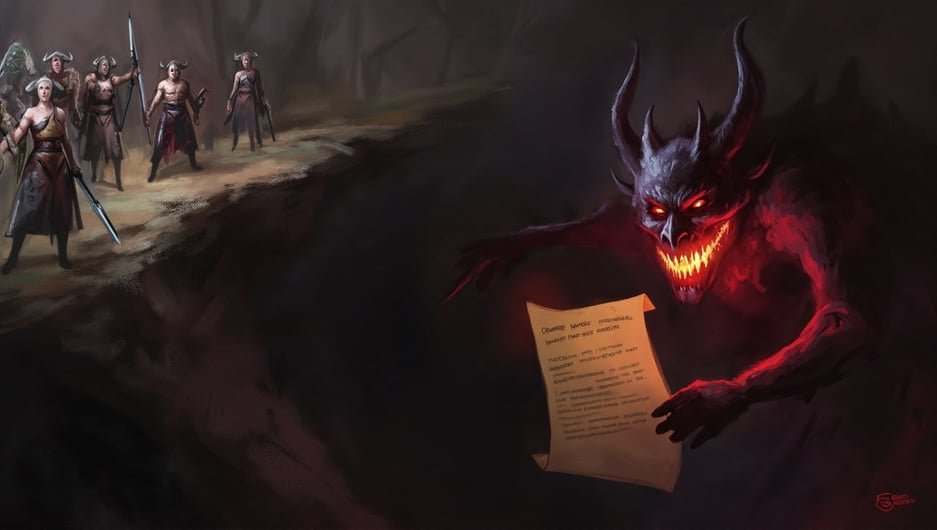
The Pact: Temptation at the Precipice
Delve into the shadowy lore of devils: their origins, powers, and roles in folklore and RPGs. Discover why these cunning tempters still haunt our stories and game nights.
The Devil’s Origins: From Ancient Myth to Modern Fantasy Devils have slithered their way into human consciousness for millennia. Ancient civilizations spun tales of wicked spirits and malevolent gods. The word “devil” itself stems from the Greek diabolos, meaning “slanderer” or “accuser”—a hint at their role as manipulators and corrupters. Over time, these figures evolved, absorbing traits from various cultures: the horned, cloven-hoofed demons of Christian lore, the trickster spirits of pagan myth, and the cunning overlords of modern fantasy.
Despite their varied forms, devils share a common thread: they are masters of temptation, deal-makers, and architects of ruin. They thrive on the weaknesses of mortals, offering power, knowledge, or wealth in exchange for souls—a transaction as old as storytelling itself.
Devils in Folklore and Religion
In Christianity, the devil—often called Satan or Lucifer—is the ultimate adversary, a fallen angel cast out of heaven for his pride. He is the tempter in the Garden of Eden, the whisperer of doubt, and the ruler of Hell. Other traditions offer their own takes: in Islamic lore, Iblis refuses to bow to Adam and is banished for his arrogance. In Hinduism, demons (asuras) and tricksters (rakshasas) play similar roles, though not always with the same infernal branding.
Across cultures, devils are rarely simple monsters. They are complex, charismatic, and often tragic figures—beings of immense power undone by their own flaws. This complexity makes them endlessly fascinating, both as symbols and as characters.
Devils in Role-Playing Games
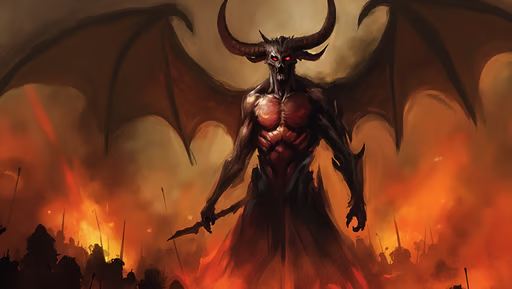
In the world of tabletop RPGs, devils are more than just villains—they are master strategists, contract negotiators, and sometimes reluctant allies. Dungeons & Dragons, for example, features a hierarchy of devils, each with unique powers and personalities. At the top sits Asmodeus, the Lord of the Nine Hells, a figure of cold intellect and ruthless ambition. Below him, a host of lesser devils—imps, succubi, and pit fiends—scheme and plot, each vying for power and souls.
Devils in RPGs are not mindless brutes. They are cunning adversaries who prefer manipulation to brute force. They offer deals, tempt heroes with their deepest desires, and exploit every weakness. Facing a devil is as much a test of character as it is of combat prowess.
Why Devils Make Perfect Antagonists
What makes devils such compelling foes? It’s their intelligence, their charm, and their understanding of human nature. A devil knows what you want, and they know how to offer it—with a catch. They are the ultimate test of a hero’s morality, forcing players to weigh the cost of their desires against the price of their souls.
In storytelling, devils are the ultimate wildcards. They can be tragic figures, misunderstood outcasts, or irredeemable monsters. They challenge protagonists to confront their own flaws and temptations, making for richer, more nuanced narratives.
Crafting Your Own Infernal Encounter
Want to introduce a devil into your campaign? Start by considering their motives. Is your devil a power-hungry schemer, a tragic outcast, or a tempter testing the party’s resolve? Give them a unique personality and a voice that drips with honeyed lies and veiled threats.
Consider the stakes: what does the devil want, and what are they willing to offer? A contract is traditional, but don’t be afraid to get creative. Perhaps the devil seeks a rare artifact, or maybe they want to corrupt a virtuous NPC. The key is to make the encounter memorable, challenging, and—above all—fun.
The Enduring Appeal of Devils
Devils are more than just monsters. They are reflections of our own fears, desires, and moral dilemmas. They challenge us to question our choices and confront our weaknesses. In fantasy, in folklore, and at the gaming table, devils remain some of the most compelling figures—charismatic, cunning, and utterly unforgettable.
Links & Sources
- Devil (Dungeons & Dragons) – Wikipedia
- https://en.wikipedia.org/wiki/Devil_(Dungeons_%26_Dragons)
- Satan – Britannica
- https://www.britannica.com/topic/Satan
- Asmodeus – Forgotten Realms Wiki
- https://forgottenrealms.fandom.com/wiki/Asmodeus
- Iblis – Britannica
- https://www.britannica.com/topic/Iblis
- Rakshasa – Britannica
- https://www.britannica.com/topic/rakshasa