
Key Takeaways
- The “Low Fantasy” Bait-and-Switch: John Flanagan pulled a strategic pivot after The Ruins of Gorlan. The series launched with high-fantasy tropes—mindless Wargal hordes and mesmerizing Kalkara beasts—before aggressively shifting into a low-magic, geopolitical thriller format by The Icebound Land. This move saved the series from being a generic Tolkien clone and established its unique “competence porn” identity.
- Araluen is a Glitchy Britain: While the map of Araluen is a distorted Great Britain, the logistical reality of the world breaks down under scrutiny. The “Wolfships” possess watertight compartments and below-deck stables , a technological impossibility for the Viking-era longships they are modeled on, representing a significant deviation from historical naval architecture to serve narrative convenience.
- The Longbow Physics Problem: The English Longbow is the gold standard for medieval ballistics, but the Ranger practice of firing heavy war bows from the saddle defies biomechanics. The kinetic energy required to draw a 100lb+ war bow necessitates a grounded stance; Flanagan favors the “Rule of Cool” over the static reality of the Battle of Agincourt.
- The Temujai are the Mongols (Down to the Tactics): The tactical doctrines used in The Battle for Skandia—specifically the feigned retreat and the recurve bow usage—are a direct 1:1 mapping of Genghis Khan’s and Subutai’s operational doctrines during the invasion of Europe (1241 AD). Flanagan essentially rewrites the Battle of Legnica, allowing Western heavy infantry to win through discipline they historically lacked.
- The Sax Knife Defense is HEMA-Adjacent Fiction: The famous “double knife defense” (using a throwing knife and a sax to catch a sword blade) is mechanically dubious in real historical fencing. While visually distinct, blocking a two-handed broadsword with two short levers (wrists) is a recipe for broken bones, serving primarily as a character differentiator to separate Rangers from Knights.
- Coffee is the Ultimate Anachronism: Halt’s obsession with coffee constitutes the series’ most charming historical error. Flanagan transplants a 17th-century European habit into a distinctly 12th-century setting, ignoring the agricultural and trade realities of the medieval period to give his Rangers a noir-detective aesthetic.
1. The Cartographer’s Lie: Mapping Fiction onto Fractured History
Let’s be blunt: World-building in fantasy is often just history with the serial numbers filed off. In the case of Ranger’s Apprentice, John Flanagan didn’t just file the numbers off; he took a map of medieval Europe, threw it into a blender, and hit “pulse” for three seconds. The result is a world that feels incredibly grounded because it is our world, just slightly skewed to accommodate narrative travel times. Understanding the geography of Araluen is essential to understanding the geopolitical tensions that drive the series, as Flanagan uses real-world historical rivalries as shorthand for his fictional conflicts.
The British Isles Anomaly (Araluen, Picta, Celtica)
Araluen is England. There is no subtle metaphor here. It is an island nation, renowned for its longbowmen, operating under a feudal monarchy. However, the internal geography presents a fascinating simplification of British history that warrants a deep historical audit.
Araluen as High Medieval England:
The Kingdom of Araluen is depicted as a centralized feudal state. Unlike real medieval England, which was often plagued by the “Overmighty Subject” (powerful barons who challenged the King, leading to conflicts like the Wars of the Roses), Araluen is remarkably stable. King Duncan rules with a benevolence that is historically rare. The Fief system in Araluen—50 fiefs, each with a Baron and a Ranger—acts as a federalized system of checks and balances. The Barons provide the military muscle (Knights and Battleschools), while the Rangers provide the intelligence and federal law enforcement. This mirrors the Sheriff system of Norman England but professionalizes it into a meritocratic intelligence agency rather than a corrupt tax-farming scheme.
Picta and the Northern Threat: To the north lies Picta. Historically, the Picts were a confederation of tribes in what is today eastern and northern Scotland during the Late Iron Age and Early Medieval periods. Flanagan preserves the “wild, untamed” stereotype of the Scottish borderlands but simplifies the complex tribal politics into a singular, barbarian threat. In real history, the border between England and Scotland (The Marches) was a zone of constant, low-level warfare, cattle raiding, and shifting allegiances (the Border Reivers). In Ranger’s Apprentice, this is codified into a hard border where “Scottie” (as the Picts are colloquially modeled) raids are a constant existential threat, justifying the militarization of northern fiefs like Norgate and Macindaw.
Celtica and the Welsh Analogue: To the southwest lies Celtica. This is Wales, with a dash of Ireland, though Hibernia exists separately as the true Ireland analogue. The mining culture of Celtica mirrors the rich mineral history of Wales—gold, copper, and later coal. The isolationist nature of the Celts in the books reflects the historical resistance of the Welsh principalities against Anglo-Saxon and later Norman encroachment. However, the “distortion” comes in the scale. In The Ruins of Gorlan, the travel times suggest a landmass significantly smaller than Britain. A rider can cross a Fief in a day, yet the logistical capacity of the fiefdoms (Redmont, Gorlan, Araluen) implies a population density and agricultural base that would require a much larger footprint. Flanagan operates on what we might call “Plot Speed”—distances expand or contract based on the urgency of the message being delivered.
The Hibernian Question: Hibernia corresponds to Ireland (Hibernia was the Latin name for the island). In the Ranger’s Apprentice lore (specifically The Kings of Clonmel), Hibernia is depicted as a fractured land of petty kingdoms and warring clans. This is historically accurate to Gaelic Ireland prior to the Tudor conquest. The “High King” concept existed in Irish history, but true centralization was rarely achieved. Flanagan uses this fracture to introduce the “Outsiders” cult, showing how religious extremism thrives in political vacuums.
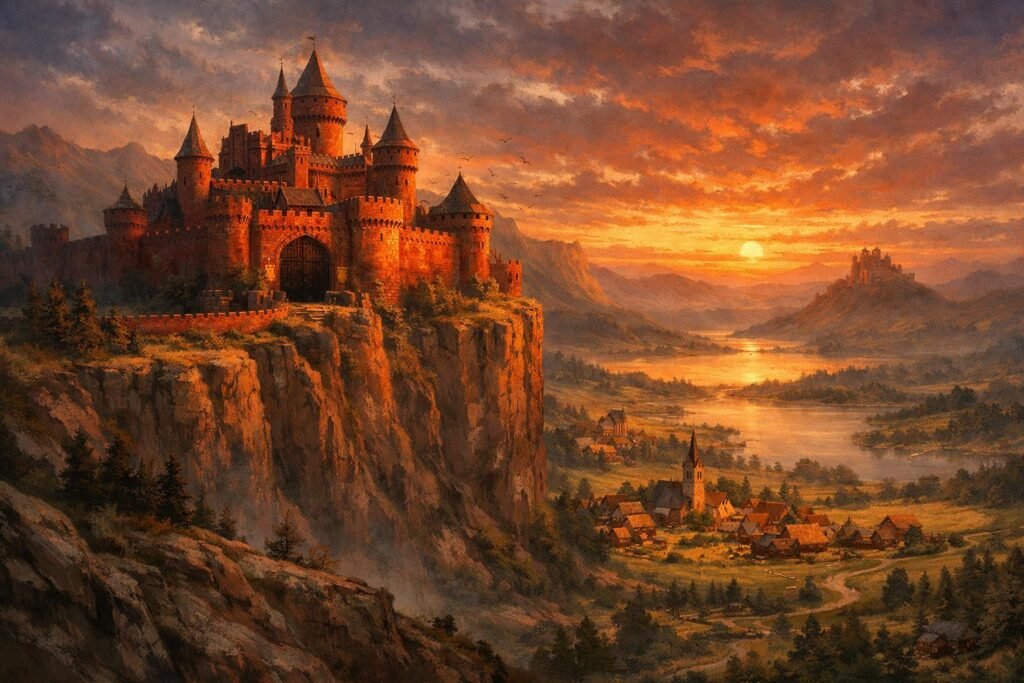
The Scandinavian Mirror: Wolfships vs. Historical Longships in Ranger’s Apprentice
Here is where the research gets messy and the “fantasy” element overrides the “historical” element for the sake of logistics. Skandia is Scandinavia (Norway, Sweden, Denmark). The Skandians are Vikings. They have the horned helmets (a historical inaccuracy Flanagan embraces for silhouette distinctiveness—real Vikings did not wear horned helmets in battle as they are a snagging hazard), the axes, and the raiding culture. But the primary point of contention is naval architecture.
The Wolfship Construction: The Wolfship is the Skandian answer to the Viking Drakkar or Longship. Flanagan describes them as having watertight compartments below deck, used for storage and—crucially—transporting horses. This description fundamentally breaks with the reality of Norse shipbuilding.
| Feature | Historical Viking Longship (e.g., Gokstad) | Flanagan’s Skandian Wolfship | Historical Verdict |
| Hull Construction | Clinker-built (overlapping planks), flexible hull designed to twist with waves. | Rigid enough to support bulkheads and heavy cargo. | Divergent: Real longships relied on flexibility; rigid bulkheads would cause the ship to break apart in heavy seas. |
| Decks | Open deck; sailors slept on the boards. Shallow draft meant no “below deck” space. | Raised deck with “watertight compartments” and space for horses below. | Impossible: A shallow-draft raider has no vertical clearance for a “below deck” stable. |
| Propulsion | Single square sail + Oars. | Single square sail + Oars. | Accurate: Flanagan respects the wind/muscle hybrid engine. |
| Horse Transport | Horses stood on the open deck, prone to panic and salt spray. Only specialized Knarrs carried livestock efficiently. | Horses are stabled below decks, safe from elements. | Fantasy Logistics: The book ignores the “panic factor” and center-of-gravity issues of horses below the waterline on a shallow ship. |
The Historical Reality Check: Transporting horses on open-deck longships was a logistical nightmare. The Vikings did it—bringing horses to Iceland, for example—but it required calm seas and arguably different vessels like the Knarr (a wider, deeper cargo ship) rather than the narrow raiding longships. A horse on a longship is a high center-of-gravity liability. If it panics, the ship tips. Flanagan’s Wolfships are essentially TARDIS-ships—externally Viking longships, internally 18th-century frigates with cargo holds. This modification is necessary for the story (heroes need to travel with their Ranger horses, Tug and Abelard), but it’s a distinct break from the historical realism the series otherwise courts.
The Gallican Fragmentation
Gallica is France. But not the unified France of the later medieval period. Flanagan depicts Gallica as a fractured mess of warring barons and warlords. This is actually highly historically accurate for the 10th-11th century post-Carolingian period. The central authority of the King in Paris was weak, and regional magnates (Normandy, Aquitaine, Burgundy) operated as de facto independent sovereigns.
The “knight” culture in Gallica is portrayed as arrogant, heavy, and ineffective against the mobile skirmishing of the Rangers—a foreshadowing of the Battle of Agincourt (1415), where French chivalry was dismantled by English longbows. Flanagan effectively uses Gallica as a foil to Araluen: Araluen is the “idealized” feudal state where nobles respect the commoners (mostly), while Gallica is the “cynical” reality where peasants are fodder.
The Arridi and the South
Arrida represents the Islamic world/North Africa and the Middle East during the Crusades. Flanagan avoids the religious conflict of the Crusades (Christianity vs. Islam) and instead focuses on cultural differences. The Arridi are depicted as scientifically advanced, culturally sophisticated, and honorable—mirroring the European perception of figures like Saladin. The Bedullin tribes are the Bedouin, nomadic desert dwellers. The Tualaghi bandits represent the chaotic elements of the desert, perhaps loosely based on Tuareg or specific bandit tribes, though the “blue veil” reference is a direct nod to the Tuareg people of the Sahara (often called the “Blue People” due to the indigo dye of their tagelmusts staining their skin).
2. The Ballistics of Araluen: Weaponry and Physics in Ranger’s Apprentice
The Ranger Corps is essentially a Special Operations Executive (SOE) grafted onto a medieval setting. Their equipment is fetishized in the books, described with the precision of a Tom Clancy novel. But does it hold up to physics?
The Longbow Mythos: Agincourt Physics vs. Saddle Archery
The Araluen Longbow is the defining weapon of the series. To understand why Will Treaty is so dangerous, we must understand the physics of the yew bow.
The Draw Weight Debate: The books cite draw weights around 80-100 lbs for a full Ranger. While this sounds impressive to a modern archer (where a hunting compound bow is ~60-70 lbs), historically, this is on the lighter end of the war bow spectrum.
- The Mary Rose Evidence: The war bows recovered from the Mary Rose (sunk 1545) had estimated draw weights of 100 lbs to 180 lbs.
- The Skeleton Deformation: We know these weights are accurate because the skeletons of English archers show “Os Acromiale”—a deformation of the shoulder blades caused by the immense skeletal stress of drawing such heavy weights from childhood. Flanagan’s Rangers, training from age 15, would realistically suffer from significant shoulder asymmetry.
The Saddle Problem:
Halt and Will frequently fire their longbows from the saddle.
Historical Verdict: Highly Improbable.
The English longbow is approximately 6 feet (1.8m) tall. To fire it effectively, you need a stable stance to engage the back muscles (latissimus dorsi).
- Clearance: On a horse, the lower limb of a 6-foot bow interferes with the horse’s neck or flanks. You cannot easily switch sides.
- Biomechanics: Drawing a 100lb bow requires a “push-pull” mechanic involving the entire upper body. Doing this while balancing on a moving platform (horse) without stirrups (or even with medieval stirrups) is exceptionally difficult.
- The Mongol Solution: The Temujai (Mongols) used recurved composite bows. These were shorter (easier to handle on horseback) and stored energy more efficiently per inch of limb, allowing for a powerful shot from a smaller package.
- Flanagan’s Cheat: Flanagan acknowledges this difference when discussing the Temujai , but he allows Rangers to use longbows mounted anyway. It creates a silhouette distinction (Ranger = Longbow), even if the physics demand a recurve for cavalry work.
The Arrow:
Flanagan mentions heavy arrows. In history, this would be the “quarter pound” arrow or a heavy ash shaft with a Bodkin point. The Bodkin was a needle-like tip designed not to cut, but to punch through mail armor and separate the rings. The Ranger’s ability to punch through Skandian shields or Gallican armor relies on this heavy mass. A lighter arrow (standard target arrow) would shatter on impact against a shield wall.
The Sax Knife Defense: Cinematic Flair vs. HEMA Reality in Ranger’s Apprentice
Every Ranger carries a double scabbard: a heavy Sax Knife (Seax) and a smaller throwing knife. The Technique: The “Double Knife Defense.” The Ranger crosses the two blades to catch an enemy’s sword stroke, twisting to lock the blade or disarm the opponent.
The Historical Seax: The Seax was a Germanic single-edged knife. The “Broken Back” Seax (Langseax) is the specific shape Flanagan likely envisions—a straight edge with a sharp angle on the spine. It was a sidearm, a tool, and a last-resort weapon. The metallurgy of the time often involved “pattern welding” (twisting rods of iron and steel together) to create a blade that was hard at the edge but flexible in the spine. Flanagan describes the Ranger knives as being made of a superior, secret steel—likely a nod to Wootz steel or Crucible steel, which was chemically superior to European pattern-welded steel of the era.
HEMA (Historical European Martial Arts) Analysis:
Blocking a two-handed broadsword or a heavy arming sword with two daggers is terrifyingly dangerous.
- Mass Disparity: A sword generates significant kinetic energy. Absorbing that energy on two short levers (wrists) without transferring it to the body is difficult. If a Knight swings a 3lb sword with full body rotation, catching it on two 1lb knives places immense shear stress on the defender’s wrists.
- The Cross Block: While “catching” a blade in an X-block is a staple of Hollywood, in reality, the sword can slide through the V, or the force can collapse the guard, driving the sword into the defender’s face.
- Range: To use knives against a sword, you must close the distance. The “Double Knife Defense” assumes the Ranger waits for the attack, blocks, and then counters. This is defensive suicide. The only viable strategy for knife vs. sword is aggressive grappling or entering the guard before the swing generates power.
Why it works in the book: It reinforces the Ranger ethos of speed and skill over brute strength. It frames combat as a puzzle to be solved (catch, twist, strike) rather than a bashing contest. It serves to distinguish the Ranger from the Knight; the Knight relies on the shield (passive defense), the Ranger relies on the intercept (active defense).
Camouflage Technology: The Ranger Cloak vs. Medieval Textiles
The Ranger cloak is described as “mottled gray-green,” shifting with the light to render the wearer invisible. Historical Context: Medieval dyeing technology used natural dyes (woad for blue, weld for yellow, madder for red). Achieving a complex, “mottled” or pixelated camouflage pattern would require sophisticated weaving techniques (like Jacquard, which didn’t exist) or hand-painting the fabric.
- The “Shadow” Effect: The books claim the cloak breaks up the silhouette. This is a valid military concept (disruptive coloration).
- The Reality: A solid green cloak (Lincoln Green) was historically associated with foresters, but mostly because it was a cheap, available dye. The “invisibility” cloak is pure fantasy tech—a D&D Cloak of Elvenkind grounded in pseudo-science. It represents the “superpower” of the Ranger without calling it magic. The idea that a single cloak works in forests, stone castles, and night settings defies the laws of optics; real camouflage is environment-specific (which is why modern armies have woodland, desert, and urban patterns).
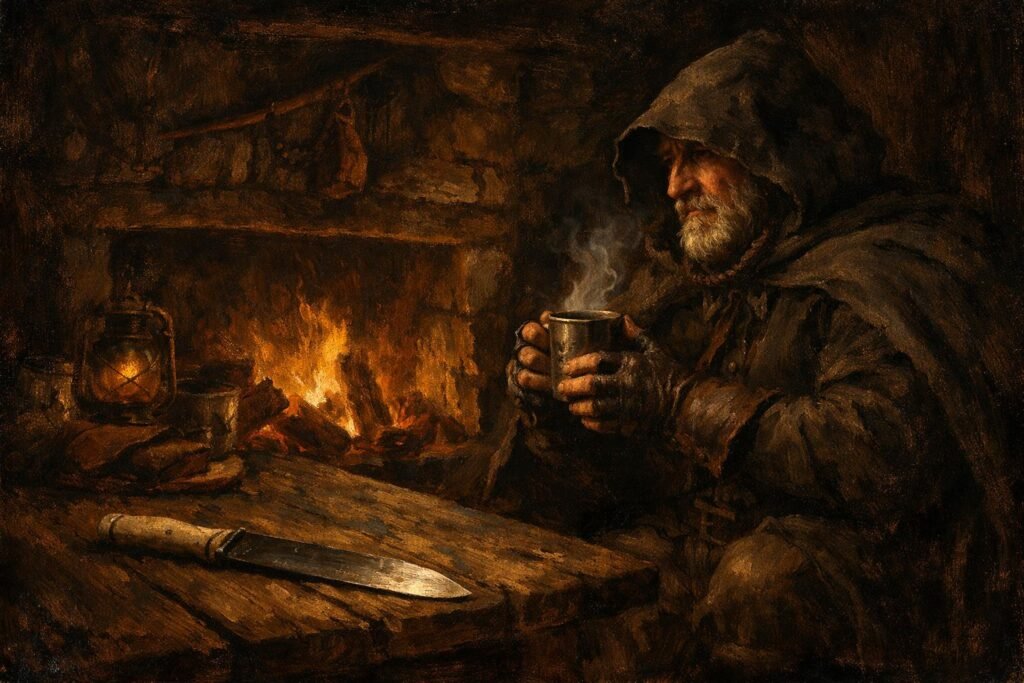
3. Tactical Doctrines of Ranger’s Apprentice: The Temujai and the Feigned Retreat
In The Battle for Skandia (and later The Return of the Temujai), Flanagan introduces the Temujai. These are the Mongols. The parallels are not subtle, but they are executed with high historical literacy, perhaps the highest in the series.
The Feigned Retreat: Legnica 1241 vs. Skandia
The tactical climax of Book 4 relies on the Skandians (Vikings) and Araluens (English) teaming up to fight the Temujai. The Tactic: The Temujai attack, then “panic” and retreat. The Skandians, hot-blooded and undisciplined, want to chase. Halt (the tactician) screams at them to hold the line.
Historical Parallel:
This is a direct reconstruction of the Battle of Legnica (1241) and the Battle of the Kalka River (1223).
The Mongols (led by Generals Subutai and Jebe) destroyed European armies repeatedly using the feigned retreat. European knights, conditioned to view retreat as weakness or a rout, would break formation to chase the “fleeing” enemy. The Mongols, who could shoot backward from the saddle (The Parthian Shot), would lead the disorganized knights into an ambush, turn around, and slaughter them.
In the book, Halt counters this by forcing the Skandians to act like a Phalanx or Shield Wall, refusing the bait. Flanagan essentially rewrites history: “What if the Europeans hadn’t been idiots in 1241?” He gives the “Viking” archetypes the discipline of a Roman Legion, guided by the strategic mind of a Ranger. It posits that intelligence and discipline can defeat superior numbers and mobility.
The Logistics of the Horde
Flanagan accurately depicts the Temujai logistical superiority:
- Multiple Horses: Each Temujai warrior rides with a string of remounts. This allows them to travel 60-100 miles a day, outmaneuvering any Western army. Western knights typically had a warhorse and a palfrey, but not the string system of the Steppe.
- Diet: They survive on mare’s milk and blood/dried meat (borts), requiring no baggage train. This contrasts sharply with the Araluen/Skandian need for supply lines.
- The Kaijin: The hierarchy of the Temujai (Khans, Generals) mirrors the Meritocratic structure of Genghis Khan’s army, where competence outranked bloodline (mostly).
By introducing the Temujai, Flanagan expands the world from a “European” fantasy to a “Eurasian” geopolitical simulation. It serves to show that the Araluens are not the apex predators of the world; there is always a bigger fish (or a faster horse archer).
4. The Bestiary That Vanished: Wargals, Kalkara, and the Pivot to Realism
There is a distinct “tonal fault line” in the series between The Burning Bridge (Book 2) and The Icebound Land (Book 3).
The “High Fantasy” Bait and Switch
In Book 1, The Ruins of Gorlan, the threats are strictly supernatural:
- Morgarath: A dark lord in a jagged mountain fortress (Mordor-lite).
- Wargals: Mindless foot soldiers, described as bear-human hybrids. They are the Orcs of the setting.
- Kalkara: Assassins with hypnotic eyes and matted fur that acts as armor.
This is standard Tolkien-lite fare. The Wargals are Orcs; the Kalkara are Trolls/Nazgûl hybrids.
However, once Morgarath is defeated, the monsters vanish. The series stops being about “Light vs. Dark” and becomes about Geopolitics.
- Book 3/4: Dealing with slavery, drug addiction (warmweed), and Mongol invasions.
- Book 5+: Sorcery is explicitly debunked as trickery (The Sorcerer in the North). The “Sorcerer” is just a guy with magnets and mirrors.
Why the pivot?
Flanagan realized that the strength of his writing wasn’t in creature design, but in tactical proceduralism. The Wargals were boring cannon fodder. Humans—treacherous barons, disciplined Skandian admirals, and calculating Temujai generals—were far more interesting. This shift allows the series to age with the reader. A 10-year-old reads for the monsters; a 14-year-old reads for the tactical analysis of a castle siege. The Wargals are retconned/softened into “an ancient race” that eventually fades, and the Kalkara are hunted to extinction.
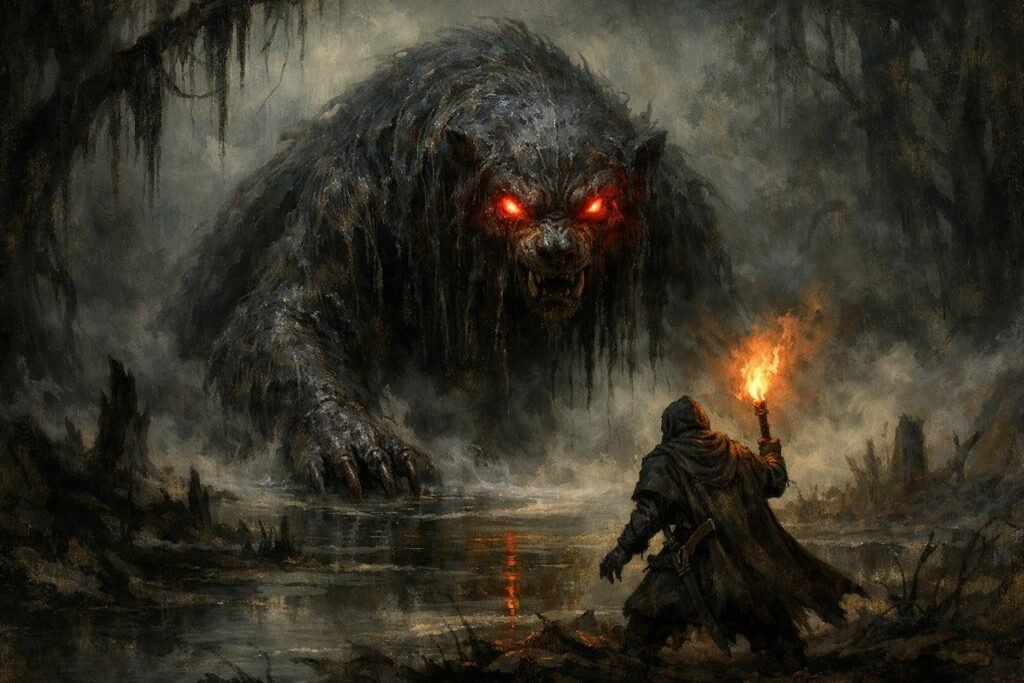
The Psychological Horror of the Kalkara
Despite their later absence, the Kalkara remain the most effective “horror” element in the series.
- The Hypnotic Gaze: This is the only overt “magic” that remains somewhat unexplained (though later books imply it might be a form of mesmerism or chemical paralysis, or perhaps infrasound).
- The Vulnerability: Their weakness to fire introduces a tactical element. You don’t “outfight” a Kalkara; you engineer a trap. This establishes the core Ranger methodology: Brain over Brawn. Will defeats the Kalkara not by being a better swordsman, but by using a flaming arrow. It is the thesis statement of the entire series.
5. The Anachronism Stew: Coffee, Stew, and Social Structures of Ranger’s Apprentice
Nothing defines Halt more than his sarcasm and his coffee addiction. “Just time for a mug of coffee in the meanwhile.”.
The Coffee Controversy
Halt’s relationship with coffee is one of the most beloved running gags in the fandom, but it represents a massive historical break.
The Controversy:
- Halt laces his coffee with honey.
- He considers milk in coffee an “abomination”.
- Crowley teases him for it.
The Historical Anachronism:
Ranger’s Apprentice is loosely set in the 12th-13th century (Longbows, chainmail, castles).
Coffee History:
- Coffee was discovered in Ethiopia (legend of Kaldi).
- It spread to the Middle East (Yemen/Sufi monasteries) by the 15th century.
- It did not reach Europe (Venice, then London) until the 17th century.
- In the 12th century, an Englishman (or Araluen) would be drinking ale, mead, or watered wine. They would have no concept of coffee. Even if they traded with Arrida (the Middle East), coffee cultivation hadn’t reached the scale for export to Northern Europe in this era.
Why include it?
It humanizes the Rangers. It gives them a “working class” or “detective” vibe. Halt is the noir detective, drinking sludge to stay awake on a stakeout. If he were drinking mead, he would just be a drunk. Coffee codes him as alert, professional, and modern. Flanagan ignores the agricultural impossibility (coffee doesn’t grow in England/Araluen) to service the Character Archetype. It is a deliberate, brilliant flaw in the world-building that endears the character to modern readers.
The Feudalism “Lite”
How does Araluen function economically?
The Fief System:
The 50 Fiefs are semi-autonomous. Each has a Baron (political/military) and a Ranger (Intelligence/Police).
The Check and Balance:
The Ranger reports to the Commandant, not the Baron. This is a crucial world-building detail. It prevents the Barons from becoming tyrants. The Rangers are the King’s “Internal Affairs” division.
The Missing Taxes:
We rarely see the peasantry paying taxes. The “cost” of the Rangers is hidden. In a realistic grimdark setting, the peasantry might resent the Rangers as tax collectors or spies. In Flanagan’s optimistic feudalism, they are universally loved protectors. This creates a “Cozy Fantasy” layer over the military simulation—the system works because everyone in charge (Duncan, Crowley, Arald) is fundamentally a good person.
6. The Storyteller’s Perspective: Blueprint for Worldbuilding on basis of Ranger’s Apprentice
If you are a writer, DM, or world-builder looking to learn from Flanagan, here is the blueprint:
1. The “Competence Porn” Factor
Flanagan’s characters are defined by their skills, not just their destinies. We watch Will learn to shoot. We watch him learn to sharpen a knife. We watch him learn to clean a stable.
Lesson: Show the work. Don’t just give the hero a magic sword; make them spend 50 pages learning the footwork. Readers love process. The training sequences in The Ruins of Gorlan are often cited as fan favorites because they validate the hero’s later success.
2. The Micro-Macro Balance of Ranger’s Apprentice
Flanagan balances the “Macro” (wars, invasions) with the “Micro” (making a stew, caring for a horse). The “Coffee Scenes” are not filler; they are pacing mechanisms. They allow the reader to breathe between battles and bond with the characters.
Lesson: If you have a chapter about a war, follow it with a chapter about a campfire. The stakes of the war only matter if we care about the people eating the stew.
3. Archetypal Remixing
He takes standard tropes and rotates them 15 degrees:
- Trope: The Wizard Mentor.
- Flanagan: Remove the magic. Give him a bow. Make him grumpy. (Halt).
- Trope: The Dumb Bully.
- Flanagan: Redeem him. Give him a sword. Make him the loyal tank. (Horace).
- Trope: The Damsel Princess.
- Flanagan: Teach her politics and logistics. Make her a ruler. (Cassandra/Evanlyn).
- Trope: The Evil Empire.
- Flanagan: Make them trade partners later (Skandia).
FAQ
Q1: Is the “Double Knife Defense” a real historical fighting style? A1: Technically, yes, but not as depicted. The combination of a dagger and sword (Rapier and Dagger) was common in the Renaissance. However, using two short knives (Sax and throwing knife) to block a heavy longsword or battleaxe is physically improbable and extremely dangerous. In HEMA terms, the lack of reach and leverage would make this a “last resort” tactic, not a primary fighting style. The force of a broadsword swing would likely collapse the “X” guard or break the defender’s wrists.
Q2: Why did John Flanagan stop writing about monsters like Wargals and Kalkara? A2: Flanagan shifted the series from “High Fantasy” to “Low Fantasy/Historical Fiction” to focus on realism and tactical storytelling. After Book 2, he realized that human antagonists (political rivals, foreign invaders) provided more complex narrative conflict than mindless monsters. He effectively debunked magic in The Sorcerer in the North, committing fully to a non-magical world.
Q3: Are the Araluen Rangers based on a specific historical unit?
A3: They are a composite of several historical and literary archetypes:
- The English Longbowmen: For their weaponry and impact on battle (Agincourt).
- The US Army Rangers / SAS: For their “Special Forces” role, camouflage, and small-unit tactics.
- The Royal Foresters: For their role as law enforcement in wilderness areas.
- Tolkien’s Rangers: For the “grim protector” aesthetic.
Q4: In what order should I read the Ranger’s Apprentice books? A4: Publication order is generally best, but chronological order offers a different experience :
- The Early Years (2 books) – Prequels focusing on Halt and Crowley.
- Books 1-4 (The main Will/Horace arc).
- Book 7 (Erak’s Ransom) – Chronologically takes place before Book 5.
- Books 5-6 (Will’s first command).
- Books 8-10 (The Outsiders/Nihon-Ja arcs).
- Book 11 (The Lost Stories) – Fills gaps.
- The Royal Ranger series – Sequel series following Will’s apprentice.

1 comment
Very interesting points you have remarked, thankyou for putting up. “The thing always happens that you really believe in and the belief in a thing makes it happen.” by Frank Lloyd Wright.