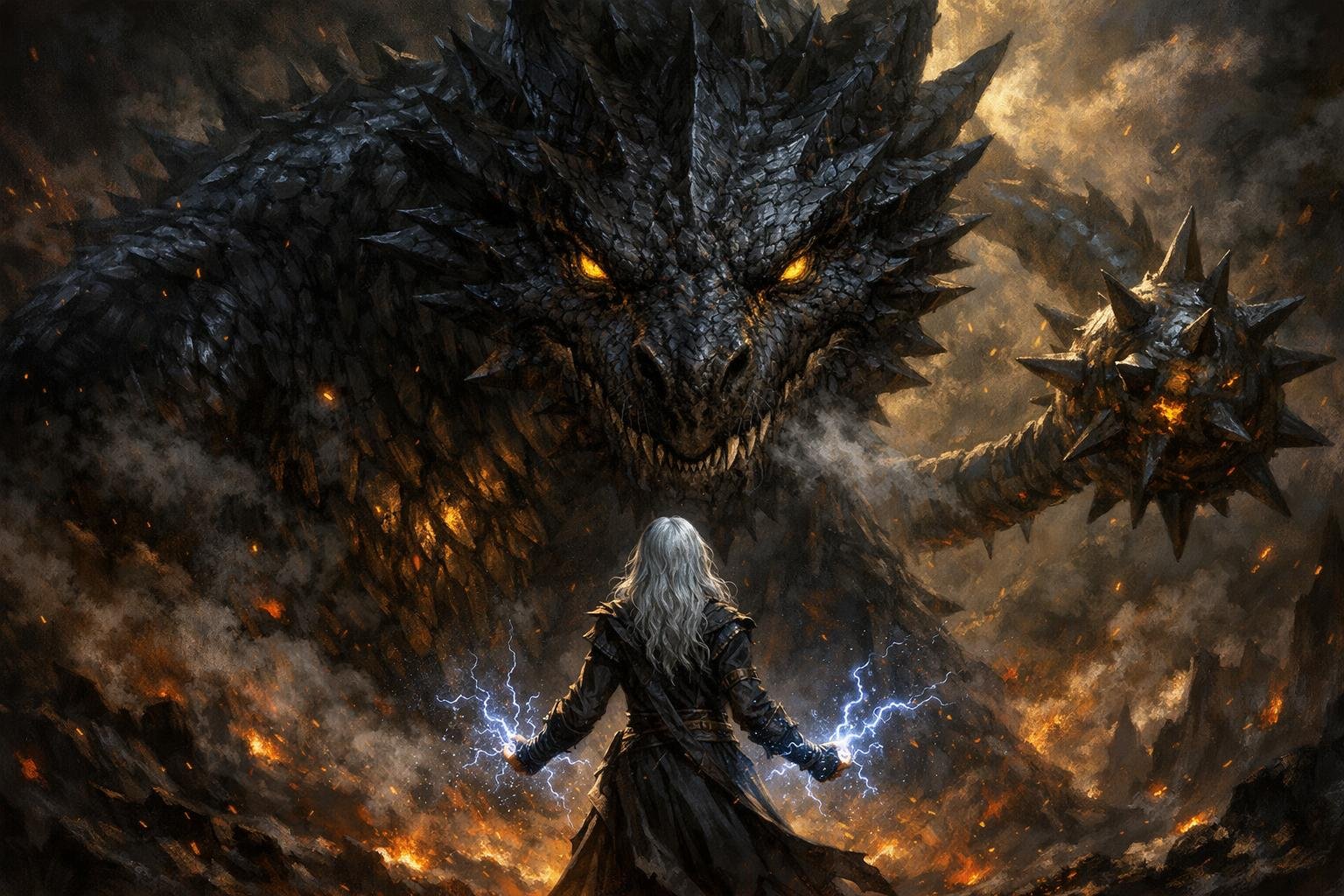
KEY TAKEAWAYS
- The “BookTok” Industrial Complex: Fourth Wing represents a total paradigm shift in publishing mechanics, where peer-to-peer algorithmic virality (>1 billion views) supersedes traditional marketing, creating a “grassroots” bestseller that moves units faster than global supply chains can manage.
- Spartan Brutality meets Modern Attrition: The Basgiath War College borrows heavily from the Spartan Agoge, specifically the concept of “culling” the weak, while mirroring the high-attrition rates of modern special forces selection (BUD/S), albeit with a fatality rate that defies military logic but serves the “Grimdark” aesthetic.
- Geography is Destiny: The Kingdom of Navarre is not just a cool name; it draws direct inspiration from the historical Kingdom of Navarre (824–1841), utilizing the defensive geography of the Pyrenees (mimicked by the fictional mountain ranges) to enforce isolationism and xenophobia.
- The Gaelic Connection: The nomenclature of the Empyrean series is rooted in Scottish Gaelic (Basgiath = Death Wing, Tairn = Thunder), providing a linguistic texture that grounds the high fantasy in ancient Celtic etymology, despite ongoing debates regarding pronunciation accuracy.
- The McCaffrey Inheritance: While modern readers cite Divergent, the series’ genetic code is deeply indebted to Anne McCaffrey’s Dragonriders of Pern (1968), particularly regarding telepathic bonding, mating flight-induced lust, and the defense against an aerial, mindless scourge (Thread vs. Venin).
- Disability as a Plot Driver: Violet Sorrengail’s condition (modeled on Ehlers-Danlos Syndrome) deconstructs the “Chosen One” trope by requiring physical accommodation rather than magical cures, reflecting the author’s own lived experience as a “zebra” (a medical term for rare conditions).
1. THE ROMANTASY INDUSTRIAL COMPLEX: ALGORITHMIC VICTORY
Let’s be honest with ourselves: The publishing industry didn’t see Fourth Wing coming. They were too busy looking at spreadsheets from 2019 and wondering why celebrity memoirs were tanking. Meanwhile, Rebecca Yarros and the team at Red Tower Books (an imprint of Entangled Publishing) were busy engineering a nuclear weapon of viral marketing. This isn’t just a book success story; it’s a case study in how the “Romantasy” genre—a frankenstein monster of high-stakes fantasy and open-door romance—has devoured the literary market whole.
The landscape of the 2020s has been irrevocably altered by the rise of “BookTok,” a corner of TikTok where emotional engagement is the primary currency and the algorithm feeds on tears. When Fourth Wing launched in May 2023, it didn’t rely on the polite, tea-sipping reviews of the New York Times or the London Review of Books for its initial traction. It didn’t need them. It had something better: an army of Gen Z readers screaming into their phone cameras.
The Metrics of Hysteria
To understand the scale of this, you have to look at the numbers, which are frankly obscene. The hashtags #FourthWing and #RebeccaYarros have accumulated over one billion views combined. That’s not a typo. That’s a billion eyeballs on content that is largely user-generated. This isn’t passive consumption; it is active, performative readership. Snippets like “I read this in 24 hours and I’m not okay” became the standard unit of critical analysis. In this ecosystem, the quality of the prose is secondary to the “Emotional Damage” quotient.
The commercial velocity of Fourth Wing was such that it stayed on The New York Times bestseller list for 18 weeks, forcing the publisher to scramble for reprints like they were printing money—which, effectively, they were. This supply chain failure, where even Amazon—the logistics god-emperor of the modern world—couldn’t keep stock, added to the mystique of the object itself. The sprayed edges (a cosmetic feature of the first print run featuring dragons on the page ends) became a status symbol, trading at inflated prices on secondary markets like eBay and Mercari. It proved that the physical book had returned as a fetish object for Gen Z, a talisman of belonging to the “In Crowd”.
The Grassroots Illusion
Critically, this success was touted as “grassroots” because it was driven by peer-to-peer recommendation rather than a Super Bowl ad spend. But let’s look closer at the mechanics. The “grassroots” nature is facilitated by the algorithm’s preference for high-emotion content. A creator crying over a plot twist engages viewers more effectively than a nuanced critique of the world-building economics. Fourth Wing was engineered—consciously or subconsciously—to feed this machine.
The “spicy” scenes (industry slang for erotica), the cliffhangers at the end of every chapter, and the enemies-to-lovers tropes are all highly clippable content. Historically, this mirrors the serialization craze of the 19th century. Authors like Charles Dickens or Alexandre Dumas wrote hook-heavy chapters to drive weekly magazine sales. Today, the “weekly installment” is the 60-second video review. Yarros, having originally conceived the Empyrean as a three-part series, swiftly signed a lucrative five-book deal following this reception. The market dictated the length of the saga.
The upcoming release of Onyx Storm (January 21, 2025) is already pre-ordained to dominate charts, not because of critical consensus, but because the algorithmic community requires the next installment of content to keep the engagement farming alive. It is also worth noting that Fourth Wing has lifted the entire “Romantasy” subgenre, increasing market share by 41.3% in the UK alone. This rising tide has floated other boats, but it has also arguably homogenized the fantasy shelf. Publishers are now hunting for the “next Fourth Wing“—meaning books with dragons, romance, and easily digestible lore—rather than experimental or dense high fantasy.
Comparative Market Analysis
To visualize just how dominant this trend is, we can compare the impact of Fourth Wing against other literary juggernauts of the era.
| Metric | Fourth Wing (Yarros) | Spare (Prince Harry) | It Ends With Us (Hoover) |
| Primary Driver | BookTok / Algorithmic Viral Loops | Celebrity Scandal / PR Tour | BookTok / Emotional Word of Mouth |
| Engagement | >1 Billion Views on Hashtags | High Traditional Media Coverage | High Social Engagement |
| Sales Impact | 41.3% increase in Fantasy subgenre | 97.2% drop in Royal Bio sales post-launch 12 | Box Office Movie ($351M) |
| Format Value | Sprayed Edges = High Resale Value | Standard Hardcover | Paperback Dominance |
| Longevity | 18+ Weeks NYT Bestseller | Flash in the Pan | Multi-Year Tail |
The takeaway here is brutal but true: Celebrity is dead. Community is king. Prince Harry wrote a book and it sold well for a minute, then crashed the genre. Yarros wrote a book about dragons and sex, and she built an empire.
2. BASGIATH AND THE SHADOW OF SPARTA: MILITARY DOCTRINE VS. FANTASY ATTRITION
At the heart of Fourth Wing lies the Basgiath War College, a brutal institution carved into a mountain where candidates either graduate or die. The premise is simple and echoed by the dragons themselves: “A dragon without its rider is a tragedy. A rider without their dragon is dead”. This binary outcome serves the narrative tension well, but it draws awkwardly—and fascinatingly—from real-world military history and ancient myth.
The Agoge: The Ancient Blueprint
The clearest historical parallel to Basgiath is the Spartan Agoge, the rigorous education and training program mandated for all male Spartan citizens (except the firstborn son in the ruling houses). The Agoge was designed to strip the individual of identity and forge a collective weapon. In Basgiath, the “Conscription Day” ritual, where candidates must cross the deadly “Parapet”—a narrow stone bridge 200 feet in the air—serves as a crude filtration system.
In Sparta, the weak were allegedly discarded at the apothetae (a chasm on Mount Taygetus) shortly after birth, though archaeological evidence for this is debated by historians. In Basgiath, the culling happens at age 20. The “Parapet” kills 15–20% of candidates on day one. This aligns with the Spartan ethos of survival of the fittest but diverges wildly from military logic. No functional military, even in a resource-scarce environment, would waste 20% of its potential officer corps on a balance beam test before training has even begun. This is “Grimdark” aesthetic overriding tactical sense.
The “Gauntlet,” an obstacle course featuring a vertical “chimney” climb and a ramp, serves as the final exam for admission to the skies.This echoes the modern Ninja Warrior course but finds its roots in the obstacle courses of the French military parcours du combattant developed by Georges Hébert, which influenced modern parkour and military training. However, the Basgiath version includes lethal consequences for failure, returning to the Spartan “win or die” mentality.
The “Parapet” Paradox
Let’s talk about the physics of the Parapet for a second. It is described as a stone bridge, 18 inches wide, suspended 200 feet in the air, subject to high winds and rain.
“The rain lashes against stone. Thunder rumbles in the distance… Violet Sorrengail takes a breath and steps onto the parapet”.
From a structural engineering standpoint, a stone bridge of that length and thinness without support arches is impossible. But we suspend disbelief because dragons.
From a strategic standpoint, it’s madness. Navarre is fighting a losing war against Venin. They are desperate for riders. Yet, they kill off able-bodied recruits who might have excellent tactical minds or magical potential simply because they have bad balance or wrong shoes. It’s a recruitment strategy that makes the First Order’s Stormtrooper program look like Mensa.
However, it serves the “Dark Academia” trope perfectly. It establishes the stakes immediately: You are not safe here.
Modern Special Forces: The BUD/S Connection
Yarros, an Army wife whose husband served as an Apache pilot0, injects modern US military culture into the fantasy setting. The structure of “Wings,” “Squads,” and “Wingleaders” mimics the US Air Force and Army aviation structures. The “Riders Quadrant” is essentially Top Gun with scales.
The high attrition rate at Basgiath draws comparisons to the United States Navy SEALs selection course (Basic Underwater Demolition/SEAL or BUD/S), specifically “Hell Week.” Attrition rates in BUD/S can exceed 70-80%.
However, in BUD/S, candidates who “ring the bell” (quit) are returned to the fleet (the regular Navy), not executed or allowed to fall to their deaths (usually).
In Basgiath, “Death is the only way out” unless you graduate. This creates a high-stakes environment where loyalty is forged in trauma.
| Feature | Basgiath War College | Spartan Agoge | US Navy SEALs (BUD/S) |
| Selection Age | ~20 Years Old | 7 Years Old | 18-29 Years Old |
| Primary Cull | The Parapet (Bridge) | Exposure / Cryptia | Hell Week |
| Attrition Rate | High (~20% Day 1 fatality) | Universal (Total Socialization) | ~75-80% Drop Rate |
| Fate of Failures | Death (Falling/Burning) | Social Ostracization (Tremblers) | Return to Fleet |
| Objective | Dragon Riders (Air Superiority) | Hoplites (Heavy Infantry) | Special Operations |
The “Forever War” Critique
The narrative voice of Violet Sorrengail is distinctly that of a modern military insider. She speaks of “Deployment,” “Briefs,” and “Chain of Command.” This is the “Army Brat” influence. Yarros admits that the “War College” setting was chosen to explore themes of government control, imperialism, and the sanitized history taught to cadets.
The text explicitly critiques the military-industrial complex of Navarre.
“One generation to change the text. One generation chooses to teach that text. The next grows, and the lie becomes history”.
This line suggests a cynicism toward institutional narratives that is common in post-War on Terror literature. The cadets are fighting a war they don’t understand, based on intelligence that is compartmentalized or falsified. This reflects the disillusionment of the “forever wars” (Iraq/Afghanistan), where Yarros’s husband served.
The “Venin” (energy-draining sorcerers) represent an existential threat that the leadership (General Sorrengail) hides from the populace to maintain order—a clear parallel to classified threat assessments and the management of public perception in modern warfare. The leadership would rather let civilians die than admit the threat is real and they are losing.
3. LINGUISTICS AND GEOGRAPHY: THE GAELIC-IBERIAN FUSION
The world-building of Fourth Wing is a hybrid of specific European historical references, blending the geography of Spain with the etymology of Scotland. It’s a cultural mashup that works surprisingly well, even if it drives linguists up the wall.
The Kingdom of Navarre: Not Just a Cool Name
The setting is explicitly named “Navarre.” This is not a subtle nod; it is a direct appropriation of the Kingdom of Navarre, a medieval Basque kingdom that existed from 824 to 1841. The historical Navarre occupied the lands on both sides of the western Pyrenees, straddling modern-day Spain and France.
- Geography is Destiny: The historical Navarre was a mountain kingdom, defined by its rugged terrain and strategic passes. In Fourth Wing, Navarre is similarly mountainous, protected by its geography from the “Barrens” and the Griffin riders of Poromiel. The “defensive mountains” trope is a direct lift from the Pyrenees, which historically protected the Iberian peninsula from northern invasions (and vice versa).
- Isolationism: Historical Navarre was often caught between the powerful kingdoms of Castile, Aragon, and France, forcing it into a defensive and often diplomatic crouch. Fictional Navarre has taken this to the extreme, sealing its borders with magical “Wards” to keep out the Venin.
- Cultural Texture: Readers have noted references to “Montserrat” (a famous mountain and monastery in Catalonia, Spain) and the use of the term “Riders Quadrant,” which echoes the military organizations of European powers. The use of “Navarre” specifically evokes a sense of ancient, proud independence—a small kingdom holding out against a larger, wilder world.
The Gaelic Controversy
While the geography is Iberian, the naming convention is distinctly Scottish Gaelic. This creates a cultural dissonance that is typical of modern fantasy, which treats European heritage as a buffet. Yarros used Gaelic to give the dragons and ancient places a sense of “Old World” magic.
- Basgiath: Derived from the Gaelic Bàs (Death) and Sgiath (Wing). It translates literally to “Death Wing,” which explains the book’s title and the lethal nature of the college.
- Tairn: The black morningstar tail dragon bonded to Violet. The name is derived from Tairneanach, meaning “Thunder” in Gaelic. This aligns with his signet power of lightning.
- Sgaeyl: Xaden’s blue dragon. A phonetic spelling of Sgàil, meaning “Shadow”. This foreshadows Xaden’s ability to wield shadows.
- Andarna: The golden feathertail. Derived from An dàrna meaning “The Second” or An dàrna urram meaning “The Second Honor”. This has sparked endless Reddit theories about her being a second distinct breed or having a second signet.
- Deigh: Liam’s dragon. Means “Ice”.
- Teine: Mira’s dragon. Means “Fire”.
This “Easter Egg” naming strategy rewards deep reading but has led to criticism regarding pronunciation. Yarros has clarified pronunciations (e.g., “Bas-guy-ith”) that do not strictly adhere to Gaelic phonetics, leading to friction with native speakers who view it as aesthetic appropriation without linguistic respect. The author admits to using online translators for some names, which explains the direct, sometimes clunky literal translations. It’s a classic case of “Fantasy Gaelic”—it looks right on the page, even if it sounds wrong in the Highlands.
The Map and the Territory
The map of the Continent, featuring Navarre and Poromiel separated by mountains and rivers, plays a crucial role in the story.
- Navarre: The walled garden. Safe, militaristic, resource-rich, but authoritarian.
- Poromiel: The wild lands. Griffin riders (lower magic), textile traders, constantly raided by Venin.
- The Barrens: The wasteland where magic has been drained.
This setup mirrors the “Civilization vs. Barbarians” trope found in Roman history (Rome vs. Germania) or Game of Thrones (The Wall). The “Wards” that protect Navarre are essentially a magical Hadrian’s Wall. The conflict drives the plot: Is it moral to hide behind a wall while your neighbors are slaughtered? Violet’s journey is realizing that her country (Navarre) are the bad guys for hoarding safety.
4. STANDING ON THE SHOULDERS OF GIANTS (AND DRAGONS)
To understand Fourth Wing, one must acknowledge the giant upon whose shoulders it stands: Anne McCaffrey. While Yarros cites her own military experience, the structural bones of the series are lifted from the Dragonriders of Pern series, specifically Dragonflight (1968).
The Pern Connection: The Original Code
McCaffrey practically invented the modern dragon rider. Before her, dragons were monsters to be slain (Smaug, Fafnir). McCaffrey made them partners.
- The Bond: McCaffrey pioneered the concept of the telepathic, life-long bond between dragon and rider. In Pern, this is called “Impression.” In Fourth Wing, it is “Threshing” or “Bonding.” The mechanic is identical: the dragon chooses the rider, they speak telepathically, and the death of one usually causes the suicide or madness of the other.
- The Mating Flight: In Pern, when a Queen dragon rises to mate, the riders of the male dragons pursuing her are swept up in the telepathic lust. The rider of the winning male dragon inevitably has sex with the Queen’s rider. Fourth Wing utilizes this exact trope. When Tairn and Sgaeyl (a mated pair) channel their lust, Violet and Xaden feel it. “My lungs only fill when hers do,” Xaden says, mirroring the symbiotic intensity of McCaffrey’s riders. This removes the “consent” barrier in a way that allows the “enemies” to become “lovers” through biological imperative—a staple of the romance genre.
- The Threat: Pern is threatened by “Thread,” a mindless, mycorrhizoid spore that rains from the sky and devours organic matter. Riders must burn it out of the air. In Fourth Wing, the threat is the “Venin” and their Wyvern, who drain the life/magic from the earth. Both threats are existential, aerial, and require a standing air force to combat.
- The Hierarchy: Pern has Weyrs; Navarre has Quadrants. Both are semi-autonomous military societies that operate outside the normal laws of the land, often leading to friction with the civilian holders/lords.
| Trope | Dragonriders of Pern (1968) | Fourth Wing (2023) |
| Bonding | “Impression” at hatching | “Threshing” in the wild |
| Telepathy | Full mind-to-mind speech | Full mind-to-mind speech |
| Sexuality | Mating flights induce rider sex | Mating flights induce rider lust/sex |
| Enemy | Thread (Spores from space) | Venin (Magic-draining sorcerers) |
| Dragons | Genetically engineered, benevolent | Wild, curmudgeonly, sarcastic |
The Divergent/Hunger Games Overlay
While Pern provides the dragons, the structure of the school is pure 2010s YA Dystopia.
- Sorting: The division into Quadrants (Riders, Scribes, Healers, Infantry) mirrors the Factions of Divergent (Dauntless, Erudite, etc.) or the Houses of Harry Potter.
- The “Other” Girl: Violet Sorrengail fits the Katniss Everdeen / Tris Prior archetype: physically smaller, underestimated, but possessing a unique “grit” or special power that disrupts the system. “I will not die today” is her mantra, echoing the survivalist internal monologues of Katniss.
- The Byronic Hero: Xaden Riorson is a classic Byronic Hero—brooding, scarred, morally grey, with a dark secret (the rebellion relics). He is Mr. Rochester with wings. He is Rhysand from ACOTAR with a military rank.
Genre Evolution: From Fantasy to Romantasy
The critical distinction between Pern and Fourth Wing is the centering of the romance. McCaffrey wrote Science Fiction (technically) where the romance was a subplot to planetary survival. Yarros writes Romance where the planetary survival provides the stakes for the relationship.
The dragons in Fourth Wing are also distinct in their attitude. Pernese dragons are generally benevolent (“Golden Retrievers with wings”). Yarros’s dragons are “curmudgeons,” sarcastic, and violent. Tairn’s lines like “Should I get the Wingleader?” or “I chose you not as my next, but my last” serve to validate the protagonist’s worth and provide comic relief. They act as the “Sassy Gay Friend” or “Grumpy Mentor” stock characters in dragon form.
This shift allows for the “Cozy Fantasy” elements to bleed into the high stakes. Tairn is not just a weapon; he is a character who judges Violet’s sex life. “Quit telling Sgaeyl about my sleep habits,” Violet grumbles.It creates a relatable, modern dynamic amidst the carnage.
5. THE FRAGILE RIDER: DECONSTRUCTING THE CHOSEN ONE
Perhaps the most significant deviation from standard fantasy tropes in Fourth Wing is the protagonist’s physical condition. Violet Sorrengail suffers from chronic pain, joint subluxations, and fragile connective tissue. While the book does not name it, Yarros has confirmed this is Ehlers-Danlos Syndrome (EDS), specifically the hypermobile type (hEDS), a condition the author and her children live with.
The Zebra in the Room
In traditional fantasy, physical frailty is usually cured by magic (e.g., Avatar, Iron Man extremism, or magical healing potions). Or, the disability is a superpower in disguise (the “Daredevil” trope).
Violet’s disability is not cured. Her joints pop out during sparring; she requires special accommodations (a custom saddle) to stay on Tairn. The text emphasizes that she cannot simply “get stronger” in the traditional sense; she has to get smarter. “My ligaments that hold my joints together don’t work for shit”.
- The Saddle as Accommodation: The plot point regarding the saddle is crucial. It represents the “social model of disability”—the idea that the impairment is not the problem, but society’s lack of accommodation is. Once Violet has the saddle (an assistive device), she becomes an elite rider. She doesn’t need to be fixed; she needs a strap.
- Representation: For the chronic illness community, lines like “My hair is the only thing about me that’s perfectly healthy” resonate deeply. It validates the experience of the “invisible illness” within a power fantasy. Violet wraps her knees. She manages pain. She counts spoons (metaphorically).
The “Plot Armor” Criticism
However, critics argue that the “brutal” nature of Basgiath contradicts this representation. If the school kills the weak, Violet should have died on day one. Her survival relies heavily on “Plot Armor” (and Xaden’s protection), which somewhat undermines the message of self-reliance.
Yet, within the logic of the story, her survival is attributed to her mind—her training as a Scribe allowed her to poison opponents she couldn’t beat physically. This “Brain over Brawn” arc satisfies the reader’s desire to see the underdog win, even if the military logic of allowing a cadet to poison others is questionable at best.
“You look all frail and breakable, but you’re really a violent little thing, aren’t you?” Xaden asks. This fetishization of her fragility combined with her lethality is the core of the romance dynamic. It allows her to be protected (which is sexy) but also dangerous (which is empowering).
THE STORYTELLER’S PERSPECTIVE
Look, let’s cut the noise. Fourth Wing isn’t rewriting the code of literature; it’s remixing the hits. You’ve got the brooding shadow-daddy from A Court of Thorns and Roses, the dragon bonds from Pern, the lethal school from Ender’s Game or Divergent, and the military grit from a writer who actually knows what a Deployment feels like.
It works not because it’s original, but because it’s efficient. It delivers the dopamine hits of a romance novel with the high-stakes set dressing of epic fantasy. Yarros understands that in 2024, a reader doesn’t just want to read about a dragon; they want to feel the wind shear and the sexual tension in the same chapter.
The historical cherry-picking—Spartan cruelty, Gaelic names, Spanish geography—is just that: flavoring. It gives the world a texture of “realism” that allows the reader to suspend disbelief when the dragons start talking like grumpy uncles. It’s pragmatic storytelling for a generation that consumes content in vertical video formats. Is it “Deep Literature”? No. Is it a masterclass in giving the people exactly what they didn’t know they were starving for? Absolutely.
FAQ: THE FOURTH WING DOSSIER
Is Basgiath War College based on a real place?
While the physical structure is fictional, the training doctrine heavily references the Spartan Agoge (the rigorous education of ancient Spartan citizens) and modern US military special forces selection processes like the Navy SEALs’ BUD/S. The “Parapet” crossing mimics extreme height exposure tests, though the fatality rate (15-20% on day one) is purely a fantasy exaggeration of “weeding out the weak”
What language are the dragon names in Fourth Wing derived from?
The names are derived from Scottish Gaelic.
Andarna comes from An dàrna (The Second).Author Rebecca Yarros admits to using translation tools, which has led to some debate regarding correct pronunciation among native Gaelic speakers.7
Tairn comes from Tairneanach (Thunder).
Sgaeyl comes from Sgàil (Shadow).
Basgiath comes from Bàs (Death) + Sgiath (Wing).
Does Violet Sorrengail have a real medical condition?
Yes. Although not named in the text, Rebecca Yarros has confirmed Violet has Ehlers-Danlos Syndrome (EDS), specifically the hypermobile type. This genetic connective tissue disorder causes joint instability, chronic pain, and easy bruising. Yarros and her children also have this condition, making Violet’s struggle for physical accommodation a personal reflection of the author’s life
Why is the kingdom called Navarre?
The name is taken from the historical Kingdom of Navarre, a medieval Basque kingdom (824–1841) located in the Pyrenees mountains between modern-day Spain and France. The book parallels the real Navarre’s mountainous, defensive geography to explain the fictional kingdom’s isolationist policy and ability to ward off invasions
Is the “Mating Flight” original to Fourth Wing?
No. The concept of dragons mating in the air and their riders sharing the sensations (and often having sex as a result) was popularized by Anne McCaffrey in the Dragonriders of Pern series, starting with Dragonflight in 1968. Yarros modernized this trope to fit the “fated mates” dynamic of contemporary romance

2 comments
Wow, that’s what I was exploring for, what a data!
present here aat this weblog, thanks admin of this site.
This data is awesome! Looking to incorporate it into a rhetorical analysis for an assignment.
Do you happen to have sources, especially for the data?