Listen, the 2026 fantasy trends is a meat grinder. If you’re still trying to sell a “chosen one” saving the world from a generic dark lord, you’re shouting into a void filled with AI-generated filler. Readers have matured; they’re looking for “meat”—stories that smell like the mud of 18th-century France and magic that feels like a tool for surveillance rather than a plot device. As the “Sage-Rebel” team, we need to bite into these trends with enough cynicism to stay honest and enough expertise to provide real value. Here is your 2026 roadmap.
Key Takeaways
- The Pivot to Inward Stakes: Global crises are out; personal, psychological stakes are in. Readers want introspection and authenticity over epic battles.
- Historical Accuracy+: Authenticity is the new “cool.” Using niche historical facts as narrative hooks is essential for 2026 world-building.
- The Death of the “Shadow Daddy”: The market is shifting toward “Failed Dark Lords” and subverted tropes—think cozy settings with sharp, cynical edges.
- Physical Fetishization: Deluxe editions with sprayed edges and physical artifacts are the only way to compete with digital formats.
The “Inward Stakes” Pivot: Why Small is the New Big
In 2026, the fantasy market is undergoing a silent but brutal revolution. Google Trends and industry reports show a massive shift toward “inward stakes”. People are exhausted by global crises in the real world, so they’re looking for internal conflict in their fiction. Instead of another army of orcs, they want to read about an AI having a breakdown or a wizard who failed at being a villain and now has to manage a cat shelter.
| 2026 Market Trend | Mechanism | Copywriting Implication |
| Inward Stakes | Conflict shifts from global survival to psychological integrity. | Market “messy” heroes who avoid traditional heroism. |
| Historical Accuracy+ | Deep blending of verified history with dark lore. | Use obscure 18th-century medical or military facts as hooks. |
| Cozy Subversion | Saccahrine settings meet cynical humor or horror. | Contrast “cute” aesthetics with “brutal” realities. |
| Physical Artifacts | Growth in deluxe editions and sprayed edges. | Focus on “book porn” aesthetics in visual marketing. |
Case Study: The Red Winter – Blood, History, and Sarcastic Demons
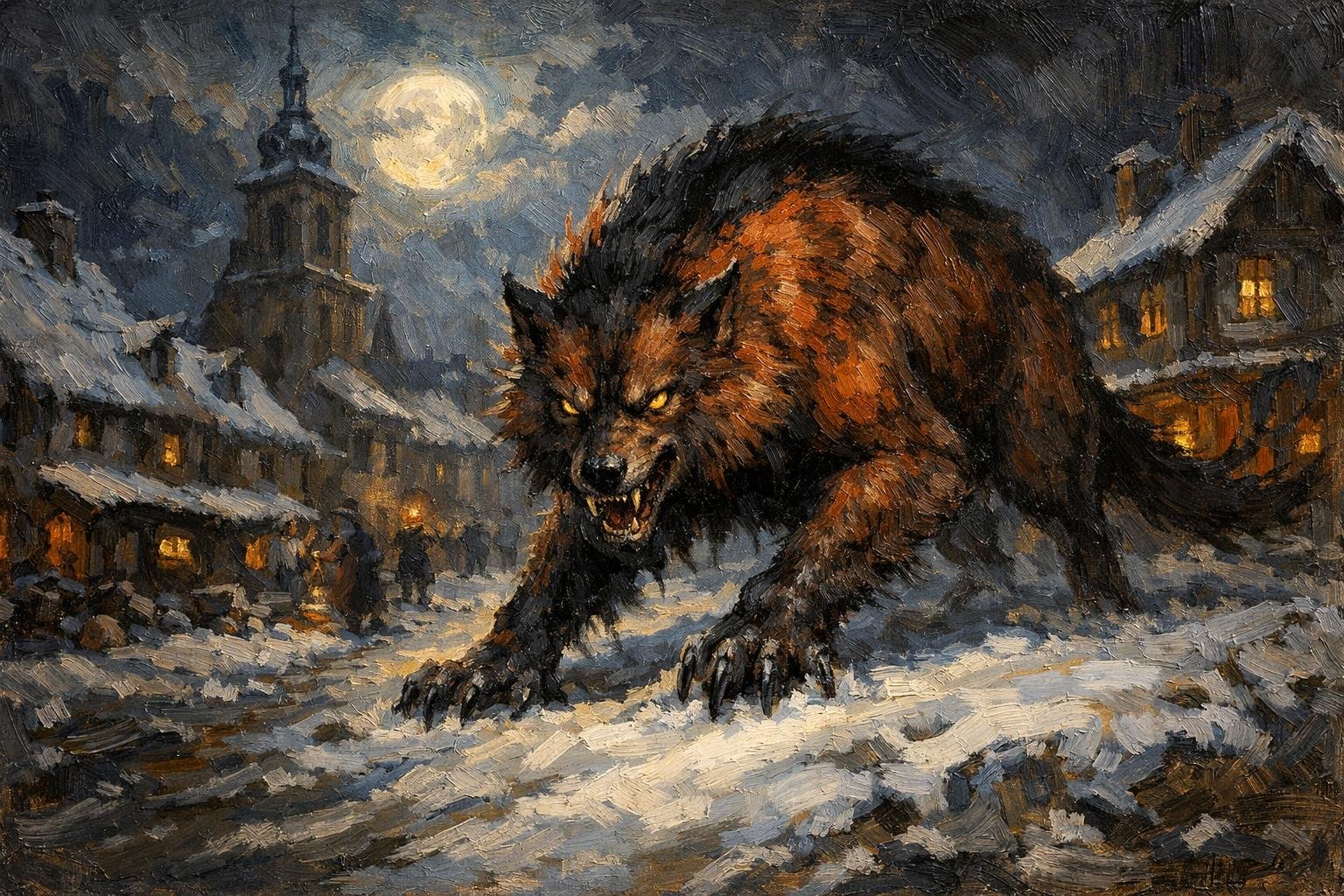
If you want “catchy and current,” Cameron Sullivan’s The Red Winter (February 2026) is your lead player. Sullivan takes the historical legend of the Beast of Gévaudan and turns it into a queer, blood-soaked treatise on guilt and power .
Lore and World-building: The Non-Wolf of Gévaudan
Modern world-building often fails because it lacks foundations. Sullivan builds on the 1764-1767 “Beast” attacks—the first international media frenzy . The protagonist, Professor Sebastian Grave, shares his body with a demon named Sarmodel, and their relationship is one of pure, cynical pragmatism. The narrative cuts between three timelines: 1425 (Joan of Arc), 1766 (the first hunt), and 1785 (the eve of the Revolution).
Strategic Hook: “Did you know King Louis XV sent 30,000 men to kill one wolf? Spoiler: they failed, and the Beast kept eating. Forget sparkly werewolves; in 1785, the monster wants your throat, and the only guy who can stop it has a demon in his gut that takes payment in living hearts” .
The Technical Edge: Muskets and Bishops
Sullivan uses the failure of technology as a tension builder. The muskets of 1764, like the Charleville 1763, were notorious for failing in the cold . This isn’t just “fantasy flavor”—it’s a technical constraint that makes the monster more terrifying. Add in Bishop Gabriel-Florent de Choiseul-Beaupré, who declared the Beast a “divine plague” to control the masses, and you have a perfect story about how power uses fear.
Katherine Arden and the Realpolitik of Unicorns
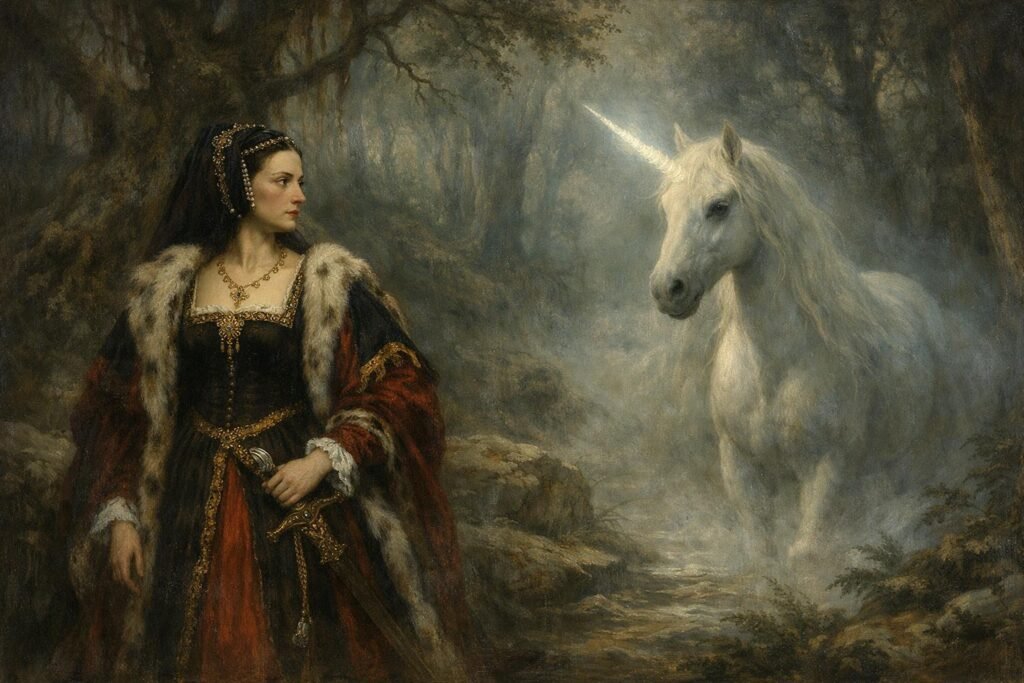
Katherine Arden’s The Unicorn Hunters (June 2026) deconstructs the most tired myth in the genre . Set in 15th-century Brittany, the story follows Anne of Brittany as she navigates a forced marriage to the King of France.
Mythology as a “False Flag”
In Arden’s world, unicorns aren’t magical pets—they are a ruse. Anne organizes a unicorn hunt in the legendary forest of Brocéliande because the forest is “inimical to divination” (it’s magic-proof) . She needs a place where French spies cannot use magic to watch her so she can secretly betroth herself to an enemy . This is “Sage-Rebel” world-building: magic as an analogue for NSA surveillance and unicorns as a distraction for idiots.
The Screen in 2026: Intelligence is Finally Sexy
Hollywood is betting on “Literary DNA” in 2026. Genery sequels are out; smart adaptations are in.
- Project Hail Mary (March 2026): Ryan Gosling as Ryland Grace. This is the return of “hard sci-fi” where problems are solved with math, not willpower.
- Gerwig’s Narnia (November 2026): Starting with The Magician’s Nephew. This avoids the “kids in a wardrobe” cliché and goes straight to the mythic creation of the world through song.
- Dune Messiah (December 2026): Villeneuve ends the trilogy by showing how the “Messiah” becomes a tyrant. It’s cynical, political, and fits our archetype perfectly.
The Storyteller’s Perspective: How to Sell the “New Fantasy”
Stop being polite. The 2026 reader is over-stimulated and cynical.
- Lead with theTechnical: Don’t just say a sword is sharp; mention the metallurgy. Don’t say a demon is scary; mention its specific contract terms.
- Subvert the Archetype: Take a “Shadow Daddy” and make him fail at something mundane—like Heather Fawcett does with Havelock Renard, the “failed Dark Lord” who has to live in a cat shelter.
- Use the “Stay-Power” Hook: Focus on the “inward stakes.” Ask: “What happens to the hero after the war is won and he still can’t sleep?”.
FAQ
Q: Is the Beast of Gévaudan a werewolf legend?
A: Technically, no. Contemporary accounts described it as “like a wolf, but not a wolf,” with theories ranging from a hyena to a young lion . The werewolf label was added later by 19th-century horror writers
Q: What are “inward stakes” in 2026 literature? A: It’s a shift from external threats (saving the kingdom) to internal ones (preserving one’s identity or sanity).
Q: Why is physical book quality rising? A: As AI and digital formats flood the market, readers are “fetishizing” physical objects. Deluxe editions with special covers and sprayed edges are becoming standard for the fantasy genre.
META DESCRIPTION
