
KEY TAKEAWAYS
- Venetian DNA is Structural, Not Just Aesthetic: Camorr is a forensic reconstruction of the Venetian Republic’s corruption, specifically utilizing the Council of Ten’s surveillance state (1310–1797) and the Bravi street violence to ground high fantasy in dirty realism. It avoids the “theme park Venice” trap by integrating the specific neuroses of a sinking, isolated mercantile empire.
- The “Competence Porn” Engine: The series rejects the “Idiot Plot.” Narrative tension arises not from characters making mistakes or miscommunications, but from highly competent professionals facing equally competent disasters. Locke Lamora isn’t a “Chosen One”; he is a master tradesman of bullshit, and the reader’s pleasure comes from the process of the lie.
- The Economy of Magic: The Bondsmagi work because they are inextricably tied to economics. Lynch balances an overpowered magic system not by nerfing the wizards, but by tethering them to a strict economic and political cost (exorbitant fees, guild politics), preventing them from breaking the narrative stakes.
- Atmospheric Dissonance & Elderglass: The juxtaposition of alien “Elderglass”—indestructible, glowing, precursor technology—with gritty, Renaissance-level human squalor creates a unique “Post-Post-Apocalyptic” texture. It is a “Dying Earth” setting masquerading as a swashbuckler, reminding the reader that humanity is merely squatting in a graveyard of giants.
- The Bromance as the Anchor: The Locke/Jean dynamic subverts the “lone wolf” trope. It is the emotional engine of the series, proving that platonic male intimacy—forged in shared trauma and professional respect—is a more stabilizing narrative force than romantic subplots in grimdark settings.
SECTION 1: THE CITY OF GLASS AND GARBAGE — VENICE AS THE GENETIC CODE
Let’s cut the fluff. Most fantasy writers see a picture of a canal, think “ooh, pretty boats,” and write a shallow water-city that functions exactly like London but wet. They treat the water as scenery, not infrastructure. Scott Lynch didn’t do that. When he built Camorr, he didn’t just clone the aesthetic of Venice; he cloned its neuroses. To understand the Gentleman Bastard sequence, you have to understand that it is a love letter to the filth, paranoia, and bureaucratic nightmare of the Italian Renaissance, specifically the Serenissima Repubblica di Venezia.
The city of Camorr is not merely a backdrop; it is a hostile organism that the characters must parasitize to survive. Lynch explicitly cites the “lovely, goofy stuff” of Venetian history as a primary inspiration.1 He wanted a setting that was “exotic and beautiful even while being dirty and dangerous,” invoking the spirits of Babylon, Constantinople, and Old New York.2 But the structural bones? That is pure Venice.
The Lagoon and the Labyrinth: Geography as Destiny
Camorr, like Venice, is defined by its isolation and its stench. Historically, Venice was founded in the 5th century AD by Roman refugees fleeing Germanic Lombards and Huns. They retreated into a malaria-ridden lagoon where barbarian horses couldn’t follow.3 This created a city-state that was naturally defensive but psychologically claustrophobic. It was a city built on fear and mud. Lynch captures this perfectly with Camorr’s geography. It is an island city, separated from the mainland, which dictates its politics: isolationist, naval-focused, and densely packed.
In The Lies of Locke Lamora, the geography creates the plot. Because space is at a premium on the islands, verticality becomes essential. In historical Venice, the rich lived on the piano nobile (the noble floor, usually the first floor above the damp ground), while the poor lived in the attics or the street level prone to flooding (acqua alta). Lynch inverts and exaggerates this with the Elderglass towers. The nobility in Camorr occupy the high towers (Dawncatcher, Raven’s Reach), literally living above the stench of the “Shifting Market” and the canals. The poor are forced into the “Narrows” and “The Snare,” areas that are visually and olfactorily distinct from the high-society haunts.
The canals themselves—the Angevine river in Camorr—are not romantic lazy rivers; they are commercial arteries and open sewers. Lynch leans into the sensory reality of a canal city: the smell of “salt and shit,” the dampness that rots wood, and the persistent fog. This is the “Pragmatic Fantasy” aesthetic. He doesn’t shy away from the logistical nightmares of living on the water. The Shifting Market, a massive flotilla of merchants that moves with the currents, is a direct nod to the maritime chaotic commerce of the Rialto, but dialed up to eleven. It reinforces a central theme: in Camorr, nothing is solid. The ground moves, the money moves, and the truth moves.4
The Council of Ten vs. The Spider: State Surveillance in the Renaissance
One of the most chilling aspects of Venetian history was the Consiglio dei Dieci (Council of Ten). Established in 1310 by Doge Pietro Gradenigo originally as a temporary measure to investigate the Bajamonte Tiepolo plot, it became a permanent body in 1455.6 This was the secret service of Venice, tasked with protecting the state from treason and maintaining the oligarchy. They were infamous for their network of informants, the Bocca di Leone (Lion’s Mouth) mailboxes where citizens could anonymously denounce their neighbors, and their unchecked power to disappear people.3
Lynch adapts this historical terror into the character of The Spider and the Duke’s secret police. The Spider is essentially the Council of Ten personified in a single, terrifyingly competent old man. In Camorr, the “Secret Peace” between the criminal underworld (Capa Barsavi) and the aristocracy (The Duke) is a fragile treaty. This mirrors the real Venetian social contract: the patricians ruled, and the lower classes were allowed their vices and petty crimes as long as they didn’t threaten the state structure.
The parallels between the Venetian intelligence apparatus and Camorr’s “Spider” are striking when examined side-by-side:
| Historical Element (Venice) | Fantasy Counterpart (Camorr) | Function in Narrative/History |
| Council of Ten (Consiglio dei Dieci) | The Spider (Camorr’s Secret Police) | An extra-judicial body with the power to execute nobles and commoners alike to preserve state stability.6 |
| Lion’s Mouth (Bocca di Leone) | Midnighters / Whisperers | A network of anonymous informants. The Spider knows secrets before they are spoken, creating an atmosphere of paranoia. |
| The Inquisitors of State | The Spider’s Agents | Specialized agents authorized to use torture and assassination to protect the “Secret Peace”.7 |
| Isolationism | The Duke’s Embargoes | Both states rely on naval superiority and tight control of trade routes to maintain independence from larger mainland empires.3 |
The Spider’s network of “midnighters” and spies reflects the paranoia of the Doge’s palace. In Venice, no one knew who was watching. In Camorr, the Spider knows what you ate for breakfast. This historical parallel is crucial for the tone of the book. It raises the stakes. Locke isn’t just hiding from the city watch (the “Yellowjackets,” who are incompetent beat cops, similar to the historical sbirri); he is hiding from a state intelligence agency that operates with Renaissance efficiency and ruthlessness.
Bravi and Garristas: The Economics of Organized Crime
In the 16th and 17th centuries, Northern Italy was plagued by Bravi—swordsmen for hire. These weren’t just random thugs; they were often retainers of noble families, used to settle disputes that the law couldn’t touch.8 I Promessi Sposi (The Betrothed), the famous Italian novel, opens with a terrifying encounter with two Bravi. They were distinct for their flashy clothes, their specialized weapons, and their impunity. They were a symptom of a weak central justice system where “might made right”.9
Lynch’s Gentleman Bastards and the other gangs of the Capas are the fantasy evolution of the Bravi. The structure of the criminal underworld in Camorr—governed by a Capa (Head) who demands a tithe—is a direct mirror of the nascent Mafia structures or the organized guilds of thieves that operated in major European cities. But the stylistic flair? That’s pure Bravo.
- The Capa Barsavi represents the centralization of crime. Before him, Camorr had chaos; he brought the “peace” by killing everyone who disagreed. This echoes the consolidation of power in Italian city-states, where despots (Signori) would brutalize rival families to establish order. Barsavi rules from the “Floating Grave,” a dismasted ship, symbolizing his detachment from the solid ground of the law.10
- The Right People: Lynch gives the thieves a religious and cultural identity. They aren’t just criminals; they are a distinct social class with their own god (the Crooked Warden), their own language (Cant), and their own rules. This is historically grounded. Criminal fraternities often had complex initiation rites and pseudo-religious structures to ensure loyalty in a world where betrayal meant death. The use of slang like “Glims” (eyes), “Copper” (police), and specific Cant terms mirrors the furbesco (thieves’ latin) used by Italian criminals to hide their conversations from the uninitiated.11
The “Secret Peace” is the most fascinating economic element. It suggests that the Aristocracy tolerates organized crime because it serves a function: it keeps the chaotic street crime in check. This is a cynical, pragmatic, and historically astute observation. The Duke doesn’t want no crime; he wants managed crime. Locke’s disruption of this peace—by stealing from the nobles while pretending to be a common thief—is not just a robbery; it’s a violation of the social contract that holds the city together.
SECTION 2: THE ART OF THE LIE — COMPETENCE PORN AND THE MECHANICS OF GRIFTING
“Competence Porn” is a term often thrown around in geek culture (think The Martian or Sherlock), but Scott Lynch is the undisputed king of it in fantasy. The genre is often plagued by the “Idiot Plot”—where the story only moves forward because someone fails to communicate or acts out of character. Lynch rejects this completely. The Gentleman Bastard series is built on the premise that Locke and his crew are the absolute best in the world at what they do. The tension comes from the fact that their enemies are also the best.
Lynch himself has described his work as “competence porn with petty theft,” framing it as a “what if Batman was raised in a street pickpocket gang” scenario.12 The satisfaction for the reader doesn’t come from the result of the heist (getting the money), but from the process (how they solved the problem). This aligns with the heist genre’s core appeal: “a synthesis of premise and plot” where human ingenuity is the primary superpower.13
Deconstructing the “Spanish Prisoner” in the Salvara Game
In The Lies of Locke Lamora, the central heist targeting Don Salvara is a textbook variation of the “Spanish Prisoner” confidence trick, one of the oldest scams in history (dating back to the late 18th century).14
The Historical Con:
The con artist tells the mark that a wealthy person (the “Spanish Prisoner”) is being held captive and needs money for bail/bribes to recover a hidden fortune. The mark puts up the money in exchange for a share of the fortune and perhaps the hand of the prisoner’s beautiful daughter. It plays on the victim’s greed and their desire to feel like a “savior.”
The Camorr Twist (Lukas Fehrwight):
Lynch evolves this into a mercantile masterpiece. Locke masquerades as Lukas Fehrwight, a merchant from Emberlain. He doesn’t ask for bail money; he creates a “market opportunity”.16
- The Hook (Greed & Exclusivity): He tells Don Salvara that there is a civil war in Emberlain (the “prisoner” element) which creates a scarcity of luxury brandy (the “fortune”). By offering Salvara exclusive rights to this brandy, he targets the Don’s mercantile vanity.
- The Evidence (Tangible Proof): Locke creates tangible proof. He doesn’t just say he has brandy; he orchestrates a fake robbery where he is “saved” by the Don, establishing trust through shared trauma. He produces samples. He creates a persona so detailed (clothes, accent, mannerisms) that the lie feels more real than the truth.
- The Squeeze (The Secret Peace): The “Secret Peace” makes the Don feel safe. He thinks he is untouchable because no thief would dare target a noble. Locke uses the Don’s arrogance against him.
Lynch details the logistics of the lie in excruciating detail. We see Locke practicing the Vadran accent. We see the crew forging documents. We see them spending money to make money.18 This “process” narrative engages the reader intellectually. We aren’t just told Locke is clever; we are shown the blueprints.
The Fiddle Game and Street Level Hustles
While the Salvara con is the main event, Lynch litters the world with “short cons” to establish the ecosystem of Camorr. One of the most prominent is the Fiddle Game.14
The Mechanic:
- Step 1: A “poor man” (Con Artist A) enters a bar/tavern, orders food, and realizes he has no money. He leaves a “valuable violin” as collateral, promising to return with cash.
- Step 2: A “stranger” (Con Artist B) notices the instrument after A leaves. He examines it and excitedly tells the bartender/mark that it is a rare masterpiece worth a fortune. He offers to buy it for a huge sum, but he has to “run to the bank” or catch a train. He leaves his card.
- Step 3: The poor man (A) returns. The bartender, greedy for the profit, offers to buy the violin from the poor man for a small sum (which is still more than the meal). The poor man “reluctantly” agrees.
- The Sting: The bartender is left with a worthless violin. Con Artist B never returns.
Lynch depicts the Bastards utilizing variations of these classic street hustles to fund their larger operations. The “Beggar” guise Locke uses is a classic trope, but Lynch adds the layer of the “Thiefmaker.” The children are trained to be pitiful. It’s weaponized empathy. The brilliance of these depictions is the cynicism. Lynch shows that in Camorr, trust is a weakness. The city functions on a “zero-trust” protocol, yet the con artist succeeds by hacking the human desire to believe in a lucky break.
The Psychology of the Imposter: Why Locke Lamora is a Mess
Locke Lamora is a paradox. He is a “false face” protagonist.
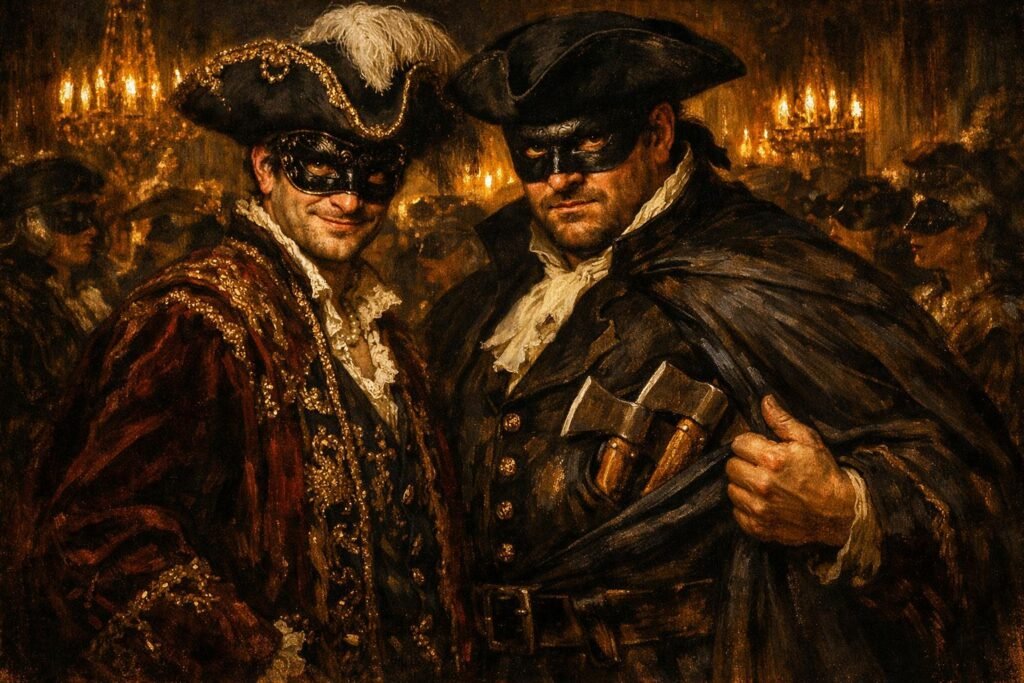
- External Competence: When he is in character (as Fehrwight, or the Gray King), he is unflappable. He is witty, arrogant, and in control. “Nice bird, asshole,” he says to a Bondsmage who could disintegrate him.20
- Internal Chaos: When the mask comes off, Locke is a neurotic, self-loathing disaster. He is prone to depression, obsession (specifically with Sabetha), and recklessness. He doesn’t just want to win; he wants to destroy himself. “Locke would appreciate it” is cited as a “fatal” phrase by his own crew.22
This dichotomy is crucial for the “Competence Porn” to work. If Locke were confident and competent all the time, he would be boring (a Mary Sue). Lynch balances the scales by making Locke’s personal life a train wreck. He steals not because he wants money, but because he is addicted to the adrenaline of being someone else. He literally “stole himself” (a reference to his murky origins and lack of a true name).23
The “Rich Insight” here: Locke represents the Imposter Syndrome of the Creative Class. He is an artist whose medium is lies. He creates beautiful, intricate fictions that no one can ever applaud because if they did, he’d be executed. His “audience” (the marks) must never know they attended a performance. This tragic isolation—the artist who can never take a bow—is the emotional core of the character.
SECTION 3: PRECURSORS AND PIGMENTS — THE ATMOSPHERIC HORROR OF ELDERGLASS
Standard fantasy settings are usually “stagnant medieval”—castles made of stone that have stood for 500 years. Camorr is different. It is built on the bones of a dead, superior civilization. This is the “Dying Earth” sub-genre influence (Jack Vance), where humanity lives like rats in the ruins of giants.24
Falselight and the Alien Aesthetic
Elderglass is the defining visual element of the series, separating Camorr from a generic Venice clone.
- Properties: Indestructible, translucent, and capable of retaining alchemical light. It cannot be cut or shaped by human tools.25
- The Five Towers: The skyline is dominated by alien structures: Dawncatcher (silver-red), Blackspear (black with broken rainbows), Westwatch (violet/white), Amberglass (singing flutings), and Raven’s Reach (the tallest). These aren’t just buildings; they are artifacts.10
- Falselight: At night, the Elderglass glows. This creates a perpetual, eerie twilight known as “Falselight.” It changes the atmosphere of the night scenes—the thieves aren’t working in pitch black, but in an alien, amber/violet haze.28
Analytical Insight: This creates a sense of Temporal Vertigo. The characters are Renaissance-level tech (cannons, caravels, rapiers), but they are surrounded by sci-fi architecture. It reminds the reader (and the characters) that they are small. The “Eldren” who built the city are gone. Why? It adds a layer of cosmic horror to the background. The humans are squatters. It prevents the world from feeling too “cozy.” Even the prettiest palace in Camorr is a tombstone for a dead race.
Sensory World-Building: Alchemy, Food, and Fashion
Lynch is a sensory writer. He doesn’t just describe how things look; he describes how they taste and smell. This is critical for immersion.
- Food as Status: The descriptions of food (ginger-scented cakes, wines, roasted meats) serve a narrative purpose. In a world of poverty (The Narrows, The Dregs), food is the ultimate signifier of wealth. When the Bastards eat well, we feel their victory. It grounds the fantasy in biological reality. The detailed culinary training Locke undergoes with Father Chains emphasizes that a “Gentleman” Bastard must know which fork to use to infiltrate the nobility.30
- Alchemy: Instead of “magic spells” for light, Lynch uses alchemy. “Alchemical globes” and salamander stones. This feels more grounded, more like early science than high mysticism. It fits the “Renaissance” vibe—a time when chemistry and magic were indistinguishable.
- Fashion: Locke’s disguises are described by fabric and cut (Vadran coats, Tal Verrar silks). This attention to costume is vital for a con artist story—clothes are the uniform of the lie.18
SECTION 4: DIVINE LARCENY — THE THIRTEEN GODS AND RELIGIOUS ENGINEERING
Religion in fantasy is often a generic “Church of Light” vs. “Dark Lord.” Lynch creates a polytheistic pantheon that functions like a bureaucracy. The Thirteen Gods (only 12 are publicly acknowledged) mirror the Roman or Greek pantheon, but with a specific focus on the needs of a mercantile city.32
The Crooked Warden and the Ethos of “The Right People”
The 13th God, the Crooked Warden (or the Nameless One), is the god of thieves. But he isn’t a god of chaos. He is a god of protection for the outcasts.33
- “The Right People”: This is the self-designation of the thieves. It implies a moral code. They aren’t “sinners” in their own eyes; they are priests of the 13th god.
- The Theology: “Thieves prosper.” It’s a prosperity gospel for criminals. The rich have the 12 gods; the poor have the Warden. The prayers are transactional and pragmatic. “Gods help me to make it worthy,” Locke prays, acknowledging the need for skill over luck.34
- Father Chains: Locke’s mentor is a priest. This reframes the entire training sequence. Locke isn’t just learning to steal; he is entering a seminary. The heists are “offerings.” This adds a layer of solemnity to their crimes. They aren’t just greedy; they are devout.
Comparison: This is similar to the Roman cult of Mercury/Hermes (god of thieves and merchants), but stripped of the public acceptance.32 In Rome, you could pray to Mercury openly. In Camorr, the Warden is a heresy. This forces the thieves underground, creating a tight-knit, cult-like community.
Bondsmagi: When Magic Breaks the Economy
The Bondsmagi of Karthain are Lynch’s answer to the “Overpowered Wizard” problem.35
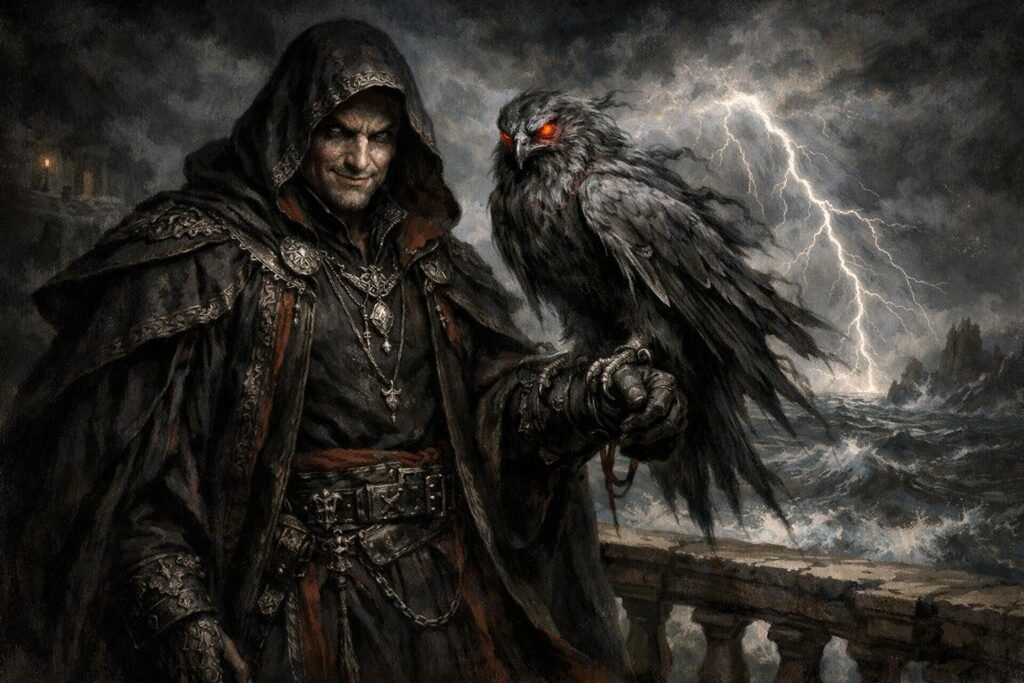
- The Problem: If wizards can do anything (mind control, telekinesis, healing), why don’t they rule the world?
- Lynch’s Solution: They are mercenaries. The Bondsmagi are a guild. They don’t want to rule the world (too much paperwork); they want to get paid.
- The Falconer: He is terrifying not because he is evil, but because he is a professional. He charges a fee.
- The True Name Mechanic: Magic requires the target’s true name. This makes information the most dangerous weapon. It explains why Locke is so paranoid about his past and why “Locke Lamora” is likely not his birth name.23
This turns magic into an economic commodity. It is a luxury good. Only the super-rich (The Grey King, The Archon) can afford a Bondsmage. This preserves the balance of power for the street-level characters while allowing for high-magic threats. It’s a brilliant piece of world-building that uses economics to nerf magic.
SECTION 5: THE BROMANCE AS ANCHOR — JEAN TANNEN AND THE SUBVERSION OF THE LONE WOLF
In a genre obsessed with the “Lone Wolf” hero (Conan, Geralt, Elric), Scott Lynch gives us a codependent duo. Locke Lamora cannot survive without Jean Tannen.
The Dynamics of Violence and Wit
Locke is the brain; Jean is the muscle. But Lynch subverts the “dumb brute” trope. Jean is well-read, mathematically literate, and arguably more emotionally mature than Locke.36
- Jean’s Competence: Jean isn’t just a thug; he is a master duelist with his “Wicked Sisters” (hatchets). The “Competence Porn” extends to his violence. It is precise, brutal, and efficient.37
- The Emotional Anchor: In The Republic of Thieves and Red Seas Under Red Skies, it becomes clear that their friendship is the only stable thing in their lives. While Locke chases the ghost of Sabetha, Jean provides the reality check. “I’m the ambush,” Jean famously says, defining his role not as a sidekick, but as the inevitable consequence of Locke’s actions.23
This relationship grounds the grimdark setting. The world is cruel, people die, and torture is common. But the loyalty between Locke and Jean provides a “Noblebright” spark within the darkness.38 It tells the reader that even in a city of bastards, connection is possible.
The “Sabetha” Problem and Romantic Subversion
For two books, Sabetha is a ghost—a “woman in the refrigerator” who motivates Locke. When she finally appears in Republic of Thieves, she is Locke’s equal. This deconstructs the “idealized lover.” Sabetha is real, flawed, and finds Locke’s obsession exhausting. Their rivalry in the elections of Karthain shows that Lynch is interested in the messiness of love, not the fairy tale. Sabetha’s refusal to be just a prize for Locke is a critical modernization of the genre.40
THE STORYTELLER’S PERSPECTIVE: PRACTICAL ADVICE FOR WRITERS AND WORLD-BUILDERS
(Written from the persona of the Sage-Rebel Copywriter)
Listen, if you’re trying to write fantasy, stop trying to invent a new language for “sword” and focus on the plumbing. Lynch wins because he focuses on the grime, the money, and the brotherhood. Here’s the playbook for writers who want to steal his fire:
- The “Bromance” is the Plot: Forget the romantic subplot. The strongest love story in fantasy is Locke and Jean. Why? Because it’s based on competence and shared trauma. Jean doesn’t just “like” Locke; he keeps him alive. Locke doesn’t just “like” Jean; he gives him a purpose. If you want to write a duo, make them codependent professionals. They should finish each other’s sentences and each other’s fights.
- Flashbacks are Mechanics, Not Filler: In Lies, the “Interludes” aren’t just backstory; they are the setup for the punchline in the present timeline. If Locke pulls a trick in Chapter 5, the Interlude before it shows him learning that trick at age 10 and failing miserably. Use the past to explain the competence of the present. This creates a “payoff” structure that feels incredibly satisfying.
- Ground the Magic in Economics: Magic shouldn’t be free. It should cost money, sanity, or blood. If your wizard can conjure gold, why is there an economy? Lynch’s Bondsmagi charge exorbitant rates. This explains why they are rare and why they don’t solve every plot hole.
- Steal from History (But the Weird Stuff): Don’t just steal “Kings and Queens.” Steal the Council of Ten. Steal the South Sea Bubble. Steal the specific, weird bureaucratic nightmares of history. Real history is stranger than your imagination. Camorr works because it feels like a place where people actually have jobs, pay taxes, and get screwed by the government.
FAQ
Q: Is Camorr based on a real city?
A: Yes, Camorr is heavily inspired by late medieval and Renaissance Venice, Italy. It shares Venice’s canal geography, island structure, and political elements like the secret police (Council of Ten) and a stratified nobility. However, Lynch adds fantastical elements like Elderglass architecture and a distinct polytheistic religion..1
Q: What is the reading order for the Gentleman Bastard series?
A: The current reading order is:
- The Lies of Locke Lamora (2006)
- Red Seas Under Red Skies (2007)
- The Republic of Thieves (2013)
- The Thorn of Emberlain (Forthcoming, updates suggest 2025 release window).43
- There are also prequel novellas collected in The Bastards and the Knives (Forthcoming).
Q: What is “Competence Porn” in the context of Scott Lynch’s writing?
A: “Competence Porn” refers to narratives where the pleasure comes from watching highly skilled characters perform complex tasks with expertise. In Lynch’s work, Locke and the Bastards are master con artists. The story focuses on the intricate mechanics of their heists and their ability to improvise solutions to impossible problems, rather than creating drama through incompetence or misunderstandings.12
Q: Who are the Bondsmagi of Karthain?
A: The Bondsmagi are a powerful guild of sorcerers in the Gentleman Bastard universe. They are mercenaries who sell their magical services for exorbitant fees. Their magic often relies on knowing a target’s true name, and they are feared for their vindictiveness and ability to manipulate reality, serving as the primary supernatural antagonists in the series.
- SFFWorld – Interview with Scott Lynch: inspirations and tone
- Nekoplz – Scott Lynch on historical cities (Babylon, Venice, old New York)
- Odyssey Traveller – Secret Venice: The Council of Ten and Medieval Espionage
- CJ Wilson Stories – Interaction Based Worldbuilding in Camorr
- Fafnir – Journal of Nordic Research in SFF (PDF)
- Wikipedia – Council of Ten (Consiglio dei Dieci) history
- CrimeReads – Venetian Spymasters and the Council of Ten
- Thieves Prosper Wiki – Camorr and the Spider
- Cambridge Core – Banditry and Bravi in Renaissance Italy
- Cambridge Core – Enmity and Violence in Early Modern Europe
- Thieves Prosper Wiki – Landmarks of Camorr (Five Towers, Floating Grave)
- Thieves Prosper Wiki – Slang and Cant
- Thieves Prosper Wiki – Thieves Cant Glossary
- Reddit – Scott Lynch on “Competence Porn” definition
- Holden Lee – Readercon 2019 Panel on Heists and Competence Porn
- [Telework.ro – Most Known Confidence Tricks (Spanish Prisoner, Fiddle Game)
- [Scribd – Leverage RPG: Spanish Prisoner Mechanic
- Bookey – The Lies of Locke Lamora Summary (PDF)
- Fantasy Faction – Read Along: Lukas Fehrwight and the Brandy
- Bookey – Chapter 8 Summary: Training and Competence
- Wikipedia – List of Scams: The Fiddle Game
- Reddit – Favorite Insults (“Nice bird, asshole”)
- Goodreads – Quotes: “Locke would appreciate it”
- Goodreads – Quotes: Locke’s name and Jean’s “Ambush”
- Reddit – Comparisons to Jack Vance’s Dying Earth
- Hacker News – Elderglass Architecture Descriptions
- Thieves Prosper Wiki – Eldren Structures
- Books by Proxy – Elderglass and Falselight Quotes
- Fantasy Faction – Read Along: Costumes and Status
- Reddit – List of the Thirteen Gods
- Pipes Dreams – Comparison of 13 Gods to Roman Pantheon
- Reddit – Prayers to the Crooked Warden
- Reddit – Gods of Thievery (Mercury comparison)
- Paizo Forums – Bondsmagi Discussions
- Reddit – Bondsmagi Magic System Analysis
- Fantasy Hotlist – Scott Lynch & Matthew Stover Interview (Locke/Jean Dynamic)
- R. Jean Mathieu – Red Seas Under Red Skies Review
- Reddit – Grimdark vs Noblebright Discussion
- Violin in a Void – Sabetha and Locke’s Relationship
- Reddit – Discussion on Republic of Thieves and Sabetha
- Reddit – Camorr Inspired by Renaissance Venice
- Reddit – Thorn of Emberlain Release Updates
- Reddit – 2024/2025 Scott Lynch Update
