
1. Introduction: The Paradigm Shift in Epic Fantasy
The publication of Assassin’s Apprentice in 1995 marked a pivotal moment in the trajectory of epic fantasy literature. Authored by Margaret Astrid Lindholm Ogden under the pseudonym Robin Hobb, the Farseer Trilogy (Assassin’s Apprentice, Royal Assassin, Assassin’s Quest) emerged during a decade dominated by the sprawling, plot-driven narratives of Robert Jordan’s Wheel of Time and the nascent grimdark political machinations of George R.R. Martin’s A Song of Ice and Fire. While sharing the superficial trappings of the genre—magic, dragons, medieval political structures—Hobb’s work distinguished itself through a radical commitment to psychological realism and a claustrophobic, intense focus on the internal life of a single protagonist: FitzChivalry Farseer.1
This article provides an exhaustive, expert-level analysis of the trilogy, dissecting the mechanisms by which Hobb subverts traditional heroic tropes. It explores the intricate interplay between the series’ two magic systems (the Skill and the Wit) and the sociocultural dynamics of the Six Duchies. Furthermore, it investigates the “Sage-Rebel” nature of the protagonist—a character who serves the throne (Sage/Duty) while fundamentally existing outside its accepted social strata (Rebel/Wit)—and how this duality drives the narrative’s exploration of trauma, memory, and identity.2
The analysis draws upon a wide array of textual evidence, critical reception, and thematic deconstruction to illuminate why this trilogy is frequently cited as a masterclass in character-driven fantasy. By moving beyond the surface plot of a royal bastard trained as an assassin, the report reveals a complex treatise on the cost of violence, the fluidity of gender and connection, and the devastating weight of history on the individual soul.3
1.1 Context and Publication History
To understand the impact of the Farseer Trilogy, one must situate it within the broader “Realm of the Elderlings,” a 16-book cycle that chronicles the history of a world recovering from the collapse of an ancient, dragon-riding civilization. Farseer is the foundational text, establishing the geopolitical landscape of the Six Duchies and the Mountain Kingdom, as well as the metaphysical laws of the magic systems that govern the world.4
The choice of the pseudonym “Robin Hobb”—androgynous and distinct from the author’s previous work as Megan Lindholm—signaled a shift in tone. Where Lindholm’s work was often urban fantasy or short fiction, Hobb’s work embraced the “slow burn” of the epic, utilizing the increased word count not for endless battles, but for deep, gradual character development that mirrors the slow accretion of real-life maturity.5
2. Narrative Architecture: The First-Person Retrospective
The defining structural element of the Farseer Trilogy is its narrative mode: a first-person retrospective told by an older, scarred FitzChivalry Farseer (writing as “Tom Badgerlock”) looking back on his youth from a position of isolation and regret.6 This is not a standard first-person account where the narrator discovers events alongside the reader; rather, it is a memoir, saturated with the foreknowledge of tragedy.
2.1 The Duality of the Narrator
The narrative voice is bifurcated into two distinct entities:
- The Experiencing Self (Young Fitz): This version of the character is reactive, often confused, emotionally volatile, and limited by his youth and lack of political awareness. He makes “bad decisions” driven by trauma, hormones, and limited information.7
- The Narrating Self (Old Fitz): This voice is analytical, weary, and cynical. He frequently interrupts the narrative to offer context, foreshadowing, or philosophical musings. He possesses the clarity of hindsight, often critiquing his younger self’s ignorance with a mix of compassion and frustration.8
This dual structure allows Hobb to achieve a high degree of dramatic irony. The reader often knows, through the narrator’s tone or explicit foreshadowing, that a certain choice will lead to disaster, yet is forced to watch the younger Fitz make it anyway. This creates a sense of tragic inevitability that aligns with the series’ themes of fate and prophecy.9
2.2 The Epigraphs: World-Building through Fragmented History
Each chapter begins with an epigraph—a snippet of in-world text ranging from historical treatises and herbalist journals to fragments of folklore and political propaganda. These epigraphs serve multiple narrative functions:
- Contextual Expansion: They provide crucial world-building information (e.g., the history of the Red Ship Raiders, the geography of the Six Duchies, the nature of magic) without cluttering the main narrative with exposition dumps.
- Tonal Contrast: Often, the dry, academic tone of an epigraph about the “glory” of the Farseer line is immediately followed by a scene depicting the brutal, unglamorous reality of Fitz’s life, creating a stark juxtaposition between official history and lived experience.
- The Unreliable History: The epigraphs frequently contradict one another or the main text, highlighting the theme that history is a construct written by the victors. This underscores the “Sage” aspect of the narrative—the pursuit of truth in a world of political fabrication.10
2.3 The “Slow Burn” as Psychological Immersion
Critics and readers often describe Hobb’s pacing as a “slow burn,” a term that can be polarizing. However, this pacing is a deliberate stylistic choice designed to facilitate psychological immersion. By dedicating thousands of words to the mundane details of Fitz’s daily existence—his stable chores, his lessons with Chade, his solitary wanderings—Hobb forces the reader to inhabit the protagonist’s rhythm of life.5
This technique creates “emotional equity.” When trauma occurs (and it occurs frequently), the reader feels it acutely because they have lived through the long periods of calm that preceded it. The pacing mimics the experience of depression and isolation, where time can seem to stretch or compress based on internal emotional states. It is a rejection of the “action-movie” style of fantasy in favor of a “biographical” style, where the quiet moments are as significant as the battles.
| Narrative Element | Function | Effect on Reader |
| First-Person Retrospective | Filters all events through Fitz’s memory and bias | Creates intimacy and tragic inevitability |
| Epigraphs | Provides macro-context and historical depth | Contrasts official history with personal truth |
| Slow Burn Pacing | Mirrors the protagonist’s daily reality | Builds deep emotional investment and realism |
| Unreliable Narration | Highlights the subjectivity of memory | Encourages active reading and skepticism |
3. The Psychology of the Catalyst: FitzChivalry Farseer
FitzChivalry Farseer is the emotional fulcrum of the series. He is a character study in trauma, abandonment, and the conflict between identity and duty. While he fulfills the “Chosen One” archetype technically (he is the “Catalyst” prophesied to save the world), Hobb deconstructs this trope by focusing on the cost of being chosen rather than the glory of it.11
3.1 The Trauma of Erasure: “Boy” vs. “Fitz”
Fitz begins his life with a primal wound of abandonment. At age six, he is dropped off at the gates of Buckkeep by his maternal grandfather, who tells the guards, “I’m done with him.” This moment of rejection defines his psyche. For much of the first book, he has no name, referred to simply as “Boy” by Burrich, or “Fitz” (a distinct acknowledgment of illegitimacy) by the court.12
This erasure of identity creates a “void” in Fitz that he perpetually tries to fill—with the Skill, with the Wit bond, with Molly, and with his duty to the King. He internalizes the belief that he is “abominable” (due to his bastardy and his Wit magic) and that his only value lies in his utility as a tool for the throne.
3.2 The “Former Gifted Child” Syndrome and Duty
Fitz exhibits classic symptoms of what modern psychology might term “Former Gifted Child Syndrome” or “Parentified Child Syndrome.” He is thrust into adult responsibilities (assassination, espionage, war) long before he is emotionally mature enough to handle them.
- Instrumentalization: King Shrewd and Chade treat him as an asset rather than a person. He is a “diplomatic dagger,” kept in the shadows and used when necessary.
- Dissociation: To survive his training and his missions, Fitz learns to compartmentalize his emotions, a skill that serves him as an assassin but destroys his personal relationships.
- Anhedonia: As the series progresses, Fitz struggles to feel joy or desire for his own sake. His “bad decisions” often stem from a fundamental belief that he does not deserve happiness, or that his happiness is secondary to his duty.7
3.3 The Sage-Rebel Archetype
Fitz embodies a “Sage-Rebel” duality:
- The Sage: Through his education with Chade and his mastery of the Skill, Fitz gains access to the hidden knowledge of the kingdom. He sees the “truth” behind the political facades. He becomes a chronicler, a historian, and a keeper of secrets.
- The Rebel: Despite his loyalty, Fitz constantly chafes against the constraints of his station. His use of the Wit (a forbidden magic) is an act of inherent rebellion against the social order. His bond with Nighteyes is a rejection of civilized norms in favor of “natural” law. He serves the King, but he often disobeys direct orders to achieve what he believes is right, embodying a morality that transcends law.13
3.4 Addiction and Self-Destruction
Fitz’s relationship with magic, specifically the Skill, serves as a potent metaphor for addiction. The Skill is described as a “river” of euphoria that calls to the user, promising oblivion and connection. Fitz’s struggle to control his Skilling—and his use of “elfbark” to dampen it—mirrors the cycles of substance abuse. He uses magic to escape the pain of his reality, but the magic extracts a terrible physical and mental toll, leading to “Skill hunger” and degradation.14
“Addictive magic was literally Robin Hobb’s first idea for the Farseer Trilogy.” 15
This struggle adds a layer of gritty realism to the fantasy. Magic is not a clean, cost-free power; it is a dangerous substance that can destroy the user as easily as it destroys the enemy.
4. Magic Systems: Ontology, Metaphor, and Sociology
Hobb constructs two distinct magic systems in the Six Duchies: The Skill and The Wit. These systems are not merely functional tools for the plot but are deeply integrated into the cultural and class structures of the world. They represent opposing forces—mind vs. body, elite vs. common, acceptable vs. taboo—and serve as rich metaphors for various aspects of the human condition.16
4.1 The Skill: The Magic of the Mind and the Elite
The Skill is the hereditary magic of the Farseer royal line. It allows for telepathy, the projection of thoughts, the manipulation of emotions, and clairvoyance over distances.
4.1.1 Mechanisms and Sensations
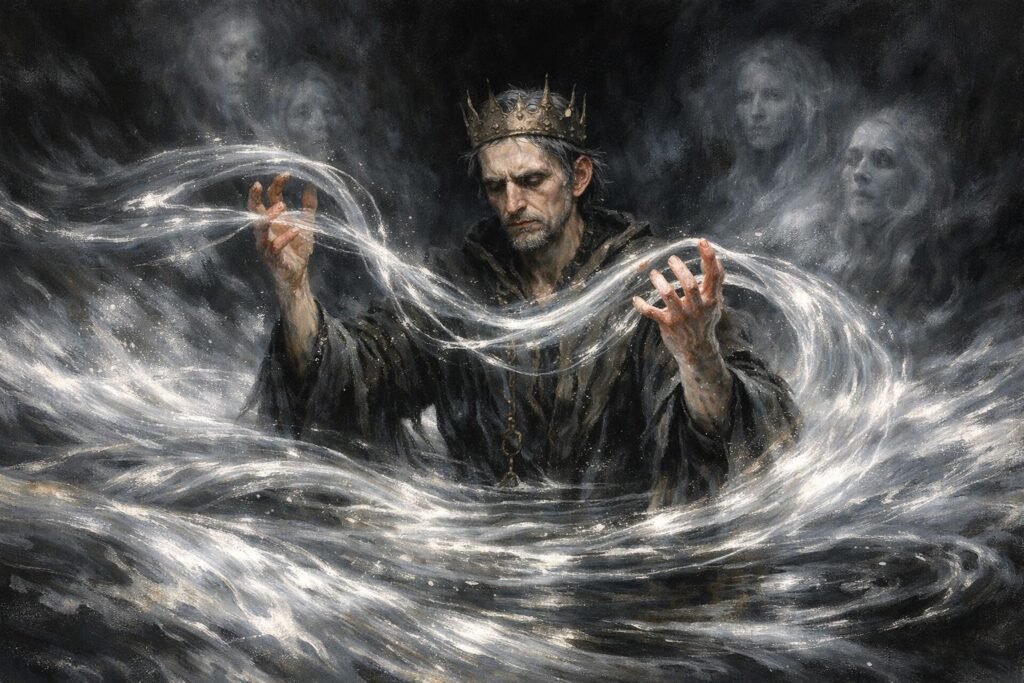
- The River: The Skill is experienced as a rushing river of voices and thoughts. The user must maintain a strong barrier to avoid being swept away and losing their individual ego in the collective stream. This metaphor highlights the danger of losing oneself to power or the collective.
- Silver: In later books (and hinted at in Farseer), the Skill is linked to a substance called “Silver,” a magical liquid that amplifies power. The descriptions of the Skill often invoke metallic, shimmering imagery, contrasting with the earthy tones of the Wit.17
- Physical Toll: Using the Skill is physically exhausting. It burns calories, dulls the senses to hunger and cold, and can leave the user emaciated. This biological cost grounds the magic in physical reality.18
4.1.2 Sociological Function
The Skill is a tool of governance. It is used to coordinate defenses against the Red Ship Raiders, to communicate with nobles, and to enforce the King’s will. Because it is tied to the royal bloodline, it is prestigious. Even bastards who possess it (like Fitz) are valuable to the state, whereas commoners are excluded.
4.2 The Wit: The Magic of the Body and the Other
The Wit is the ability to sense the life force of other living beings and to form telepathic/empathic bonds with animals.16 Unlike the Skill, the Wit is found among commoners and is reviled by the social hierarchy of the Six Duchies.
4.2.1 The Stigma and Queer Allegory
Academic analysis strongly supports reading the Wit as an allegory for queerness (specifically homosexuality) and social otherness.19
- The Closet: Witted individuals must hide their nature or face execution (being “quartered”). Fitz leads a double life, terrified that his Wit will be discovered.
- “Lying with Beasts”: The rhetoric used against the Wit parallels homophobic slurs. It is called “unnatural,” “dirty,” and a perversion of the natural order.
- Internalized Oppression: Burrich, Fitz’s father figure, possesses the Wit but hates it. He beats Fitz to try to “cure” him of it, representing the tragedy of internalized self-hatred and the generational trauma of suppression.
4.2.2 The Ecological Connection
The Wit also serves as an exploration of ecological ethics. Through the Wit, Fitz understands animals not as resources or beasts of burden, but as sapient beings with their own languages, cultures, and emotions. The bond with Nighteyes (the wolf) provides a counter-narrative to the anthropocentric worldview of the court. Nighteyes teaches Fitz the philosophy of “The Pack”—living in the “Now,” loyalty without judgment, and the acceptance of death as part of the life cycle.20
4.3 Comparative Analysis: Skill vs. Wit
| Feature | The Skill | The Wit |
| Domain | Mind / Spirit / Distance | Body / Instinct / Proximity |
| Social Status | Royal / Prestigious / Divine | Common / Despised / “Old Blood” |
| Metaphor | Addiction / Power / Dissociation | Queerness / Ecology / Connection |
| Visuals | Silver / Mist / Light | Earth / Blood / Fur |
| Key Danger | Drowning (Loss of Ego) | Going Feral (Loss of Humanity) |
| Primary Bond | Verity (King) | Nighteyes (Wolf) |
4.4 Forging: The Anti-Magic
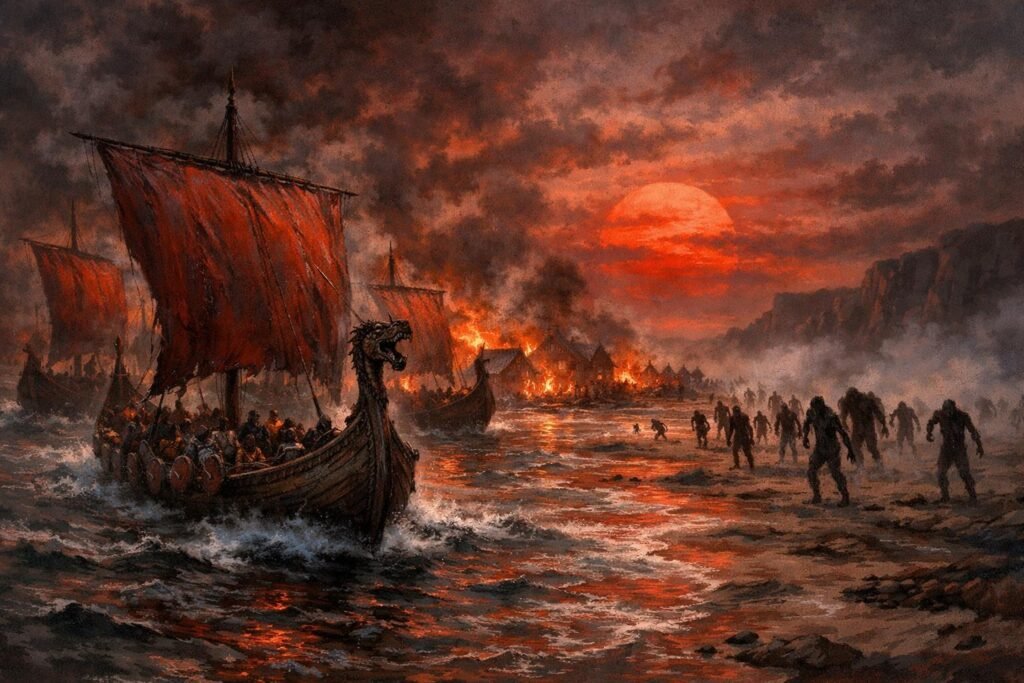
The “Forging” is a dark art practiced by the Red Ship Raiders (and later revealed to be a corruption of Skill-magic). It involves severing a person’s capacity for empathy, emotion, and memory, leaving them alive but “empty”.21
- Mechanism: Forging does not turn people into zombies; they remain intelligent and capable of speech. However, they lack all moral inhibition. They will steal, rape, and kill to satisfy immediate urges, with no regard for social bonds or consequences.
- Thematic Significance: Forging is the ultimate horror in Hobb’s universe because it represents the total loss of connection. If humanity is defined by our ability to care for others (the Wit/Pack philosophy), then Forging is the erasure of humanity. It serves as a grim reflection of what happens when a society (or a person) loses its empathy—a historical parallel to the brutality of Viking raids or the psychological effects of lobotomy.22
5. Character Dynamics and Archetypes
Hobb’s characters are rarely simple archetypes; they are deconstructions of standard fantasy roles, imbued with psychological complexity and contradiction.
5.1 The Fool: The White Prophet and Gender Fluidity
The Fool is arguably the most enigmatic character in the series. Functionally, the Fool serves the role of the “Wise Fool” (a la Shakespeare’s King Lear), using riddles and mockery to speak truth to power.23 However, Hobb elevates this archetype through the concept of the “White Prophet.”
- The Prophet and the Catalyst: The Fool is a White Prophet, a being who sees the branching paths of the future. To affect change, the Prophet needs a “Catalyst”—a person who has the power to alter destiny. Fitz is that Catalyst. This creates a relationship of intense dependency and manipulation. The Fool loves Fitz, yet must constantly push him into danger to save the world.24
- Gender as Performance: The Fool’s gender is fluid. In Farseer, the Fool is generally presented as male, but later books explore the Fool’s ability to transcend gender binaries (appearing as the female Amber). This fluidity challenges Fitz’s rigid worldview and allows Hobb to explore themes of love that transcend physical orientation. The bond between Fitz and the Fool is described as “two halves of a whole,” a spiritual union that defies categorization.25
5.2 Burrich: The Tragedy of Duty and Toxic Masculinity
Burrich is the stablemaster who raises Fitz. He is the epitome of the “loyal retainer” archetype—stoic, strong, and unyielding in his duty to the Farseer throne. However, Hobb reveals the cracks in this armor.
- The Cost of Repression: Burrich’s hatred of his own Wit magic makes him a tragic figure. He perpetuates the stigma that hurts Fitz, believing he is saving the boy’s soul. This relationship is a painful exploration of how toxic masculinity and internalized shame can poison paternal love.26
- The Substitute Father: Burrich sacrifices his own life and happiness to raise Chivalry’s son, yet he can never fully embrace Fitz because Fitz reminds him of his failures.
5.3 Chade Fallstar: The Machiavellian Mentor
Chade is the royal assassin, a man who lives in the secret passages of Buckkeep. He is Fitz’s mentor in the arts of death and diplomacy.
- State vs. Individual: Chade represents the argument for “The Greater Good.” He loves Fitz, but he will not hesitate to use him as a weapon if the kingdom requires it. This tension—between Chade the father figure and Chade the spymaster—forces Fitz to confront the ethics of his profession. Is it right to kill one man to save a thousand? Chade says yes; Fitz is never sure.
5.4 Verity Farseer: The King Who Sacrifices
Prince (later King) Verity is the moral center of the Farseer family. Unlike his neurotic brother Regal, Verity is consumed by his duty to protect the Six Duchies from the Red Ship Raiders.
- The Skill Addiction: Verity uses the Skill to defend the coast, but the magic drains his life force. He becomes an addict to the defense of his people, eventually sacrificing his very humanity to carve a Stone Dragon and save the kingdom. He is the ultimate example of the “Servant King,” contrasting with the self-serving leadership of Regal.27
5.5 Women of the Six Duchies: Agency within Patriarchy
While the narrative is male-centric (due to Fitz’s POV), the female characters exert significant agency.
- Kettricken: The Mountain Princess who becomes Queen. She brings a different cultural ethos to Buckkeep—one of directness, “Sacrifice” (a Mountain concept of leadership), and warrior spirit. She refuses to be a passive victim of Regal’s plots.
- Molly: Fitz’s love interest. Molly is not just a prize to be won; she is a working-class woman with her own struggles (an abusive father, poverty). Her rejection of Fitz’s lifestyle is a valid critique of his “heroism.” She chooses stability and safety for her children over the chaos of Fitz’s life, a choice the narrative respects.28
- Patience: Fitz’s stepmother (eccentric and seemingly flighty). She uses her perceived “madness” and obsession with botany as a shield, while quietly funding the defense of the kingdom when the men fail. She represents the power of unconventional resistance.
6. Geopolitics and Cultural Anthropology
Hobb engages in extensive world-building that feels grounded in anthropological reality. The conflict in the Farseer Trilogy is not just good vs. evil; it is a clash of cultures, economies, and geographies.
6.1 The Six Duchies: A Fragile Union
The Six Duchies are a federation of two distinct cultures:
- The Coastal Duchies (Buck, Bearns, Rippon, Shoaks): These are maritime cultures, heavily reliant on trade and fishing. They bear the brunt of the Red Ship raids and are more cosmopolitan.
- The Inland Duchies (Tilth, Farrow): These are agrarian, conservative, and isolated. They resent being taxed to defend the coast.
- Political Tension: The antagonist, Regal, exploits this divide. He courts the favor of the Inland Duchies, willing to sacrifice the coast to consolidate his own power. This reflects real-world political dynamics where regional interests threaten national unity.
6.2 The Mountain Kingdom: A Matriarchal Contrast
To the west lies the Mountain Kingdom, led by the “Sacrifice” (their term for ruler).
- Culture: The Mountain culture values transparency, gender equality, and a spiritual connection to the land. They do not stigmatize the Wit (or at least, have a different understanding of magic).
- The “Sacrifice”: The ruler is called the Sacrifice because they are expected to give everything for the people. This philosophy deeply influences Kettricken and eventually Verity and Fitz. It reframes leadership from “ruling” to “serving”.13
6.3 The Outislanders and the Red Ship Raiders
The Raiders are clearly modeled on Viking cultures (longships, raiding season), but Hobb adds the twist of “Forging.”
- Resource War: The raids are initially confusing because they don’t seem to be for loot. It is later revealed that the Outislanders are being manipulated by the “Pale Woman” (a White Prophet from the south) to destabilize the Duchies. However, the underlying tension is also resource-based—the Outislands are harsh, cold, and lack the fertile land of the Duchies.29
- Forging as Terror: The tactic of returning Forged hostages is a stroke of psychological warfare. It forces the Six Duchies to kill their own kin, destroying the social fabric and morale of the coastal towns.30
7. Thematics: Duty, Sacrifice, and Solitude
The Farseer Trilogy is a thematic exploration of the costs associated with saving the world.
7.1 The Ethics of Duty vs. The Self
The central conflict of Fitz’s life is the tension between his desire for a normal life (with Molly, as a scribe or stableman) and his duty as a Farseer.
- The Cage of Birth: Because of his blood, Fitz is never free. He is “owned” by the King. The narrative asks: Does a person have a right to their own life if their service is necessary for the survival of thousands?
- The Rejection of Reward: Unlike traditional fantasy heroes who are rewarded with marriage and kingdoms, Fitz is “rewarded” with anonymity and isolation. He saves the world from the shadows, and history will never know his name. This underscores the theme that true duty is doing the right thing without expectation of praise.
7.2 The Persistence and Pain of Memory
Memory is a tangible force in the series.
- Skill-Stones: The magic of the Elderlings relies on memory. To wake a Stone Dragon, one must feed it memories. This literalizes the idea that we “give ourselves away” to our creations or our causes.31
- Trauma: Fitz cannot forget. His memories of torture, abandonment, and loss haunt him. The narrative suggests that while memory is painful, it is also the foundation of identity. To be Forged is to lose memory and emotion; therefore, pain is the proof of humanity.20
7.3 Solitude and “The Pack”
Fitz is a profoundly lonely character. He is isolated by his secrets (Assassin, Witted, Skill-user). However, through Nighteyes, he finds a different kind of connection.
- “We are Pack”: This mantra represents a bond that transcends social judgment. It is an acceptance of the self in its rawest form. The Pack is small (Fitz, Nighteyes, and partially the Fool), but it is the only place where Fitz is truly known. This suggests that while we may be alone in society, we can find profound connection in the “found family”.
8. Visual and Aesthetic Analysis
Hobb’s descriptive powers ground the fantasy elements in a tactile, gritty reality.
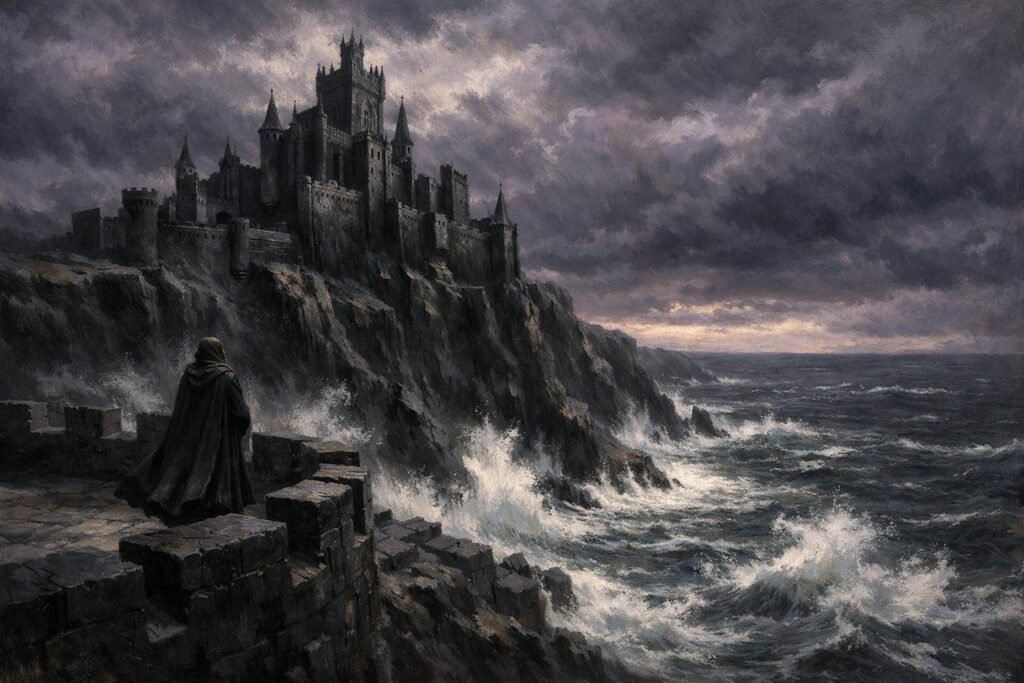
- Buckkeep Castle: The castle is built of “black stone” (Skill-stone), described as cold, smooth, and almost parasitic to the touch. It sits on a cliff, constantly battered by the salt spray. This visual—a black fortress against a gray sea—perfectly captures the mood of the series: endurance, gloom, and solidity.32
- The Skill vs. The Wit:
- Skill: Silver, light, rushing water, cold, high towers, maps, ink.
- Wit: Fur, blood, wet earth, musk, stables, forests, warmth.These aesthetic clusters reinforce the thematic dichotomy between the “High Magic” of the mind and the “Low Magic” of the body.33
9. Conclusion: The Legacy of the Farseer Trilogy
The Farseer Trilogy stands as a monumental achievement in the fantasy canon because it dared to look inward. Robin Hobb took the tropes of the genre—the royal bastard, the magical assassin, the dragon—and stripped them of their glamour to reveal the human cost underneath.
By filtering the epic through the retrospective voice of a traumatized, regretful, yet enduring narrator, Hobb created a work that is as much a psychological case study as it is an adventure. The “Sage-Rebel” spirit of FitzChivalry Farseer lies not in overthrowing empires, but in his quiet, stubborn refusal to be completely erased by the systems that use him. He rebels by feeling, by remembering, and by loving, even when the world demands he become a tool of black stone.
The report concludes that the trilogy’s enduring relevance lies in this empathy. It serves as a mirror for the reader’s own struggles with duty, identity, and the pain of memory, validating the idea that survival itself—broken and scarred as one may be—is a heroic act.
10. Addendum: Structural and Stylistic Data Points
10.1 Key Narrative Statistics
| Attribute | Detail |
| Series | The Farseer Trilogy |
| Books | Assassin’s Apprentice (1995), Royal Assassin (1996), Assassin’s Quest (1997) |
| POV | First-Person Retrospective (FitzChivalry Farseer) |
| Setting | The Six Duchies (Medieval/Feudal), The Mountain Kingdom |
| Magic Systems | The Skill (Telepathy/Silver), The Wit (Animal Bond), Forging (Anti-Magic) |
| Key Themes | Trauma, Memory, Duty vs. Self, Queer Ecology, Addiction |
10.2 Character Archetype Analysis
| Character | Traditional Archetype | Hobb’s Deconstruction |
| Fitz | The Chosen One | The Damaged Instrument / The Anti-Hero |
| The Fool | The Court Jester | The White Prophet / Gender-Fluid Catalyst |
| Burrich | The Mentor / Father | The Victim of Toxic Masculinity / Internalized Shame |
| Verity | The Warrior King | The Addict / The Sacrifice |
| Regal | The Evil Prince | The Narcissist / The Product of Spoiling |
| Chade | The Wise Old Wizard/Mentor | The Machiavellian Spymaster / Moral Relativist |
10.3 Geopolitical Entities
| Region | Economy | Culture | Magic Attitude |
| Coastal Duchies | Fishing, Trade | Cosmopolitan, Resilient | Skill: Respected / Wit: Hated |
| Inland Duchies | Farming, Vineyards | Conservative, Insular | Skill: Distant / Wit: Hated |
| Mountain Kingdom | Mining, Hunting | Matriarchal, Spiritual | Magic is “Old Ways” / Accepted |
| Outislands | Raiding, Scavenging | Tribal, Harsh | Forging (Weaponized) |
12. Selected Bibliography & Further Reading
- Wikipedia. “Farseer trilogy.” Wikipedia, The Free Encyclopedia. Link
- Moon, Caitlyn. “‘I set no limits on my love’ – magic, queerness and the disruption of binaries in Robin Hobb’s Realm of the Elderlings.” University of Kent, 2024. Link
- Hobb, Robin. “The Farseer Trilogy (Assassin’s Apprentice, Royal Assassin, Assassin’s Quest).” HarperCollins, 1995-1997.
- Hobb, Robin. “Realm of the Elderlings Reading Order.” Robin Hobb Official Website. Link
- Fantasy Faction. “Robin Hobb Interview.” Fantasy Faction, 2013. Link
- Elliott, R.W. “Re-presentation: Shades of Steel Gray.” Elliott R.W.I., 2020. Link
- Reddit Discussion. “Is FitzChivalry the stupidest protagonist in fantasy?” r/Fantasy, 2022. Link
- Pages Below Vaulted Sky. “A Stupidly Long Ramblepiece on FitzChivalry Farseer.” Pages Below Vaulted Sky, 2018. Link
- Augur Society. “Re-reading the Farseer Trilogy: An Introduction.” Augur Society. Link
- She Reads Novels. “Assassin’s Apprentice by Robin Hobb Review.” She Reads Novels, 2014. Link
- BAOS. “Deconstructing the Chosen One Trope.” BAOS Pub. Link
- The Parenthetical. “Nighteyes Quote Analysis.” The Parenthetical. Link
- Sons of Vikings. “Giants: The Anti-Gods of Viking Norse Mythology.” Sons of Vikings. Link
- Giant in the Playground. “Robin Hobb’s Realm of the Elderlings in 3.5 (Magic Addiction).” Giant in the Playground Forums. Link
- Reddit Discussion. “Addictive magic was literally Robin Hobb’s first idea.” r/Fantasy. Link
- Inky Bookwyrm. “Immerse Readers Fast with this Low Magic System.” Inky Bookwyrm. Link
- Reddit Discussion. “Theory on Origins of the Skill in Farseer Line.” r/robinhobb, 2021. Link
- Reddit Discussion. “WTH is up with the Skill?” r/robinhobb. Link
- Lemon8. “Robin Hobb Quote: Wit Magic Stigma.” My Gay Bookcase. Link
- Goodreads. “Robin Hobb Quotes: Memory, Stone, Wolf.” Goodreads. Link
- SciFi StackExchange. “What is the book series where people become Forged?” StackExchange. Link
- AustLII. “Witchcraft and the Law (Historical Context of Familiars).” Auckland University Law Review, 2003. Link
- Trepo. “The Fool as Wise Fool Archetype.” Tampere University, 2016. Link
- Reddit Discussion. “Comparison between Sanderson’s Wit and Hobb’s Fool.” r/Fantasy. Link
- Reddit Discussion. “Part of the Fool’s Character Development.” r/robinhobb. Link
- Reddit Discussion. “Burrich from the Farseer Trilogy is a Top 3 Character.” r/Fantasy. Link
- Reddit Discussion. “I love the way Robin Hobb subverts fantasy tropes (Verity).” r/robinhobb. Link
- Reddit Discussion. “I’d like a woman’s opinion on Fitz, Molly and Burrich.” r/robinhobb. Link
- Wikipedia. “Great Heathen Army (Historical Parallels).” Wikipedia. Link
- SFF World. “Interview with Robin Hobb.” SFF World, 2001. Link
- Elliott RWI. “Skill-stone Appearance Description.” Elliott R.W.I.. Link
- Reddit Discussion. “Buckkeep Castle Painting References.” r/robinhobb. Link
- Reddit Discussion. “Exactly what is the difference between the Skill and Silver?” r/robinhobb. Link
