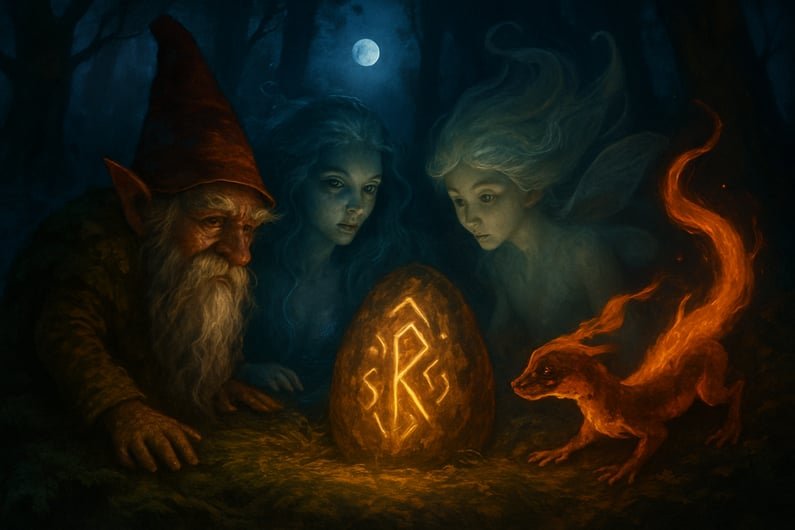
Elementals Unleashed: Legends, Lore, and the Fantasy Renaissance
Discover the origins, legends, and evolution of elementals—nature’s primal spirits—across myth, literature, and fantasy. Explore their journey from ancient lore to modern RPGs, with essential reading recommendations and a touch of playful sarcasm.
Introduction
In the mystical tapestry of human imagination, few beings command such enduring fascination as the elementals—those primordial spirits that dance between the physical and ethereal realms, embodying the raw essence of nature’s fundamental forces. From the whispered legends of ancient civilizations to the sprawling digital worlds of modern gaming, these enigmatic entities have captured our collective consciousness with their otherworldly power and mysterious purpose.
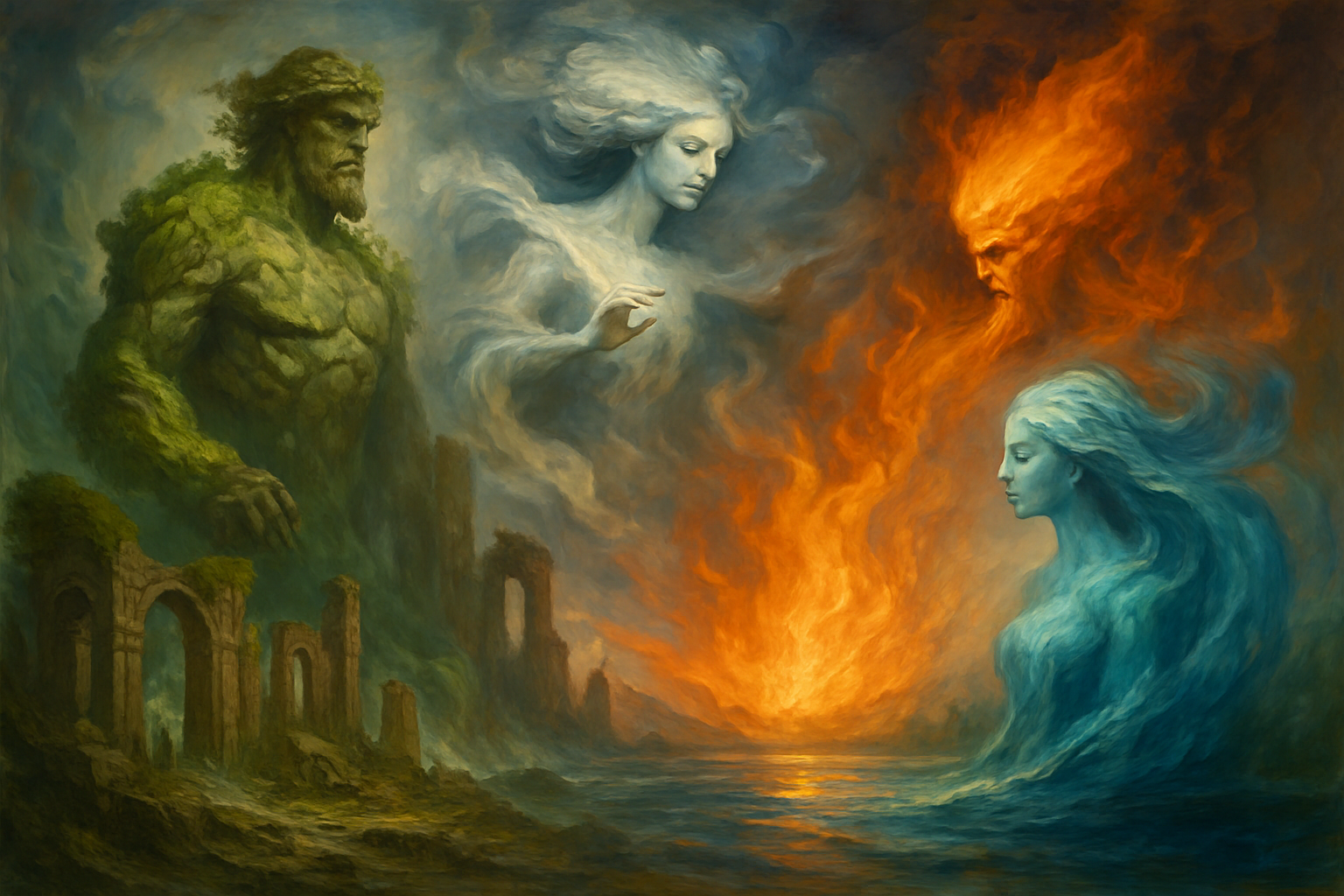
The elementals represent humanity’s oldest attempt to understand and personify the forces that govern our world. They are the living embodiments of earth, water, air, and fire—the classical elements that ancient philosophers believed formed the foundation of all existence. Yet their story extends far beyond mere philosophical abstraction, weaving through mythology, folklore, alchemical texts, and contemporary fantasy with an enduring relevance that speaks to something fundamental in the human psyche.
The Classical Foundation: Four Elements as Universal Building Blocks
Ancient Philosophical Origins
The concept of four primary elements emerged independently across multiple ancient civilizations, suggesting a universal human tendency to categorize and understand the natural world through these fundamental forces. In ancient Greece, the philosopher Empedocles first proposed that all matter consisted of four root elements: earth (γῆ), water (ὕδωρ), air (ἀήρ), and fire (πῦρ).
Aristotle later expanded this system, adding aether as a fifth element representing the celestial realm beyond our earthly sphere. This Aristotelian framework became the cornerstone of Western philosophical thought about the natural world for over two millennia, influencing everything from medieval alchemy to Renaissance natural philosophy.
The four elements were not merely abstract concepts but were believed to possess distinct qualities and characteristics. Earth represented stability and solidity, water embodied fluidity and adaptability, air symbolized movement and intellect, and fire encompassed energy and transformation. These elements were thought to exist in constant interaction, their balance determining the nature of all physical matter and phenomena.
Eastern Parallels and Variations
While the Western tradition focused on four elements, Eastern philosophical systems developed their own elemental frameworks. In Hindu and Buddhist cosmology, the concept of Panchamahabhuta (Five Great Elements) includes earth, water, fire, air, and space/ether, each representing different aspects of existence and consciousness.
The Chinese tradition developed the Wu Xing (Five Elements) system, incorporating fire, earth, metal, water, and wood. This system emphasized the dynamic relationships between elements rather than their static properties, introducing concepts of generation and destruction cycles that would later influence alchemical thinking.
These parallel developments across cultures suggest that the elemental framework represents a fundamental way humans process and categorize their relationship with the natural world, transcending geographical and cultural boundaries.
The Medieval Synthesis: Paracelsus and the Birth of Modern Elementals
The transformation of abstract elemental philosophy into the personified elemental spirits we recognize today largely occurred during the medieval period, reaching its pinnacle in the work of the Swiss physician and alchemist Paracelsus (1493-1541). Born Philippus Aureolus Theophrastus Bombastus von Hohenheim, Paracelsus revolutionized the understanding of elementals by proposing that each of the four classical elements was inhabited by specific types of spiritual beings.
In his seminal work De Nymphis, Sylphis, Pygmaeis et Salamandris et de Caeteris Spiritibus (On Nymphs, Sylphs, Pygmies, and Salamanders, and Other Spirits), Paracelsus systematically catalogued these elemental inhabitants. His classification system became the foundation for virtually all subsequent elemental lore in Western culture.
The Paracelsian Classification System
Paracelsus identified four distinct types of elemental spirits, each corresponding to one of the classical elements:
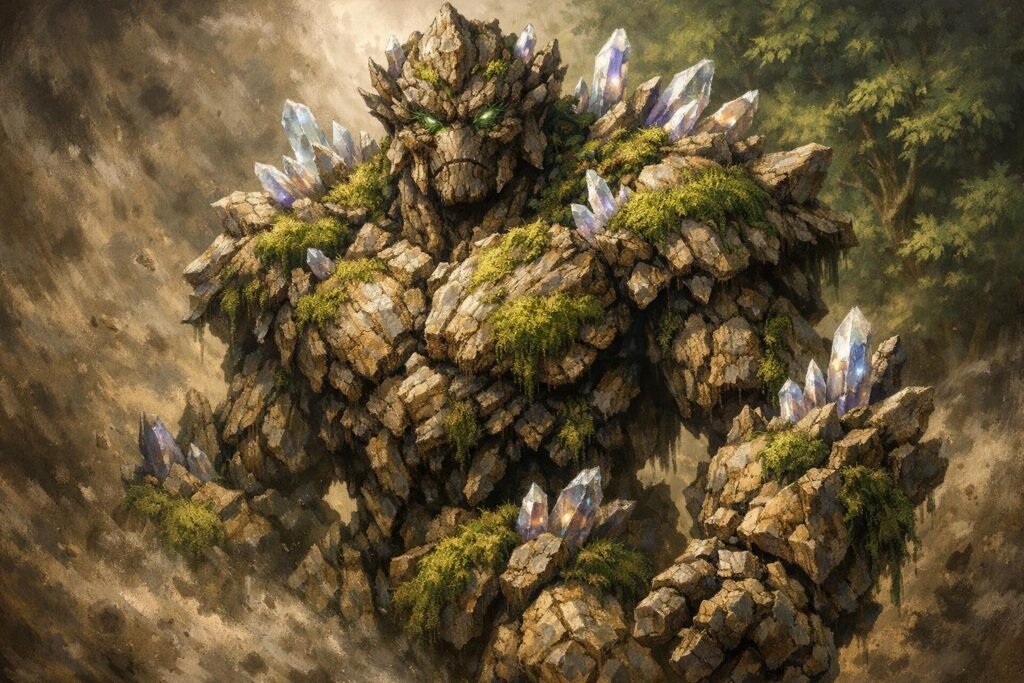
Gnomes (Gnomi): The earth elementals, depicted as small, stocky beings with deep connections to the underground world. These spirits were said to inhabit caves, mountains, and deep forests, possessing knowledge of precious metals and gems. Gnomes were characterized by their wisdom, craftmanship, and sometimes mercurial temperament.
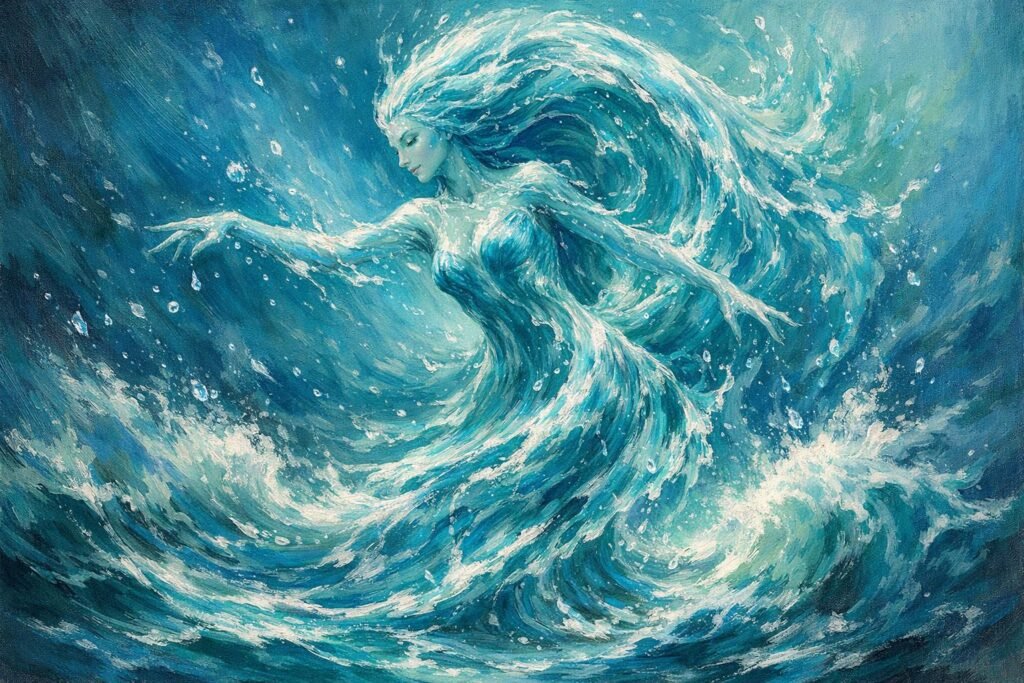
Undines (Undinae): The water elementals, typically portrayed as beautiful feminine spirits dwelling in rivers, lakes, and oceans. Drawing from earlier traditions of water nymphs and mermaids, undines were said to be capable of acquiring human souls through marriage with mortals. The most famous undine legend is that of Melusine, whose story heavily influenced Paracelsian thought.
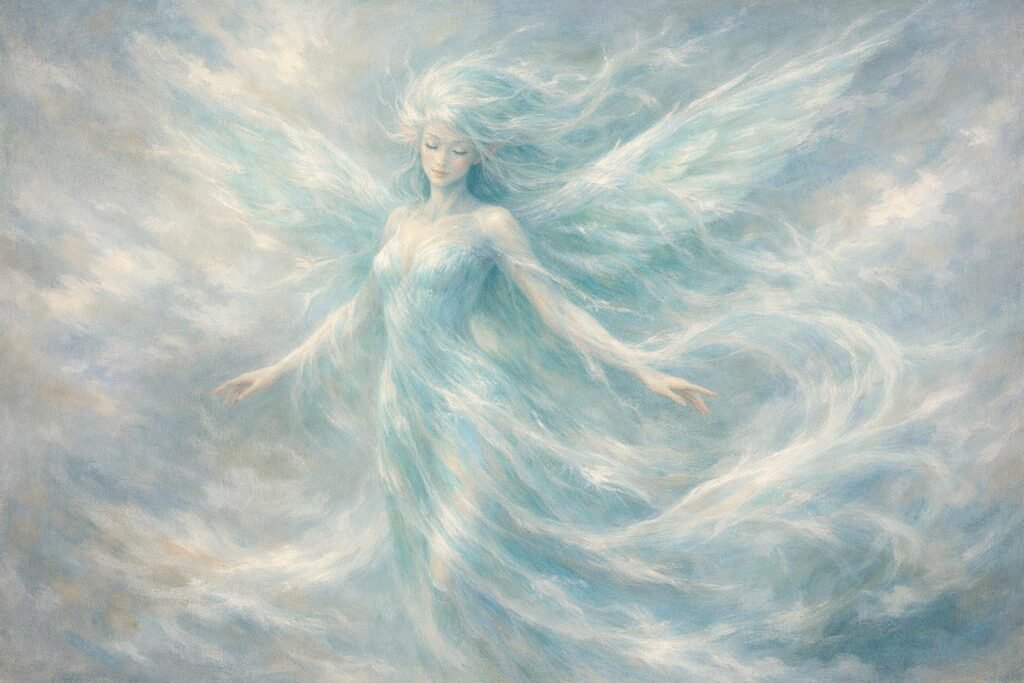
Sylphs (Sylphi): The air elementals, imagined as ethereal beings of exceptional beauty and grace. These spirits were said to inhabit the atmosphere, controlling winds and weather patterns. Sylphs were often depicted as the most benevolent of the elementals, possessing great wisdom and serving as intermediaries between the earthly and celestial realms.
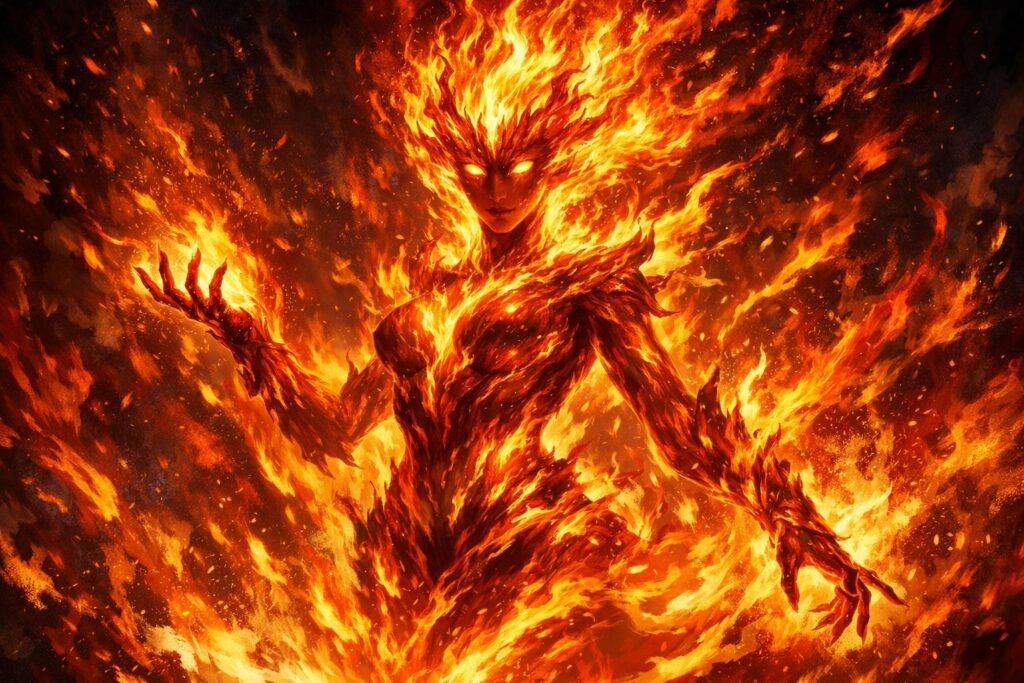
Salamanders (Salamandrae): The fire elementals, portrayed as beings of pure flame and energy. Unlike the amphibious creatures that share their name, elemental salamanders were conceived as spiritual entities capable of existing within fire itself. They were often depicted as the most powerful and potentially dangerous of the elementals.
The Influence of Hermetic Tradition
Paracelsus’s elemental theory was deeply influenced by Hermetic philosophy, particularly the principle of correspondence expressed in the famous maxim “as above, so below”. This concept suggested that the spiritual and material worlds were mirror images of each other, with elemental spirits serving as the connecting links between these realms.
The Hermetic tradition also contributed the idea that elementals were intermediate beings—neither fully divine nor purely material—existing in a liminal space between the physical and spiritual dimensions. This positioning made them fascinating subjects for alchemical study, as they represented the possibility of transformation and transmutation that was central to alchemical philosophy.
From Folklore to Literature: The Evolution of Elemental Narratives
Medieval and Renaissance Literature
The transition from alchemical texts to popular literature marked a significant evolution in how elementals were portrayed and understood. Medieval romances and fairy tales began incorporating elemental spirits as characters rather than mere philosophical concepts, giving them personalities, motivations, and roles within narrative structures.
The story of Melusine, a water spirit who could transform into a serpent, became one of the most influential elemental narratives of the medieval period. This tale, which combined elements of Celtic water mythology with Continental European folklore, established many of the tropes that would define elemental literature for centuries to come: the supernatural being who enters the human world, the transformative power of elemental magic, and the tragic consequences of crossing the boundaries between realms.
The Romantic Era and Literary Elementals
The Romantic movement of the 18th and 19th centuries brought a renewed interest in elemental spirits, as writers sought to reconnect with nature and explore the relationship between the material and spiritual worlds. This period saw the emergence of elementals as fully realized literary characters rather than mere folkloric figures.
Alexander Pope’s “The Rape of the Lock” (1712) featured sylphs as delicate, ethereal beings concerned with the preservation of feminine virtue and beauty. This portrayal established the image of elementals as capricious but ultimately benevolent beings who interacted with human affairs in subtle, often humorous ways.
The German Romantic tradition, particularly through the works of E.T.A. Hoffmann and Friedrich de la Motte Fouqué, further developed the literary potential of elemental spirits. Fouqué’s Undine (1811) became the definitive elemental romance, exploring themes of love, sacrifice, and the possibility of spiritual transformation through union with elemental forces.
Contemporary Fantasy Literature
Modern fantasy literature has embraced elementals as both homage to classical tradition and vehicles for exploring contemporary themes. Authors have expanded the traditional four-element system to include new categories and interpretations, while maintaining the core appeal of beings who embody natural forces.
The flexibility of elemental concepts allows contemporary authors to address environmental concerns, questions of identity and belonging, and the relationship between technology and nature. Elemental magic systems have become particularly popular in fantasy literature because they provide intuitive, visual representations of power while maintaining connection to fundamental natural forces.
The Modern Fantasy Renaissance: Elementals in Contemporary Media
Gaming and Interactive Media
The digital age has given elementals new life through video games, tabletop role-playing games, and interactive media. Games like Dungeons & Dragons have systematized elemental lore, creating detailed bestiaries and magical systems that draw directly from Paracelsian tradition while adding modern innovations.
The Warcraft universe presents elementals as primal forces of nature, each with distinct personalities and motivations that reflect their elemental nature. Fire elementals embody destruction and renewal, earth elementals represent stability and endurance, water elementals symbolize change and adaptation, and air elementals reflect freedom and movement.
Modern gaming has also expanded the traditional elemental framework to include new categories such as ice, lightning, metal, and nature, reflecting contemporary understanding of natural forces and providing greater diversity in magical systems.
Literature and Visual Media
Contemporary fantasy literature has embraced elemental magic as a foundation for complex magical systems. Authors like Brandon Sanderson have created sophisticated frameworks where elemental principles interact with other magical concepts, creating layered systems that reward careful study and understanding.
The Avatar: The Last Airbender series represents perhaps the most successful modern interpretation of elemental concepts, combining Eastern martial arts traditions with Western elemental philosophy to create a cohesive world where different cultures are defined by their relationship to specific elements. The series demonstrates how elemental concepts can be used to explore cultural identity, personal growth, and the balance between opposing forces.
The Influence of World-Building
Modern fantasy has elevated world-building to an art form, with authors creating comprehensive magical systems that integrate elemental concepts with physics, psychology, and sociology. The Stormlight Archive series demonstrates how elemental concepts can be integrated into complex magical systems that reflect the author’s understanding of physics and natural phenomena.
These sophisticated approaches to elemental magic reflect the maturation of fantasy literature as a genre, moving beyond simple spell-casting to explore the deeper implications of how magical forces might shape society, culture, and individual identity.
Global Perspectives: Elementals Across Cultures
Celtic and Northern European Traditions
Celtic mythology presents a rich tapestry of elemental spirits that predate and complement the Paracelsian system. The Celtic tradition emphasized the connection between elemental forces and the landscape itself, with spirits tied to specific locations and natural features.
Water Spirits: Celtic water mythology includes beings like Manannán mac Lir, the sea god who controlled ocean currents and weather patterns. These spirits were often depicted as guardians of otherworldly realms accessible through water, reflecting the Celtic understanding of water as a boundary between worlds.
Earth Spirits: The Celtic tradition includes numerous earth spirits associated with hills, mountains, and sacred groves. These beings were often portrayed as guardians of ancient knowledge and natural treasures, similar to the later Germanic tradition of dwarven smiths and craftsmen.
Air Spirits: Celtic air spirits were associated with winds, storms, and the movements of clouds. They were often depicted as messengers between the earthly and celestial realms, capable of carrying prayers and prophecies across vast distances.
Norse and Germanic Traditions
Norse mythology contributed significantly to the development of elemental concepts, particularly in the realm of earth spirits. The dvergar (dwarves) of Norse tradition were master craftsmen who created magical items for gods and heroes, embodying the transformative power of earth and metal.
The Norse understanding of elemental forces was deeply tied to their cosmological worldview, where different realms were associated with different elemental principles. Fire and ice were particularly important, representing opposing forces whose interaction created and would ultimately destroy the world.
Asian Traditions
Japanese mythology presents a complex system of elemental spirits that reflects the culture’s sophisticated understanding of natural forces. The oni tradition includes beings associated with various elemental powers, from thunder and lightning to earth and water.
The Japanese concept of elemental spirits emphasizes their role as both protectors and destroyers, reflecting the dual nature of natural forces in a landscape shaped by earthquakes, typhoons, and volcanic activity. These spirits often serve as moral arbiters, punishing those who violate natural law while protecting those who live in harmony with elemental forces.
The Universal Appeal of Elementals Concepts
The prevalence of elemental spirits across diverse cultures suggests that these concepts address fundamental human needs for understanding and connecting with natural forces. Whether expressed through the sophisticated philosophical systems of ancient Greece, the shamanic traditions of indigenous cultures, or the technological fantasies of modern science fiction, elemental concepts provide a framework for exploring humanity’s relationship with the natural world.
Elemental Magic Systems in Modern Fantasy
The Sanderson Approach
Brandon Sanderson’s Cosmere universe represents one of the most sophisticated approaches to elemental magic in modern fantasy literature. Rather than simply adopting traditional elemental categories, Sanderson creates magical systems that explore the fundamental principles underlying elemental concepts.
In the Mistborn series, Allomancy presents a magic system based on the ingestion and burning of metals, each producing specific effects that can be categorized according to elemental principles. Iron and steel manipulation recalls traditional earth magic, while the emotional influences of brass and zinc reflect air and fire symbolism.
The Stormlight Archive series introduces Surgebinding, a magic system where different Orders of Knights Radiant can manipulate various fundamental forces. These include gravitational manipulation, transformation of matter, and control over light and sound—all concepts that can be understood through expanded elemental frameworks.
Avatar: The Last Airbender’s Cultural Integration
The Avatar series demonstrates how elemental concepts can be integrated with cultural identity and martial arts traditions. Each nation in the Avatar world is associated with a specific element, and their bending arts reflect both the physical properties of their element and the cultural values of their society.
Earthbending is characterized by strong, direct movements that reflect the earth kingdoms’ values of stability and determination. Waterbending emphasizes fluid, adaptive movements that mirror the water tribes’ emphasis on change and healing. Firebending involves aggressive, powerful movements that reflect the fire nation’s emphasis on strength and conquest. Airbending features circular, evasive movements that embody the air nomads’ philosophy of harmony and spiritual growth.
This integration of elemental concepts with cultural identity demonstrates how elemental magic can serve as more than mere spectacle, becoming a lens through which to explore questions of identity, tradition, and social structure.
Evolution of Elemental Concepts
Modern fantasy has expanded traditional elemental frameworks to include new categories and interpretations. Ice, lightning, metal, wood, and spirit have all been incorporated into various magical systems, reflecting contemporary understanding of natural forces and providing greater diversity in magical applications.
Some authors have moved beyond traditional elemental categories altogether, exploring conceptual magic systems based on emotions, ideas, or abstract principles. However, even these innovations often maintain connections to elemental concepts, suggesting the enduring appeal of these fundamental frameworks.
Essential Reading: A Beginner’s Guide to Elemental Fantasy
Classic Foundations
For readers new to elemental fantasy, certain foundational works provide essential context and demonstrate the evolution of elemental concepts in literature:
The Earthsea Cycle by Ursula K. Le Guin: This seminal fantasy series establishes many of the conventions of elemental magic in literature, presenting a world where magic is based on understanding the true names of things and the balance between opposing forces. Le Guin’s approach to elemental magic emphasizes wisdom, responsibility, and the interconnectedness of all things.
The Chronicles of Narnia by C.S. Lewis: While not explicitly elemental, Lewis’s fantasy series incorporates elemental themes through its depiction of seasonal change, the power of natural forces, and the spiritual significance of the natural world.
Contemporary Masterworks
Modern fantasy literature offers numerous excellent entry points for readers interested in elemental concepts:
Avatar: The Last Airbender (animated series): This series provides the most accessible and comprehensive introduction to elemental magic for modern audiences, combining Eastern martial arts with Western elemental philosophy to create a cohesive world where elemental concepts drive both plot and character development.
The Mistborn Series by Brandon Sanderson: Beginning with The Final Empire, this series presents a sophisticated magic system that, while not traditionally elemental, explores themes of balance, transformation, and the relationship between different types of power.
The Stormlight Archive by Brandon Sanderson: This ongoing series demonstrates how elemental concepts can be integrated into complex magical systems that reflect scientific understanding while maintaining the wonder and mystery essential to fantasy.
Young Adult and Accessible Options
For younger readers or those new to fantasy, several series provide excellent introductions to elemental concepts:
The Elemental Series by various authors: Multiple series exist under this general title, each offering different approaches to elemental magic and providing entry points for readers with different interests and reading levels.
Born of Water by A.L. Knorr: This series explores elemental concepts through the lens of environmental protection and personal growth, making it particularly relevant for contemporary readers concerned about climate change and environmental issues.
Advanced and Specialized Works
For readers seeking deeper engagement with elemental concepts, several works offer sophisticated explorations of these themes:
The Lightbringer Series by Brent Weeks: This series presents a magic system based on the light spectrum, offering a scientific approach to elemental concepts while maintaining the visual spectacle essential to fantasy.
The Mage Errant Series by John Bierce: This series explores elemental magic through the lens of magical education, demonstrating how elemental concepts can be developed through study and practice.
The Cultural Impact and Continuing Evolution
Elemental Concepts in Popular Culture
The influence of elemental concepts extends far beyond literature into virtually every aspect of popular culture. From the Pokémon franchise’s type system to the Magic: The Gathering trading card game’s color philosophy, elemental concepts provide organizational frameworks that help audiences understand complex systems and relationships.
Film and television have embraced elemental concepts as visual shorthand for different types of power and personality. The X-Men franchise includes numerous characters whose abilities can be understood through elemental frameworks, while films like Frozen use elemental powers to explore themes of identity, responsibility, and self-acceptance.
Educational and Therapeutic Applications
Elemental concepts have found applications in educational settings, where they provide intuitive frameworks for understanding natural phenomena. The four classical elements serve as organizing principles for chemistry education, while elemental symbolism is used in psychology and therapy to help individuals understand different aspects of personality and behavior.
The elemental framework’s emphasis on balance and interaction makes it particularly valuable for exploring ecological concepts and environmental education. By understanding how different elements interact in natural systems, students can better appreciate the complexity and interconnectedness of environmental issues.
Future Directions and Innovations
As human understanding of natural forces continues to evolve, elemental concepts adapt to incorporate new scientific discoveries and cultural perspectives. Climate change has given new urgency to elemental themes, with contemporary works exploring how elemental imbalances might manifest in the real world.
Technological advancement has also influenced elemental concepts, with some works exploring how traditional elemental powers might interact with modern technology. The concept of “techno-elementalism” has emerged in science fiction and fantasy, where elemental spirits or powers are integrated with digital and mechanical systems.
Conclusion: The Eternal Dance of Elements
The enduring appeal of elemental concepts in human culture reflects something fundamental about our relationship with the natural world. From the ancient Greek philosophers who first systematized elemental theory to contemporary fantasy authors who create sophisticated magical systems, the elements provide a framework for understanding the forces that shape our existence.
The journey from abstract philosophical concepts to the personified elemental spirits of Paracelsian tradition, and from there to the complex magical systems of modern fantasy, demonstrates the remarkable adaptability of these ideas. Each generation has found new ways to express elemental concepts that reflect their understanding of the natural world and their place within it.
As we face unprecedented environmental challenges and technological changes, elemental concepts continue to provide valuable frameworks for understanding our relationship with natural forces. Whether expressed through the spectacular elemental battles of animated series, the sophisticated magic systems of epic fantasy novels, or the environmental themes of contemporary young adult literature, elements remain a powerful tool for exploring fundamental questions about power, responsibility, and our place in the natural order.
The elements call to something primal in human consciousness—the recognition that we are part of a larger system of forces and interactions that extends beyond our individual existence. In embracing elemental concepts, we acknowledge our connection to the fundamental forces that shaped the universe and continue to influence our daily lives.
For those seeking to explore this rich tradition, the path forward is clear: begin with the foundational works that established elemental concepts in literature, progress through the sophisticated magical systems of contemporary fantasy, and ultimately engage with the ongoing evolution of these ideas in new media and cultural contexts. The dance of elements continues, and there has never been a better time to join the eternal conversation between humanity and the fundamental forces of existence.
In the end, elementals represent more than mere fantasy creatures or magical systems—they embody humanity’s eternal attempt to understand and connect with the forces that govern our world. Their continued evolution and adaptation across cultures and centuries suggests that these concepts will remain relevant as long as humans seek to understand their place in the natural order. The elements endure, and so does our fascination with the spirits that embody their eternal dance.
LINKS & SOURCES
The 8 Eras of Fantasy Literature: A Short History of Magical Stories
https://cliffordstumme.substack.com/p/the-8-eras-of-fantasy-literature
T Brief History of Fantasy (PDF)
https://ojs.library.dal.ca/YAHS/article/view/403/388
Elementals in Mythology and Literature
https://mythology.net/mythical-creatures/elementals/
Paracelsus and the Elemental Spirits
https://www.ancient-origins.net/myths-legends-europe/paracelsus-elemental-spirits-0012476
The Four Elements in Western Esotericism
https://www.britannica.com/topic/classical-element
The History of Elementals in RPGs
https://rpgbot.net/dnd5/dungeon-master/monsters/elementals/
Avatar: The Last Airbender and Elemental Magic
https://avatar.fandom.com/wiki/Elemental_bending
Sanderson’s Laws of Magic
https://brandonsanderson.com/sandersons-first-law/
The Earthsea Cycle by Ursula K. Le Guin
https://www.ursulakleguin.com/earthsea
The Mistborn Series by Brandon Sanderson
https://www.brandonsanderson.com/books/mistborn/
The Stormlight Archive by Brandon Sanderson
https://www.brandonsanderson.com/series/the-stormlight-archive/
Elemental Spirits in World Mythology
https://www.worldhistory.org/article/1120/elemental-spirits-in-world-mythology/
Celtic Water Spirits and Legends
https://www.ancient-origins.net/myths-legends-europe/celtic-water-spirits-0012747
Japanese Elemental Spirits
https://www.nippon.com/en/japan-topics/g00752/
Dungeons & Dragons: Elemental Bestiary
https://www.dndbeyond.com/monsters?filter-type=elemental
Magic: The Gathering Color Philosophy
https://magic.wizards.com/en/news/feature/color-philosophy-2013-10-02
The Lightbringer Series by Brent Weeks
https://www.brentweeks.com/books/lightbringer-series/
Mage Errant Series by John Bierce
https://www.johnbierce.com/mage-errant-series/
Born of Water by A.L. Knorr
https://alknorrbooks.com/books/born-of-water/
Fantasy and the Four Elements
https://www.tor.com/2017/12/14/fantasy-and-the-four-elements/
Elementals in Popular Culture
https://tvtropes.org/pmwiki/pmwiki.php/Main/ElementalPowers