The Ancient Origins of Animal Companions
Explore the deep roots of animal companions in myth and fantasy, tracing their evolution from ancient familiars to beloved book characters. Discover the most popular fantasy pets and a curated list of books to begin your journey.
Since the dawn of human civilization, animals have been more than mere creatures sharing our world—they have been our companions, protectors, and spiritual guides. The concept of animal companions has deep roots in ancient cultures, where the boundaries between humans and animals were often blurred in spiritual and mythological contexts. In ancient Egypt, animals held sacred status, with cats being particularly revered as descendants of Bast, the goddess of moonlight and fertility. Lions and cheetahs served as exotic pets for royalty, while cobras symbolized protection for kings. This reverence for animals as both companions and spiritual entities laid the foundation for how we perceive animal companions in fantasy literature today.
The shamanic traditions across various cultures further cemented the spiritual connection between humans and animals. Shamans relied heavily on the guidance and wisdom of power animals, viewing them as protectors, guides, and helpers on their spiritual journeys. These animal spirits were believed to possess heightened awareness of spiritual energies and assist in maintaining a connection to the natural world. The concept of “animal totems”—symbolic representations of animal guides—became integral to many indigenous spiritual practices, with each animal carrying specific traits, wisdom, and medicine to guide individuals through life’s journey.
From Familiar Spirits to Fantasy Companions
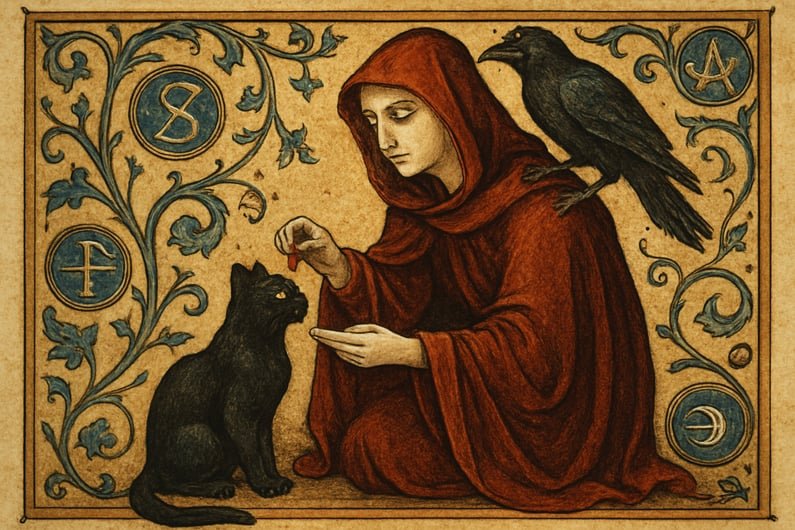
The European medieval period marked a significant evolution in how animal companions were perceived. In European folklore of the medieval and early modern periods, “familiars” or “familiar spirits” were believed to be supernatural entities that would protect or assist witches and cunning folk in their practice of magic. These familiars could manifest in numerous forms, usually as animals but sometimes as human or humanoid figures. They were described as clearly defined, three-dimensional forms, vivid with color and animated with movement and sound, distinguishing them from the smoky, undefined forms of ghosts.
During the witch trials of the late medieval period and early modern Europe, familiar spirits were often cited as evidence of witchcraft. Accused witches were said to keep these spirits in animal forms—cats, dogs, toads, or birds—often feeding them in exchange for supernatural favors. The term “familiar” comes from the Latin word “familiaris,” meaning “household servant,” reflecting their role as personal helpers who served their human companions in a domestic or spiritual capacity.
Medieval households also kept pets for companionship rather than just utility. Cats, dogs, monkeys, squirrels, birds, and even rabbits were common companions. Nunneries tried (and failed) to ban the keeping of pets, as nuns would bring their beloved animals into church. Manuscripts from this period show women with pet squirrels, while the Luttrell Psalter depicts collared pet squirrels as signs of status. This historical practice of keeping animals as companions for emotional rather than practical purposes directly influenced how animal companions would later be portrayed in fantasy literature.
The Evolution into Modern Fantasy Literature
The transition of animal companions from historical and mythological contexts into modern fantasy literature was gradual but profound. Medieval chivalric romances often featured animals as guides or symbolic figures. In “Sir Gawain and the Green Knight,” hunting scenes parallel the protagonist’s moral journey, with each animal symbolizing different aspects of his character development. These early literary representations established a precedent for animals as more than mere background elements—they became integral to character development and narrative progression.
The 19th and early 20th centuries saw animal companions evolve further in literature. In Victorian literature, dogs became central characters in classics like Jack London’s “The Call of the Wild,” featuring Buck, a domesticated dog who reverts to his wild instincts in the Alaskan wilderness. These portrayals highlighted the primal connection between humans and animals, a theme that would become central to many fantasy works.
The modern fantasy genre as we know it today began to take shape in the mid-20th century, with J.R.R. Tolkien’s works setting many of the conventions. While Tolkien’s elves demonstrated better communication with animals than humans (riding horses without bridles, for example), explicit animal companions were less prominent in his works. However, his contemporary C.S. Lewis incorporated talking animals extensively in “The Chronicles of Narnia,” including the memorable Reepicheep, a valiant talking mouse.
The concept of animal companions in fantasy literature truly flourished in the latter half of the 20th century. Authors began exploring deeper, more complex bonds between humans and their animal companions, moving beyond simple master-pet relationships to profound psychological and spiritual connections. This evolution reflected changing societal attitudes toward animals, with greater emphasis on their intelligence, emotional capacity, and individual worth.
Psychological and Symbolic Significance
Animal companions in fantasy literature serve multiple psychological and symbolic functions. Philip Pullman’s concept of daemons in “His Dark Materials” represents perhaps the most sophisticated exploration of the human-animal bond in fantasy literature. Daemons are the physical manifestation of a person’s soul, appearing as animals that reflect their human’s personality. This concept brilliantly illustrates the duality of human nature and provides a compelling metaphor for self-discovery and personal growth.
The bond between humans and animal companions in fantasy often represents aspects of human psychology that are difficult to express directly. In Christopher Paolini’s “Inheritance Cycle,” the telepathic bond between dragon and rider symbolizes the deep connection between two beings who complement each other’s strengths and weaknesses. This bond transcends mere companionship, becoming a lifelong connection that survives even death.
Animal companions also frequently serve as moral guides, helping protagonists navigate complex ethical dilemmas. They often represent the protagonist’s better nature or intuitive wisdom, providing guidance when rational thought fails. This reflects the real-world psychological phenomenon where pets can serve as emotional anchors and moral compasses for their human companions.
Types of Animal Companions in Fantasy Literature
Familiars and Magical Bonds
Familiars in fantasy literature are directly inspired by the historical concept of familiar spirits. In modern fantasy, particularly in works like J.K. Rowling’s “Harry Potter” series, familiars serve as magical companions that enhance a witch or wizard’s abilities. Hedwig, Harry’s snowy owl, is not merely a pet but a loyal companion who helps him maintain connection with the wizarding world when he is isolated with his Muggle relatives.
The familiar has evolved significantly in role-playing games like Dungeons & Dragons, where it began as a unique feature available only to wizards. These familiars provided vital support, especially during the beginning of campaigns when spellcasters were vulnerable. The concept has expanded over time, with familiars gaining more abilities and becoming available to more character classes, reflecting their growing importance in fantasy narratives.
Bonded Companions and Soul Links
Some fantasy works feature animal companions that share a deep, often magical bond with their human counterparts. In George R.R. Martin’s “A Song of Ice and Fire” series, the Stark children’s direwolves share a profound connection with their human companions, with some characters even able to see through their wolves’ eyes. These direwolves—Grey Wind, Lady, Nymeria, Summer, Shaggydog, and Ghost—reflect their human companions’ personalities and serve as both protectors and extensions of their selves.
The concept reaches its apex in works featuring soul bonds or telepathic connections. In Anne McCaffrey’s “Dragonriders of Pern” series, dragons form a telepathic bond with their riders at hatching, creating a lifelong partnership so intimate that a dragon will commit suicide if its rider dies. This represents one of the most profound explorations of the human-animal bond in fantasy literature, examining themes of mutual dependence, sacrifice, and unconditional love.
Talking Animals and Sentient Companions
Talking animals have been a staple of fantasy literature since ancient fables. C.S. Lewis’s “Chronicles of Narnia” features numerous talking animals, with characters like Aslan the lion and Reepicheep the mouse playing crucial roles in the narrative. These characters are fully sentient beings with their own societies and moral codes, rather than mere extensions of human characters.
Philip Pullman’s daemons represent a unique variation on this theme. While daemons can speak and possess human-level intelligence, they are fundamentally extensions of their humans rather than independent beings. This creates a fascinating dynamic where the animal companion serves as both “other” and “self,” allowing for complex internal dialogues and character development.
Most Popular Animal Companions in Fantasy
Dragons
Dragons stand as perhaps the most iconic animal companions in fantasy literature. From Saphira in Christopher Paolini’s “Eragon” to Temeraire in Naomi Novik’s “His Majesty’s Dragon,” these majestic creatures combine awesome power with profound wisdom. The bond between dragon and rider typically involves telepathic communication and mutual growth, with each partner enhancing the other’s abilities and character.
The dragon-human bond often represents a balance of power, with dragons contributing immense strength and magical abilities while their human companions provide strategic thinking and moral guidance. This relationship frequently serves as a metaphor for the integration of primal power with human rationality and ethics.
Wolves and Canines
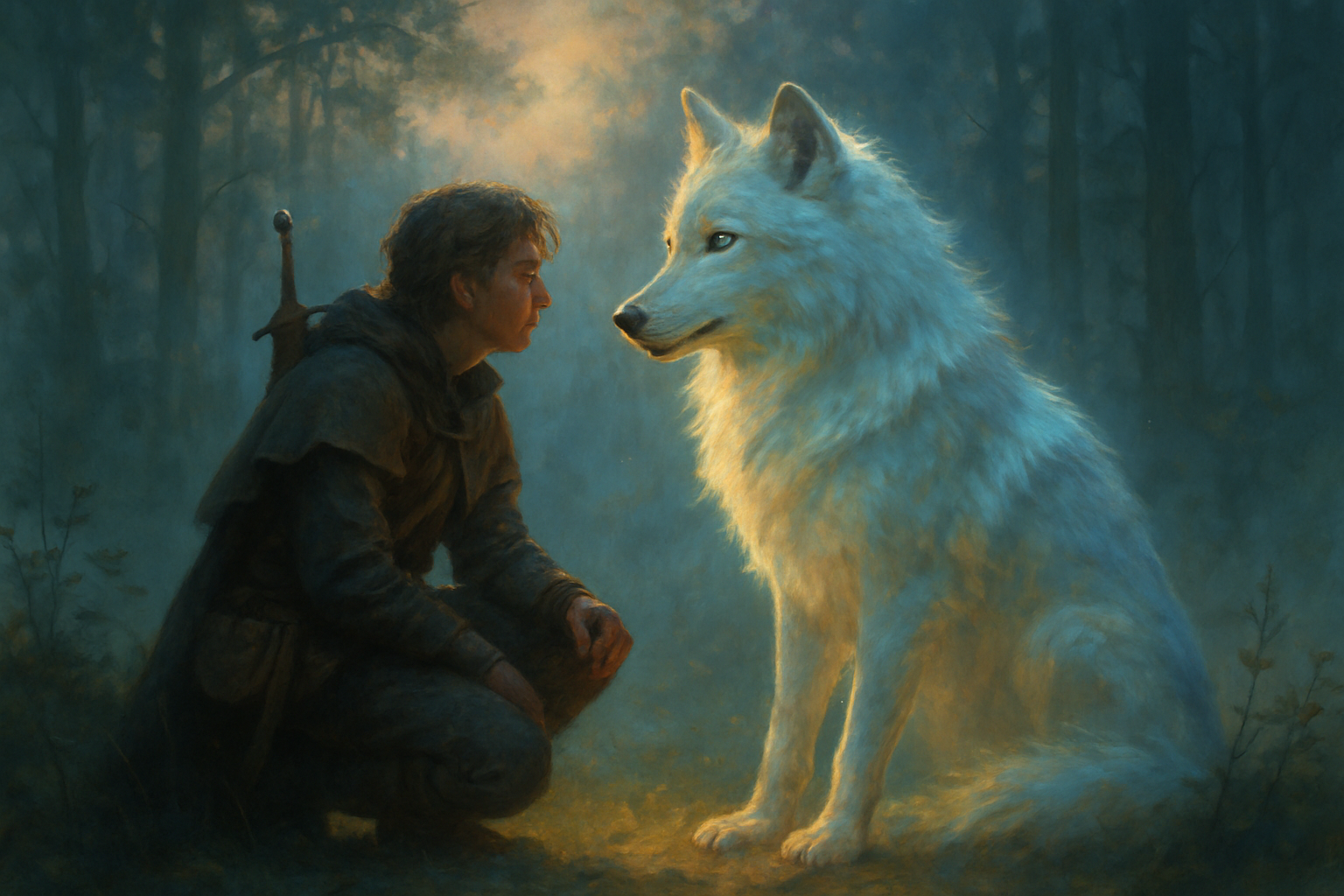
Wolves and other canines feature prominently as loyal companions in fantasy literature. The direwolves in “A Song of Ice and Fire” exemplify this tradition, serving as both protectors and symbolic extensions of the Stark children’s personalities. In Robin Hobb’s “Farseer Trilogy,” the wolf Nighteyes forms a profound bond with the protagonist Fitz through a magic called the Wit, exploring themes of otherness and ecological connection.
Celtic mythology has significantly influenced the portrayal of canine companions in fantasy. Dogs in Celtic lore were revered as protectors, warriors, and supernatural beings, often serving as guardians of the Otherworld or loyal companions to heroes. This tradition continues in modern fantasy, with wolves and dogs frequently representing loyalty, courage, and primal wisdom.
Felines
Cats hold a special place in fantasy literature, often portrayed as mysterious, independent, and magically attuned. In J.K. Rowling’s “Harry Potter” series, Hermione’s cat Crookshanks demonstrates unusual intelligence and perception, recognizing the true nature of Ron’s “rat” Scabbers long before the humans do.
The portrayal of feline companions draws heavily from historical perceptions of cats. In ancient Egypt, cats were revered as sacred animals and kept as household companions to protect stored grains from rodents and snakes. Medieval Europe had a more ambivalent relationship with cats, sometimes associating them with witchcraft but also valuing them as mousers and companions. These historical attitudes inform the complex portrayal of feline companions in fantasy literature, who often straddle the line between domestic pet and magical being.
Birds and Avian Companions
Birds, particularly owls and hawks, feature prominently as animal companions in fantasy. Hedwig from “Harry Potter” represents one of the most beloved avian companions in modern fantasy, serving as both messenger and emotional support for Harry. In Celtic mythology, ravens and crows often served as messengers between worlds, a tradition that continues in many fantasy works.
Avian companions frequently symbolize freedom, perspective, and communication. Their ability to fly gives them access to a broader view of the world, making them valuable scouts and messengers. The bond between human and bird often represents the balance between groundedness and aspiration, with the bird encouraging its human companion to “see the bigger picture.”
Exotic and Mythical Creatures
Beyond traditional animals, fantasy literature abounds with exotic and mythical creatures serving as companions. From Mephi, the strange otter-like creature with antlers in Andrea Stewart’s “The Drowning Empire,” to the daemons of Philip Pullman’s “His Dark Materials,” these unique companions add wonder and originality to their respective worlds.
These creatures often combine features of multiple animals or possess entirely fictional anatomies and abilities. Their uniqueness serves to emphasize the otherworldly nature of fantasy settings while still maintaining the emotional resonance of the human-animal bond. These companions frequently possess magical abilities that complement their human partners, creating synergistic relationships that drive plot development and character growth.
The Evolution of the Trope in Contemporary Fantasy
The animal companion trope continues to evolve in contemporary fantasy literature. Modern works often explore more complex and nuanced relationships between humans and their animal companions, moving beyond simple master-pet dynamics to partnerships based on mutual respect and understanding. This reflects changing societal attitudes toward animals and growing awareness of animal cognition and emotional capacity.
Urban fantasy has embraced animal companions as essential elements of the genre. Works like Jim Butcher’s “Dresden Files” feature Mouse, an extraordinarily intelligent and magically powerful dog who serves as both protector and moral compass for the protagonist Harry Dresden. These urban fantasy companions often serve as bridges between the mundane and magical aspects of their worlds, helping protagonists navigate both realms.
A recent trend in fantasy literature involves animal companions that can transform between animal and human forms. This allows for more complex interactions and relationships while maintaining the distinctive perspectives that animal companions bring to narratives. However, this approach raises complex questions about identity, autonomy, and the nature of the human-animal bond.
Best Books to Begin With
For readers interested in exploring the rich tradition of animal companions in fantasy literature, here are some excellent starting points:
Classic Fantasy with Animal Companions
- “The Chronicles of Narnia” by C.S. Lewis – Features talking animals throughout, with memorable characters like Aslan the lion and Reepicheep the mouse.
- “The Farseer Trilogy” by Robin Hobb – Explores the profound bond between the assassin Fitz and the wolf Nighteyes through a form of magic called the Wit.
- “His Dark Materials” by Philip Pullman – Introduces the concept of daemons, animal manifestations of human souls that provide one of the most sophisticated explorations of the human-animal bond in fantasy literature.
- “Dragonriders of Pern” by Anne McCaffrey – Features telepathic bonds between dragons and their riders in a unique blend of fantasy and science fiction.
- “The Immortals Quartet” by Tamora Pierce – Follows Daine, a young woman with “wild magic” that allows her to communicate with, heal, and shapeshift into animals.
Contemporary Fantasy with Animal Companions
- “Harry Potter” series by J.K. Rowling – Features various magical pets and familiars, including Hedwig the owl, Crookshanks the cat, and Fawkes the phoenix.
- “A Song of Ice and Fire” by George R.R. Martin – The Stark children’s direwolves serve as both protectors and symbolic extensions of their personalities.
- “The Inheritance Cycle” by Christopher Paolini – Explores the telepathic bond between the dragon Saphira and her rider Eragon.
- “The Dresden Files” by Jim Butcher – Features Mouse, an extraordinarily intelligent and magically powerful dog who serves as both protector and moral compass for the protagonist.
- “The Bone Shard Daughter” by Andrea Stewart – Includes Mephi, a strange otter-like creature with antlers who forms a deep bond with the protagonist Jovis.
Young Adult Fantasy with Animal Companions
- “The Golden Compass” (Northern Lights) by Philip Pullman – The first book in the “His Dark Materials” trilogy, introducing the concept of daemons.
- “Eragon” by Christopher Paolini – The first book in “The Inheritance Cycle,” chronicling the beginning of the bond between Eragon and Saphira.
- “Wild Magic” by Tamora Pierce – The first book in “The Immortals Quartet,” introducing Daine and her ability to communicate with animals.
- “The Dragon Prince” series by Aaron Ehasz and Justin Richmond – Features Azymondias (Zym), an adorable dragon hatchling who forms bonds with the main characters.
- “Sabriel” by Garth Nix – Features the Disreputable Dog and Mogget, animal companions with complex personalities and mysterious origins.
Conclusion
The tradition of animal companions in fantasy literature represents one of the genre’s most enduring and beloved tropes. From its roots in ancient mythology and shamanic practices to its sophisticated explorations in contemporary fantasy, the bond between human and animal has consistently captivated readers’ imaginations. These relationships speak to our deep-seated desire for connection with the natural world and our fascination with the mysterious inner lives of animals.
As fantasy literature continues to evolve, so too will the portrayal of animal companions. Contemporary authors are exploring increasingly complex and nuanced relationships between humans and their animal partners, reflecting our growing understanding of animal cognition and emotional capacity. Whether as familiars, soul-bonded partners, or talking companions, these animal characters enrich their narratives by providing unique perspectives, emotional depth, and magical possibilities that purely human characters cannot.
The enduring popularity of animal companions in fantasy literature testifies to their psychological and emotional resonance. They remind us of our connection to the natural world, embody qualities we admire but may struggle to express, and offer unconditional loyalty in worlds often characterized by moral ambiguity and betrayal. In doing so, they fulfill one of fantasy’s most important functions: helping us understand ourselves and our place in the world through the lens of the extraordinary and the magical.
LINKS & SOURCES
- 102 Fantasy Books with Animal Companions – Nikky Lee
- Fantastic Creatures & Animal Companions – Supernatural Underground
http://supernaturalunderground.blogspot.com/2018/09/fantastic-creatures-animal-companions.html
- Animal Companion Books – r/Fantasy
- What Is a Familiar? – r/Witch
- Books with Dragon Companions – r/Fantasy
- Books with a Familiar or Close Pet – r/fantasyromance
- Fantasy Books Series with Unforgettable Talking Animals – Books Are My Third Place
- Top Ten Tuesday: Animal Companions – She Reads Novels