The Celestial Enigma: Angels in History and Story
Explore the enigmatic history and enduring allure of angels across faiths and fiction, with a spotlight on must-read books that bring these celestial beings to life.
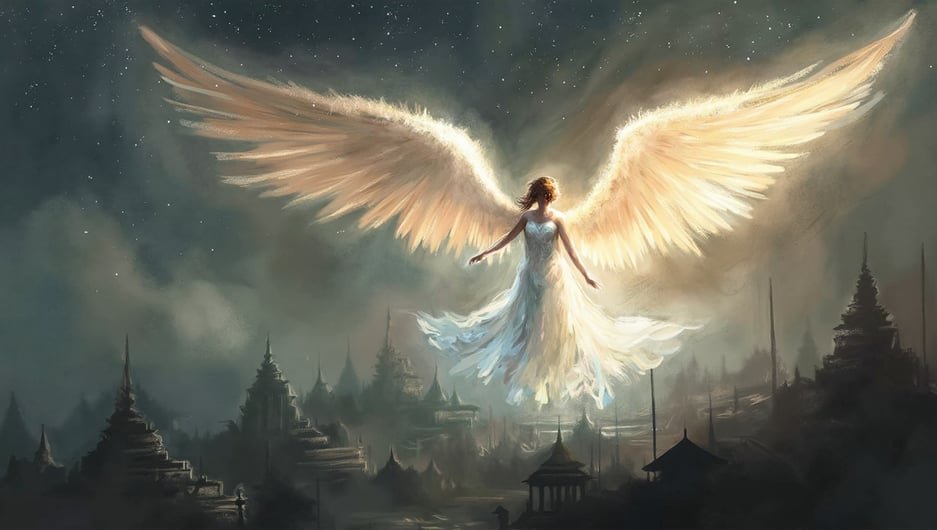
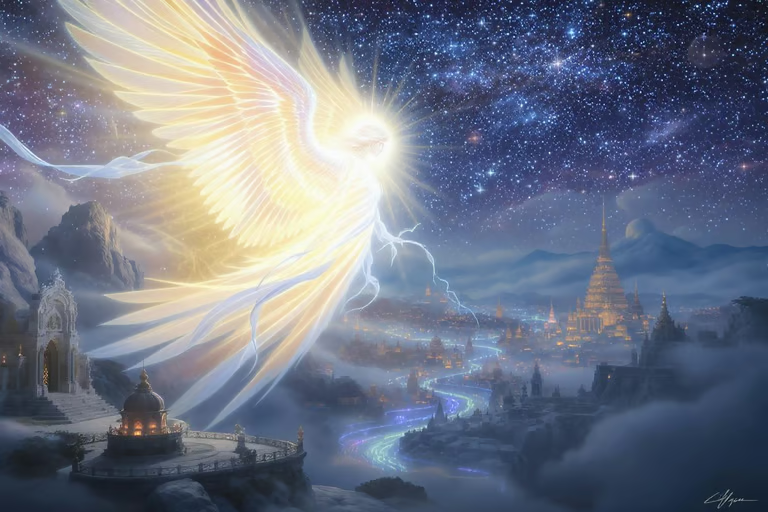
The Celestial Enigma: Angels in History and Story Angels have long fascinated humanity, their luminous presence bridging the mortal and the divine with an aura of mystery and power. These spiritual beings, often depicted as winged messengers or guardians, embody a complex tapestry of religious, mythological, and cultural meanings that have evolved over millennia.
Origins and Etymology
The term “angel” derives from the Greek word ángelos (ἄγγελος), meaning “messenger,” which itself may have roots in ancient Oriental languages, possibly Persian, reflecting the role of angels as divine couriers. This linguistic heritage underscores their primary function across traditions: intermediaries between the heavens and earth. The Hebrew Bible originally used the term mal’ākh, also meaning messenger, which the Greek Septuagint translated as ángelos. Over time, translations began to distinguish between human messengers and supernatural beings, with “angel” reserved for the latter.
Ancient and Religious Foundations
Before angels became firmly entrenched in monotheistic religions, many ancient cultures revered winged or spiritual beings that influenced natural phenomena and human fate. In polytheistic and animistic worldviews, these entities were often autonomous deities or spirits. The shift to monotheism redefined these powers as servants of a singular, supreme God, thus transforming autonomous spirits into angels—created beings who execute divine will.
Zoroastrianism, one of the oldest monotheistic faiths, profoundly shaped angelology. It introduced a dualistic cosmic battle between good and evil, with divine entities known as Amesha Spentas (holy immortals) acting as emanations of Ahura Mazda, the Wise Lord. Each human was believed to have a guardian angel called a Fravashi, who protected and manifested divine energy. This dualism influenced later Jewish and Christian concepts, where angels not only serve God but also engage in spiritual warfare against demonic forces.
Angels in the Hebrew Bible and Jewish Thought
Early Hebrew scripture rarely personifies angels as distinct beings; instead, God directly intervenes in human affairs. However, post-exilic writings, such as the Book of Daniel, introduce named angels like Gabriel and Michael, who play pivotal roles in apocalyptic visions and divine judgment. These texts reflect a theological evolution where God becomes more transcendent, delegating earthly affairs to angelic intermediaries.
The Dead Sea Scrolls from Qumran further illustrate this development, with texts like the War Scroll depicting angels of light battling forces of darkness, and the Angelic Liturgy referring to angelic beings as elim, a term for divine powers. This period also marks the emergence of the idea that angels embody pure goodness, contrasting with demons as forces of evil—a concept likely influenced by Zoroastrian dualism.
Christian Angelology: Theology and Iconography
Christianity inherited and expanded Jewish angelology, with angels becoming central figures in scripture and doctrine. The New Testament describes angels as “ministering spirits” sent to aid believers (Hebrews 1:14). Over the first five centuries CE, Christian theologians like Augustine and Gregory of Nazianzus debated angels’ nature—whether they possessed physical bodies or were purely spiritual—and their hierarchical organization.
By the Middle Ages, angels were classified into choirs and orders, such as seraphim, cherubim, thrones, dominions, and archangels, each with distinct roles and symbolism. Artistic depictions flourished, often portraying angels as beautiful humanoid figures with wings and halos, symbols of their divine origin and sublime nature. The earliest known winged angel images date back to the late 4th century, such as those on the “Prince’s Sarcophagus” near Istanbul.
John Chrysostom eloquently explained wings as metaphors for angels’ sublime nature and their ability to traverse heavenly and earthly realms, rather than literal appendages. This iconography has since become a defining feature of angelic representation in Western art.
The Ambiguity of Free Will and the Fall
While angels are typically seen as obedient servants of God, ancient texts reveal a more nuanced picture. The Bible and apocryphal books like Enoch describe angels endowed with free will, capable of rebellion. The story of Lucifer’s fall—where a third of angels defied God and were cast out of heaven—illustrates this capacity for disobedience. The Book of Enoch recounts how 200 angels, known as the Watchers, descended to Earth, took human wives, and fathered the Nephilim, a race of giants. Their punishment was severe, bound in chains and cast into darkness, highlighting the permanence of their fall.
This dual nature—powerful yet fallible—adds a layer of tragic complexity to angelic beings, distinguishing them from humans and gods alike.
Angels in Literature and Popular Culture
Beyond religious texts, angels have inspired countless works of literature and fantasy, where their roles and personalities are richly reimagined. They can be benevolent guardians, conflicted rebels, or enigmatic forces of fate.
Some notable books include:
- Good Omens by Neil Gaiman and Terry Pratchett, which humorously explores an angel and a demon teaming up to prevent the apocalypse.
- Angelfall by Susan Ee, a post-apocalyptic tale where angels invade Earth, blending survival drama with supernatural intrigue.
- Archangel by Sharon Shinn, set in a world where angels and humans coexist, exploring themes of faith and prophecy.
- Between Two Fires by Christopher Buehlman, a dark fantasy featuring angels and demons amid the Black Plague.
These narratives reflect the enduring fascination with angels as symbols of hope, conflict, and the divine mystery.
Conclusion: The Timeless Allure of Angels
From ancient mythologies to modern novels, angels continue to captivate us with their blend of beauty, power, and mystery. They embody humanity’s deepest yearnings for protection, justice, and connection to the divine. Their stories—whether sacred or secular—invite us to ponder the unseen forces shaping our world and the eternal struggle between light and darkness.
Links & Sources
- Angel – Wikipedia
- Books with angels as a focus? – Reddit
- The Greatest Books of All Time on Angels
- Books about Angels – BiblioVault
- Angels in Western Culture: A Short History of Angels and Angelic Beings – Owlcation
- 23 Books About Angels (and All Their Feathery Glory) – Book Riot
- 27 Riveting Christian Fiction Books About Angels and Demons – Fruitful Reader
- The History and Origins of Angels – The Path of the White Rose