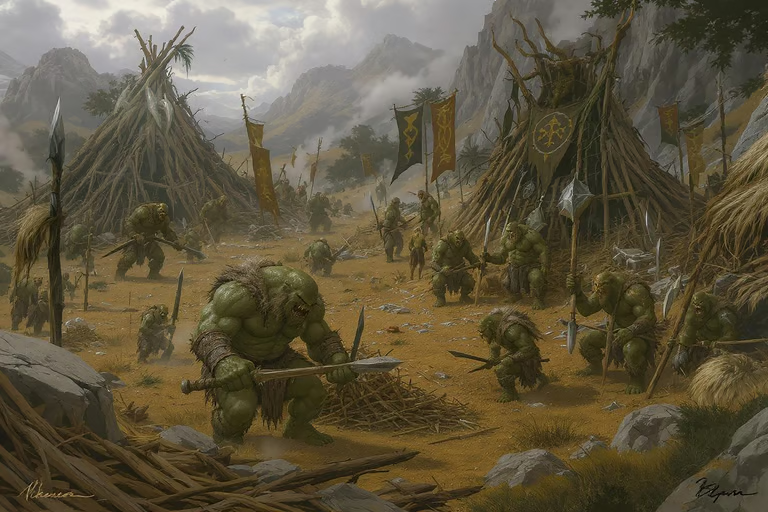
Orcs: The Unlikely Heroes of Fantasy
Delve into the dark origins, misunderstood culture, and evolving role of Orcs—from Tolkien’s twisted footsoldiers to protagonists in their own right.
The earliest known use of “orc” appears in Old English, specifically in glossaries and the epic poem Beowulf. Here, orcneas refers to monstrous, corpse-like beings—descendants of Cain, categorized alongside elves and giants as the world’s original undesirables. These beings were not the sword-wielding orcs of Tolkien but rather demonic zombies, possibly products of ancient necromancy or “hell-devils.”
Latin & Orcus
The term also traces back to the Latin Orcus, a god of the underworld, which influenced both the Old English and the Italian orco (ogre). In Italian folklore, the orco is a man-eating monster, famously depicted in works like Ludovico Ariosto’s Orlando Furioso—not green, but certainly menacing.
Ogres, Goblins, and Other Cousins
European fairy tales and legends are replete with brutish, man-eating creatures—ogres, trolls, and goblins—that share genetic ties with the modern orc. The distinctions between these monsters were always vague, a nuance that Tolkien would later exploit in his own myth-making.
Tolkien’s Orcs: The Birth of a Modern Monster
Without J.R.R. Tolkien, orcs might still be lurking in the footnotes of medieval poetry. While he did not invent orcs, he brought them into the limelight of modern fantasy.
Etymology and Inspiration
Tolkien’s orcs are a tapestry of influences:
- He borrowed the word orc from Old English, citing its “phonetic suitability” and its appearance in Beowulf.
- He drew inspiration from the Italian orco and the Latin Orcus, though he insisted that his orcs were not directly linked to sea monsters or dolphins, despite the confusing etymology.
- Initially referred to as “goblins” in The Hobbit, Tolkien later clarified that orcs and goblins are essentially the same species in his legendarium.
In-World Origins: A Mythological Mess
Tolkien’s explanations for orc origins were, to put it kindly, inconsistent—a delightful chaos that has puzzled scholars for decades.
- Corrupted Elves: The most famous theory, found in The Silmarillion, posits that orcs are elves captured and twisted by Morgoth, the original Dark Lord. This aligns with Tolkien’s theological view that evil can only corrupt, not create.
- Sorcery and Slime: In earlier drafts, Morgoth creates orcs from “the heats and slimes of the earth” through sorcery—a sort of magical mud pie.
- Beasts and Fallen Maiar: Other drafts suggest orcs were once beasts granted speech and cunning, or even fallen lesser spirits (Maiar) masquerading as orcs.
- Corrupted Men: In his later years, Tolkien considered that orcs might be corrupted humans or a mix of corrupted elves and men, to sidestep the theological issue of Morgoth creating life independently.
- Uruk-hai and Crossbreeds: Saruman’s Uruk-hai are explicitly described as hybrids of orcs and men, adding another layer of genetic complexity.
Tolkien never settled on a single origin, and perhaps that ambiguity only enhances their mystique.
Orc Society, Language, and Morality
Tolkien’s orcs are not mere mindless monsters; they possess language (albeit a crude pidgin), tribal societies, and even a twisted sense of morality. They bicker, boast, and occasionally display a dark humor—sometimes more relatable than the “good guys” who slay them.
Orcs After Tolkien: The Spread of the Green Horde
Tolkien’s orcs became the blueprint for nearly every subsequent iteration, each adding its own flavor.
Dungeons & Dragons: Orcs Go Green
When Dungeons & Dragons launched in the 1970s, it borrowed Tolkien’s orcs but soon gave them a makeover:
- Physical Traits: D&D orcs are larger, stronger, and characterized by distinctive green or gray skin, boar-like tusks, and a penchant for scars.
- Society: They are depicted as tribal, patriarchal, and fiercely warlike, worshipping a pantheon led by the one-eyed god Gruumsh.
- Alignment: Early D&D orcs were “Lawful Evil” with pig-like faces, but over time, they became more nuanced—sometimes even playable as heroes or antiheroes.
- Color Confusion: The now-standard green orc likely originated from a mix of comic book villains, accidental paint jobs in miniature wargaming, and the visual style of games like Warhammer and Warcraft.
Warhammer, Warcraft, and Beyond: Orcs Get an Upgrade
- Warhammer: Games Workshop’s orcs are rowdy, green-skinned hooligans with a love for violence and a surprising sense of humor. Their “ork” dialect and culture parody British football hooligans—proof that even monsters can have fun.
- Warcraft: Blizzard’s Warcraft series reimagined orcs as noble savages, imbuing them with a shamanistic culture, tragic backstory, and the capacity to be both villains and heroes. This sympathetic portrayal has influenced countless other games and narratives.
- Other Media: Orcs have appeared in various forms, from Magic: The Gathering to Shadowrun, sometimes as mere brutes, other times as complex societies with their own heroes, villains, and internal politics.
Modern Debates: Are Orcs Just Monsters, or Something More?
The portrayal of orcs has sparked considerable controversy and introspection in recent years.
- Dehumanization and Allegory: Critics have noted that orcs often serve as “the other”—faceless enemies to be slaughtered without guilt. Tolkien himself sometimes compared orcs to the worst aspects of humanity, particularly in the context of war.
- Racism and Representation: Tolkien’s physical descriptions of orcs have been criticized for echoing racist stereotypes, and later creators have grappled with how to depict orcs without reinforcing harmful tropes.
- Humanization: Recent works, from novels to video games, have sought to give orcs more depth—exploring their cultures, motivations, and even their capacity for heroism. Some narratives now pose the question: what if orcs are people too?
Conclusion: The Enduring Appeal of Orcs
From ancient demons to misunderstood antiheroes, orcs have evolved significantly. They exemplify fantasy’s ability to recycle, remix, and reinvent old monsters for new generations. Whether viewed as cannon fodder, tragic victims, or the misunderstood underdogs of fantasy, orcs are here to stay. After all, every hero needs a worthy (or at least numerous) opponent.
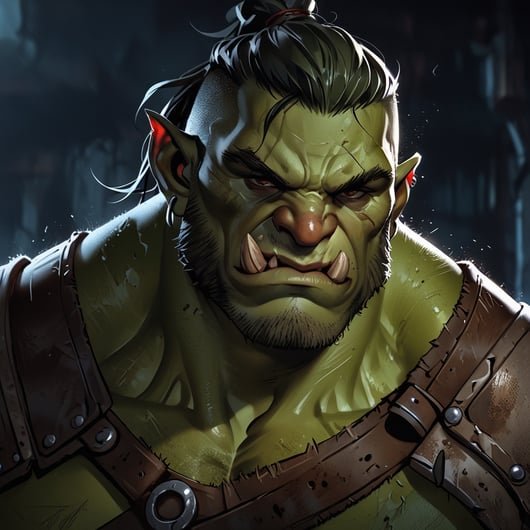
References
Delve into the dark origins, misunderstood culture, and evolving role of Orcs—from Tolkien’s twisted footsoldiers to protagonists in their own right.
- Orc – Wikipedia
- Theory on a canonically consistent origin of the Orcs – Reddit
- Did Tolkien Invent Orcs? – Of Elven Make
- The Evolution of Orcs – Not a Dead Communist
- Orcs and the Influence of the Films – Reddit
- Orc (Dungeons & Dragons) – Wikipedia
- How To Make Orcs Interesting and Unique – Sorcerer of Tea
- What is the true origin of the Orcs? – SciFi Stack Exchange
- Who invented orcs? – SciFi Stack Exchange
- The Unnatural History of Tolkien’s Orcs – Ansereg (PDF)
- Like Warcraft, These Books Remind Us That Orcs Are People Too – Barnes & Noble
- History of Orcs In Fantasy – YouTube
- Orcs before Tolkien – Marcus Pitcaithly
- Orc | Middle-earth, Tolkien, Fantasy – Britannica
