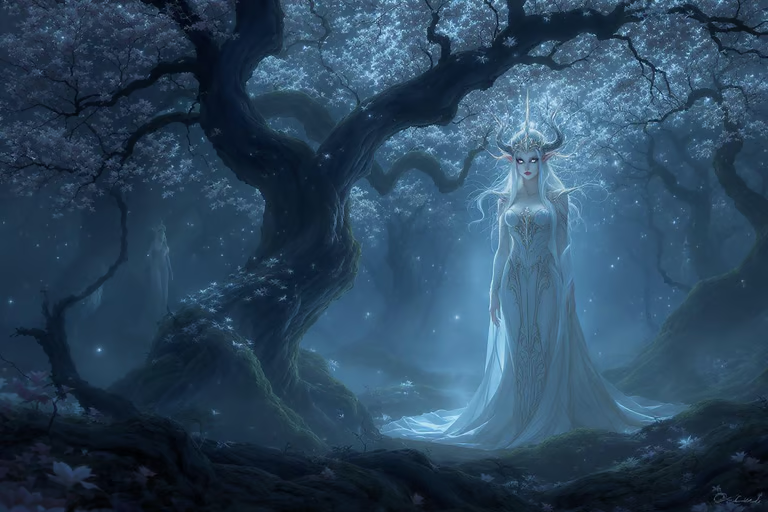
The Enchanted Thread: Tracing the Legacy of Elves in Fantasy Literature
Unravel the enigmatic journey of elves: from ancient spirits and Norse demigods to Tolkien’s immortal heroes and the myriad forms they take in modern fantasy. Explore their origins, their cultural impact, and why they remain the most alluring and mysterious beings in the genre.
The Ancient Roots: Elves in Myth and Folklore Elves have haunted the twilight edges of human imagination far longer than most realize. Their earliest incarnations spring from the tangled woods of Germanic and Norse myth, where they were known as álfar—beings of dazzling beauty, capricious power, and ambiguous morality. In these primordial tales, elves were not the pointy-eared, tree-hugging paragons of modern fantasy, but mysterious spirits, sometimes benevolent, often dangerous, and always unpredictable.
In Norse cosmology, elves were divided into two broad categories: the Ljósálfar, or light elves, radiant and associated with the heavens, and the Dökkálfar, or dark elves, who dwelled beneath the earth and were linked to shadows and misfortune. The lines between elves, gods, and other supernatural entities were blurred, with elves sometimes worshipped as minor deities or revered as ancestors. Their powers ranged from healing and blessing crops to inflicting illness and madness, a duality that made them both revered and feared.
Germanic folklore, too, painted elves as nature spirits—guardians of forests, rivers, and hills. They could be helpful, bestowing gifts or luck on those who respected their domains, but woe betide the mortal who trespassed or failed to offer proper homage. The changeling myth, in which elves stole human infants and replaced them with their own, hints at the deep unease and fascination these beings inspired.
Celtic traditions, meanwhile, often conflated elves with the sidhe or fair folk, denizens of the Otherworld who could be capricious, seductive, or perilous. Here, elves danced in moonlit rings, lured mortals into timeless revels, and blurred the boundaries between the natural and the supernatural. In all these legends, elves were creatures of liminality—dwelling at the borders of the known and the unknown, the seen and the unseen.
Medieval Transformations: Elves in Chivalric Romance and Early Literature
As Europe marched into the Middle Ages, elves underwent a curious transformation. Christian writers, ever wary of pagan spirits, recast elves as agents of temptation or misfortune, sometimes aligning them with demons or the devil himself. Yet even as their reputation darkened, elves retained their allure. In medieval ballads and romances, they became figures of seduction and danger, capable of enchanting mortals or spiriting them away to hidden realms.
The idea of the Fairy Queen, ruler of a court of beautiful and perilous elves, took root in this era. Elves became associated with the mysterious and the erotic, their dances leaving behind fairy rings and their touch bringing both ecstasy and illness. Changelings, elf-locks, and elf-shot—terms for unexplained illnesses or misfortunes—entered the popular lexicon, a testament to the lingering belief in their power.
Yet not all was gloom and doom. Elves also appeared as helpers and guides, sometimes bestowing wisdom or magical gifts on worthy mortals. The ambiguity of their nature—neither wholly good nor evil—made them endlessly adaptable, able to serve as villains, mentors, or enigmatic allies in the stories of the time.
The Tolkien Revolution: Elves Reforged for Modern Fantasy
If elves had faded into the mists of folklore, it was J.R.R. Tolkien who called them forth into the blazing light of modern fantasy. Drawing on his deep knowledge of Norse and Anglo-Saxon myth, Tolkien reimagined elves as the immortal Firstborn of creation—tall, wise, and heartbreakingly beautiful. In The Hobbit, The Lord of the Rings, and especially The Silmarillion, he crafted a detailed history for his elves, complete with languages, cultures, and tragic destinies.
Tolkien’s elves are not mere background decoration; they are the architects of Middle-earth’s greatest triumphs and tragedies. They are immortal, not dying of age or disease, but still vulnerable to grief, violence, and the slow fading of the world. Their longing for the Undying Lands, their sorrow for lost glory, and their complex relationships with humans and other races imbue them with a depth rarely seen before in fantasy.
The sundering of the elves—a grand migration that split them into myriad tribes, each with its own culture and fate—mirrors the fragmentation of language and myth. The Calaquendi, or Elves of Light, who saw the light of the Two Trees in Valinor, stand in contrast to the Moriquendi, or Elves of Darkness, who remained in Middle-earth. Tolkien’s elves are at once ancient and ever-changing, embodying both the beauty and the melancholy of lost ages.
This reinvention proved wildly influential. Suddenly, elves were not just mischievous sprites or woodland tricksters, but noble, tragic, and deeply human in their flaws and aspirations. Tolkien’s vision set the template for generations of writers, artists, and game designers, who would riff on his themes and aesthetics with varying degrees of reverence and rebellion.
Elves in Modern Fantasy: Archetypes, Subtypes, and Subversions
In the wake of Tolkien’s towering legacy, elves proliferated across the landscape of fantasy literature, games, and media. They became a staple of the genre, their pointed ears and ethereal grace instantly recognizable. Yet far from being monolithic, elves have splintered into countless subtypes, each reflecting the anxieties and aspirations of their creators.
High elves, wood elves, dark elves (or drow), sea elves, and even winged elves populate the worlds of Dungeons & Dragons, each with its own culture, abilities, and moral compass. High elves are often depicted as wise and aloof, guardians of ancient knowledge and magic. Wood elves embrace the wild, living in harmony with nature and shunning the trappings of civilization. Dark elves, exiled to the shadowy depths, are frequently cast as tragic villains or misunderstood outcasts, their societies shaped by betrayal and survival.
In literature, elves have served as both paragons and pariahs. Some stories, like those of Michael J. Sullivan or Tad Williams, delve deep into elven culture, exploring their politics, philosophies, and inner conflicts. Others, such as Terry Pratchett’s Lords and Ladies, gleefully subvert the noble elf archetype, portraying them as dangerous, alien, and anything but benevolent.
Elves have also become vehicles for exploring themes of immortality, loss, and the burden of memory. Their long lives and slow decline often mirror the fading of magic or the encroachment of modernity—a metaphor for the loss of wonder in a disenchanted world. Yet their adaptability ensures they remain relevant, whether as wise mentors, tragic lovers, or cunning adversaries.
The Anatomy of the Elf: Traits, Powers, and Peculiarities
What, then, defines an elf? Across myths and media, certain traits recur with stubborn persistence. Elves are almost always depicted as physically beautiful, with angular features, lithe bodies, and a preternatural grace. Their senses are keen, their movements fluid, and their voices often described as musical or hypnotic.
Magic is the lifeblood of the elf. Whether as master archers, spellcasters, or artisans, elves wield powers that set them apart from mortals. Their connection to nature is profound; forests flourish under their care, and they are often able to communicate with animals, plants, or the very elements themselves.
Longevity, if not outright immortality, is another hallmark. Elves may live for centuries or millennia, aging slowly and retaining their youthful vigor long after humans have turned to dust. This longevity shapes their worldview—patience, caution, and a certain detachment from the frenetic pace of mortal life are common elven traits.
Yet elves are not without flaws. Their pride can curdle into arrogance, their isolation into xenophobia. Their long memories make them slow to forgive, and their deep emotions can lead to epic feuds or tragic romances. In some stories, elves are haunted by the fading of their own kind, clinging to the remnants of a golden age that will never return.
Elves and Other Races: Friends, Foes, and Frenemies
Elves rarely exist in a vacuum. Their relationships with other races—humans, dwarves, orcs, and more—are central to their role in fantasy worlds. Often, elves are portrayed as rivals to dwarves, their elegance and artistry contrasted with dwarven craftsmanship and stubbornness. This rivalry can be friendly, competitive, or outright hostile, depending on the setting.
With humans, elves have a more ambivalent relationship. They may serve as mentors, lovers, or adversaries, their immortality and wisdom both a source of fascination and resentment. The trope of the half-elf, caught between two worlds, explores questions of identity, belonging, and the price of difference.
Elves are also frequently cast as defenders of the natural world, standing against the encroachment of industry, evil, or chaos. Their societies are often depicted as utopian, but fragile—threatened by external forces and internal decay. In some stories, elves retreat from the world, leaving mortals to inherit the ruins of their once-great civilizations.
Elves in Role-Playing Games: From Tabletop to Digital Realms
No discussion of elves in fantasy would be complete without a nod to their role in games. In Dungeons & Dragons, elves are a core playable race, beloved for their agility, magical aptitude, and unique abilities. Subraces abound, from the high elves of ancient forests to the shadowy drow of the Underdark.
Elven characters often enjoy bonuses to dexterity, resistance to enchantments, and the ability to see in the dark. Their long lifespans and rich histories make them natural lorekeepers, sages, or enigmatic wanderers. Yet their aloofness and tendency to view other races as ephemeral can lead to intriguing role-playing opportunities—and the occasional diplomatic disaster.
Video games, too, have embraced elves, from the proud Altmer of The Elder Scrolls to the enigmatic Dalish of Dragon Age. Each iteration brings new twists to the archetype, exploring questions of tradition, exile, and the cost of survival in a changing world.
The Allure of the Elf: Why We Keep Returning
Why do elves continue to captivate us, century after century? Perhaps it is their embodiment of the unattainable—beauty, wisdom, and grace beyond mortal reach. Or perhaps it is their flaws, their melancholy, and their struggle to find meaning in a world that is always slipping away.
Elves are mirrors, reflecting both our highest ideals and our deepest fears. They are the guardians of lost wisdom, the voices of the wild, and the reminders that even the most immortal beings are not immune to change, loss, and longing.
In the end, elves endure because they are endlessly adaptable. They can be gods or monsters, lovers or enemies, symbols of hope or harbingers of doom. They are, in every sense, the elder folk—echoes of a time when the world was young and every shadow held a secret.
Conclusion: The Last Song of the Eldar
From their shadowy beginnings in ancient myth to their luminous presence in modern fantasy, elves have woven themselves into the very fabric of our stories. They are at once timeless and ever-changing, embodying the paradoxes of beauty and danger, wisdom and folly, immortality and loss.
As long as we dream of magic, of worlds beyond the veil, and of the possibility that something wondrous waits just beyond the edge of the known, elves will walk beside us—silent, watchful, and forever a step ahead. In their stories, we glimpse both the light and the darkness within ourselves, and perhaps, if we listen closely, the faint echo of the first song ever sung beneath the stars.
Links & Sources
- Elves – Mythos Anthology
- Elves – Norse Mythology for Smart People
- Elves in Middle-earth – Wikipedia
- Sundering of the Elves – Wikipedia
- The Elf Life Cycle | Tolkien Explained – YouTube (Note: replace with actual URL if needed)
- The Elf Species for Dungeons & Dragons (D&D) Fifth Edition (5e)
- Elves In Mythology and Fantasy – Fantasy Faction
- Origins Of The Elves : r/mythology
- Elves – A Concise History – The Writers Initiative
- Tolkien’s Elves | Types of elves explained – YouTube (Replace with actual URL if available)
- Elf (Dungeons & Dragons) – Wikipedia
- The Elves: Myth, Magic, and Cultural Significance – Famworld
- Quendi (Elves in Middle-earth)
- Elves | Euclid Public Library
